WASHINGTON (AP) — President Donald Trump relied on his gut and largely side-stepped diplomatic coordination as he made the decision to launch strikes on Iran with Israel. But now with the war’s economic and geopolitical consequences unfurling rapidly, he’s cajoling allies and other global powers to help mop up the mess. Trump says he’s asked roughly a half-dozen other...
Category: Talk of the town
Conflict Over Cargo Operations at Aden Adde Airport and Its Fallout
By Dayib Sh. Ahmed Introduction The CEO, of Arimas Group of Companies, Abdirisaaq, who is also the son of President Hassan Sheikh Mohamud, and his family have taken direct control of all cargo operations and warehouse facilities at Aden Adde International Airport in the capital Mogadishu, consolidating one of Somalia’s most important economic gateways under their company, Arimas...
Somali Unity Requires Honesty from All Sides
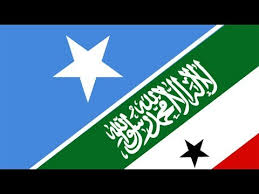
By Abdirashid Hashi I read and reread Dr. Abdifatah Tahir’s piece titled “Is Somali Unity Possible Without Political Seriousness? My Reflections.” For one, I am glad he wrote it. As a disillusioned unionist, his intervention is useful because it allows political actors and academics in the south to hear directly where many lifelong unionists from...
A new Ethiopia-Eritrea war could trigger ‘Africa’s Second World War,’ expert warns
ISTANBUL – Eritrea, a former Italian colony federated with Ethiopia in 1952, fought a nearly 30-year independence war before declaring statehood after a 1993 referendum. A brief rapprochement that allowed joint use of the Red Sea ports of Assab and Massawa collapsed into the 1998-2000 border war, which killed tens of thousands and left relations frozen...
Wajir, NFD Kenya: A City of a Colonial Archive in a Colonial Mindset
By Osman A. Hassan Wajir, the principal town of Wajir County in Kenya’s former Northern Frontier District (NFD), stands today not merely as a geographical location but as a living colonial archive, an urban space where the legacies of empire have not faded into history but instead continue to structure daily life, governance, mobility, and...
Between Aspiration and Reality: A Critical Case for the 135 Traditional Elders Model as Somalia’s Electoral Safeguard in 2026
By Abdinoor Ibrahim Noor Abstract This article interrogates the severe political crisis that has engulfed Somalia following the February 2026 collapse of electoral negotiations between the Federal Government and the opposition Somali Future Council. The nation confronts a perilous choice between a logistically unachievable one-person-one-vote (OPOV) election and reverting to discredited indirect models that have...
Is Somali Unity Possible Without Political Seriousness? My Reflections
Dr Abdifatah Ismael Tahir This essay reflects on how my experience in Somali politics had led me to reconsider the conditions under which unity could realistically be pursued. For most of my life, I have held a firm conviction that Somalis are better served by a united state than by a fragmented political order. That...
The Day Somalia Swallowed Its Own Constitution
By Abdijaliil Osman How a midnight vote, a missing quorum, and a president’s hunger for extension pushed Africa’s most fragile state to the edge of collapse DISPATCH On the evening of Wednesday, March 5, 2026, in a half-empty parliament building in Mogadishu, with scores of lawmakers absent and the Speaker of the Upper House refusing...
Where there is a will, there is a way- Bridging Somalia’s Political Impasse Through Pragmatic Compromise
By Balal Mohamed Cusman Somalia is currently confronting a moment that may be more critical to its future as a unified nation-state than at any other time in its recent history. The country faces multiple challenges simultaneously, drought, insecurity, and growing political tension, compounded by the ever-increasing complex geopolitical rivalries and wars unfolding across the...
How Political Elites Victimize Somali Clans
Dr. Abdurahman Baadiyow The question of whether clans are the victims of modern state, or whether clans themselves victimize that state, is analytically puzzling and contested. However, the dominant narrative is that clans victimize the state and are an incurable cancer in the process of state-building, and that it is one of the major reasons...