
Dr Abdifatah Ismael Tahir
This essay reflects on how my experience in Somali politics had led me to reconsider the conditions under which unity could realistically be pursued.
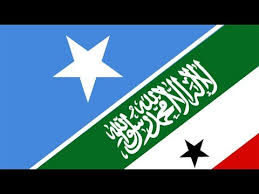
For most of my life, I have held a firm conviction that Somalis are better served by a united state than by a fragmented political order. That conviction emerged early. In part, it was shaped by my childhood interest in the historical struggles surrounding Somali territories, which developed within a social environment where the idea of a united nation—encompassing all Somali-inhabited territories—stood at the centre of political imagination and public discourse. My clan (Isaaq) also maintained strong social and historical ties with communities in the Reserve Area and the Hawd, regions in which sections of major sub-clan branches—Habar Jeclo in the east, Garhajis in the centre, and Arab and Habar Awal in the west—are present. Together, these influences shaped my early understanding of Somali unity as both a moral aspiration and a geostrategic necessity.
Like many Somalis, I left Somalia in the early 1990s. Political awareness remained an important part of my life, although its form was shaped less by organised activism and more by the demanding realities of exile. Securing livelihoods, pursuing education, and navigating the bureaucratic terrains of documentation, mobility, and institutional recognition across borders all brought the question of statehood into my everyday life. During the early 2000s, I became involved in political debates advocating the idea of a united Somali nation. These debates brought us into direct engagement with academic arguments that presented Somalia’s division into smaller states as a pathway to stability. We challenged that proposition consistently.
That engagement intensified during the rise of the Islamic Courts Union (ICU). Along with other students and scholars, I supported the ICU’s efforts to restore order in Mogadishu and reconstitute a national political authority. My engagement took multiple forms, including organising discussions in universities, speaking to the English-speaking media, writing commentaries, and mobilising diaspora communities in support of that project. When Ethiopia intervened militarily in Somalia in 2006, I publicly opposed the intervention and challenged the narratives advanced by Ethiopian and American officials and their allied commentators—namely, that the conflict constituted a war against radical Islam.
Until I entered the Somali parliament in December 2016, my belief in Somali unity remained largely unchallenged in my own thinking. However, experience in practical federal politics in general, and in parliament in particular, introduced a new level of political observation and practical judgment. With it came a closer examination of the assumptions that had sustained my conviction. I use the term assumptions deliberately because every political conviction—even a principled one—rests on underlying expectations about how actors, institutions, and societies behave. These assumptions define the conditions under which an idea can move from desirability to political realisation. It was at this level—at the level of political possibility—that my long-held position began to face serious testing.
The first assumption concerned the disposition of Somalis across the country toward unity itself. I long believed that Somalis in general desired unity. From that perspective, I viewed continued engagement in the Somali project as a worthwhile political path for Somalilanders. Over time, however, my experience increasingly pointed to a narrower political reality. I have not seen sustained enthusiasm for unity in the south. In many instances, the prevailing posture has been dismissive. Powerful sections of the current political elite appear invested in preserving existing arrangements of power rather than opening a meaningful path for Somaliland’s substantive participation.
The second assumption concerned Somaliland’s prospects for international recognition. For many years, I argued that recognition would remain difficult to secure because the political and diplomatic obstacles outweighed the available opportunities. On that basis, I believed Somaliland would gain more by participating in the reconstruction of the Somali state from the north. This argument held considerable force for decades. More recently, however, diplomatic developments and the conduct of Somaliland’s leadership have shown that the prospect of recognition commands a stronger political horizon than I had previously judged. That change matters because it alters the strategic landscape in which unionist arguments operate. Once recognition appears more attainable, the burden on advocates of Somali unity becomes heavier—that is, they must present a unionist project that carries equal or greater strategic credibility.
It is precisely at this point that my current position takes shape. I continue to support exploring the possibility of Somali unity, and I do so now through a clearer test of political seriousness. Stated plainly, if a renewed union is to command trust, it must be built on visible guarantees that speak directly to historical grievances and to the distribution of power. History gives this question particular weight.
In 1960, Somalis from the north made a profound political sacrifice when the former British Somaliland voluntarily united with the former Italian Somalia without imposing conditions. Southern leaders had even suggested that the north set out terms before the merger, yet Somaliland’s political leadership chose to proceed in a spirit of goodwill, expecting that equitable governance would follow from that act of trust. Not long after, the rejection of the 1961 constitution by a large majority of northern voters emerged dissatisfaction with the post-independence political order. This made clear that the central weakness of the union was not the aspiration to unite, but the absence of enforceable guarantees capable of balancing authority between the parties. It is from that historical lesson that any serious discussion of renewed union must proceed.
A genuinely negotiated union would, in my view, require bold political and institutional arrangements. The proposals that follow are meant as tests of political seriousness.
The first proposal concerns the location of the national capital. Since 1960, Mogadishu has served as the capital. But the present conditions invite a wider conversation about this. In my view, the capital should be relocated to the north. Such a move would communicate that the distribution of state benefits and prestige forms part of the question of unity itself. Comparative experience shows that such arrangements are not without precedent. South Africa, for example, distributes key state functions across multiple cities, while Tanzania relocated its capital from Dar es Salaam to Dodoma in part to rebalance national development and symbolism. In the Somali context, a northern capital would similarly signify the making of a new political compact.
The second proposal concerns executive leadership. A newly negotiated Somali constitution should grant the northern regions the executive presidency for a fixed transitional period—thirty-three years—with every president during that period coming from the north. The rationale rests on the historical distribution of state leadership since independence in 1960, which has been dominated largely by political elites from southern clans. A constitutionally guaranteed northern presidency for a comparable period would communicate a serious commitment to restoring confidence. Transitional power-sharing arrangements of this kind are not unusual. Bosnia-Herzegovina’s rotational presidency is a case in point for building confidence among political communities emerging from deep mistrust.
The third proposal concerns cabinet sharing and wider structural parity. Any renewed political arrangement should guarantee the northern regions at least fifty percent of national political representation and government authority, including cabinet positions and other senior state offices. A provision of this kind would indicate that union rests on parity, negotiated confidence, and shared ownership of the state. Again, comparative political practice offers a relevant example in Belgium, where the federal executive is constitutionally required to maintain parity between Dutch-speaking and French-speaking ministers, ensuring that both linguistic communities share equal representation in the cabinet.
Together, these proposals form diagnostic measures that ask whether the desire for unity includes the willingness to restructure the state in ways that restore confidence among Somalilanders and create a durable foundation for common rule.
At the same time, my assessment of the present political moment remains cautious. I do not approach these proposals with optimism. Rather, I approach them as a measure of seriousness. In that light, the question reflected in the title—whether Somali unity is possible without political seriousness—must, in my view, be answered clearly. My answer is no. Unity cannot be sustained by sentiment alone, nor by rhetoric or invocations of shared history unaccompanied by institutional commitments. If Somalis are unwilling to engage questions of power, representation, and historical grievance in a substantive way, then unity remains only a slogan. If, however, Somalis show readiness for genuine compromise, then the project of Somali unity becomes politically and intellectually compelling once again.
At present, the landscape appears to be consolidating around two paths, each carrying grave consequences. The first is the ambition to construct small independent states in a hostile geopolitical environment, flanked by neighbours with long histories of seeking domination over, or influence within, Somali territories. The second is the ambition to rebuild a centralised Somali state with inherent hegemonic power, producing a hierarchy of inequality among Somali clans and, by extension, individual citizens. Such imbalances weakened the original union. Neither path offers a horizon of shared dignity.
That there are only two perilous paths, and that both are more entrenched now than ever before, underpins the urgency of the present moment. When such positions become the prevailing choices and alternative political imagination recedes from public life, political alignment becomes a matter of choosing between the devil and the deep blue sea. In that case, I would be compelled to stand with the course pursued by the community to which I belong. This would not mark an abandonment of principle, but a recognition of political location under constrained conditions.
For that reason, my position today combines conviction with contingency. The conviction is that a just and genuinely negotiated Somali union continues to hold deep moral, historical, and strategic appeal. It remains an outcome toward which I am intellectually and politically inclined. But that outcome is not possible without political seriousness. It depends on visible political willingness, constitutional imagination, and material sacrifice from those in the south who speak in the name of unity. Without that seriousness, Somali unity, however emotionally resonant, cannot be politically realised.
Dr Abdifatah Ismael Tahir
Email: abdifatah.tahir@hilin.org
——–
The author is a unionist politician from Somaliland based in Mogadishu and a former Member of the Federal Parliament of Somalia (2016–2022). He is also a scholar with a keen interest in the geopolitical dynamics of the Horn of Africa.
———
Related article:
Rethinking Somali Unity: Where I Stand by Dr Abdifatah Ismael Tahir