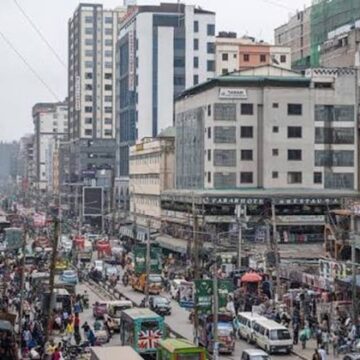
By Osman A. Hassan Wajir, the principal town of Wajir County in Kenya’s former Northern Frontier District (NFD), stands today not merely as a geographical location but as a living colonial archive, an urban space where the legacies of empire have not faded into history but instead continue to structure daily life, governance, mobility, and...
Category: opinion
A Business Model Quietly Undermining Itself
By Ahmed Bashir In many markets across East and Central Africa, Somali traders dominate entire sectors—from fuel distribution and transportation to cement imports and wholesale food supply. Their shops are busy, their warehouses full, and their trucks constantly on the road. To an outside observer, it looks like a powerful model of entrepreneurial success, with...
Between Aspiration and Reality: A Critical Case for the 135 Traditional Elders Model as Somalia’s Electoral Safeguard in 2026
By Abdinoor Ibrahim Noor Abstract This article interrogates the severe political crisis that has engulfed Somalia following the February 2026 collapse of electoral negotiations between the Federal Government and the opposition Somali Future Council. The nation confronts a perilous choice between a logistically unachievable one-person-one-vote (OPOV) election and reverting to discredited indirect models that have...
Is Somali Unity Possible Without Political Seriousness? My Reflections
Dr Abdifatah Ismael Tahir This essay reflects on how my experience in Somali politics had led me to reconsider the conditions under which unity could realistically be pursued. For most of my life, I have held a firm conviction that Somalis are better served by a united state than by a fragmented political order. That...
The Day Somalia Swallowed Its Own Constitution
By Abdijaliil Osman How a midnight vote, a missing quorum, and a president’s hunger for extension pushed Africa’s most fragile state to the edge of collapse DISPATCH On the evening of Wednesday, March 5, 2026, in a half-empty parliament building in Mogadishu, with scores of lawmakers absent and the Speaker of the Upper House refusing...
A New Era in Tehran, The Implications of Mojtaba Khamenei’s Rise
By Dayib Sh. Ahmed The appointment of Mojtaba Khamenei as Iran’s new Supreme Leader marks one of the most consequential political developments in the Islamic Republic since the death of Ayatollah Ruhollah Khomeini in 1989. For decades Mojtaba Khamenei has remained a largely opaque figure—deeply embedded within Iran’s political system yet rarely visible to the...
Where there is a will, there is a way- Bridging Somalia’s Political Impasse Through Pragmatic Compromise
By Balal Mohamed Cusman Somalia is currently confronting a moment that may be more critical to its future as a unified nation-state than at any other time in its recent history. The country faces multiple challenges simultaneously, drought, insecurity, and growing political tension, compounded by the ever-increasing complex geopolitical rivalries and wars unfolding across the...
History and Personalities Deserving Appreciation
By Faisal A. Roble This essay is both historical, an appreciation note, and a nod to the concept of “Oodi Abka dhow” or when loosely translated, “proximity is thicker than blood.” has any relevance, this story is a good example. Context: On March 2, 2026, while the world was busy with the Israeli/US vs. Iran...
Belonging Without Obligation: Why Somalia Cannot Govern Itself
By Bashir M. Sheikh Ali Somalia’s instability is usually explained through familiar causes: corruption, weak leadership, stalled reforms. Those explanations are not wrong, but they describe symptoms rather than causes. They tell us what we see without explaining why it keeps happening, generation after generation, government after government. The underlying problem is more fundamental. Somalia...
How Political Elites Victimize Somali Clans
Dr. Abdurahman Baadiyow The question of whether clans are the victims of modern state, or whether clans themselves victimize that state, is analytically puzzling and contested. However, the dominant narrative is that clans victimize the state and are an incurable cancer in the process of state-building, and that it is one of the major reasons...