

By Osman A. Hassan
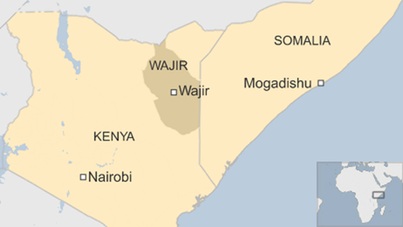
Wajir, the principal town of Wajir County in Kenya’s former Northern Frontier District (NFD), stands today not merely as a geographical location but as a living colonial archive, an urban space where the legacies of empire have not faded into history but instead continue to structure daily life, governance, mobility, and economic survival. The city, with an estimated population approaching 200,000, is a paradox: a county capital that should symbolize postcolonial progress yet instead reflects the deep continuity of colonial administrative logic, spatial segregation, and psychological governance. The colonial paddocking of sub-clans, the fear of security forces more than insurgents, the paralysis of civic services, and the normalization of political absenteeism all speak to a broader structural condition of Wajir as a city where colonial boundaries were never dismantled but internalized and reproduced across generations.
To understand Wajir is to understand the NFD as a colonial invention. When British colonial administrators annexed northern Kenya in the early twentieth century, they governed it not as an integral part of the colony but as a buffer zone between British East Africa and Italian Somaliland. The NFD was administered under special emergency-style regulations that restricted movement, economic exchange, and political participation. The logic was simple: contain the Somali pastoral population, fragment clan solidarity, and ensure surveillance through chiefs, scouts, and military outposts. Wajir became one of those strategic administrative stations—less a town than a controlled enclosure, a checkpoint society designed to discipline mobility and prevent political cohesion.
What remains striking is that the colonial “paddocking” mentality persists in spatial and social organization. In Wajir, neighborhoods are not merely residential units but are perceived through sub-clan affiliation, informal borders, and invisible lines of psychological control. Residents often internalize the notion that crossing into another sub-clan zone is not simply a matter of geography but a risk of suspicion, interrogation, or conflict. These invisible boundaries function like colonial reserve lines never formally codified in contemporary law, yet deeply embedded in everyday consciousness. The colonial archive is thus not only in government files or dusty registries; it is inscribed in the city’s urban fabric and in the mental maps of its inhabitants.
This spatial segmentation profoundly undermines economic life. Markets that should thrive through cross-clan exchange instead become constrained spaces where trust is negotiated cautiously. Traders frequently limit their operations to areas considered “safe” within their clan-dominated neighborhoods, reducing commercial integration and suppressing entrepreneurial expansion. Such economic fragmentation is not accidental; it mirrors colonial divide-and-rule strategies that discouraged unified markets among Somali pastoralists, who historically operated transboundary trade networks stretching across the Horn of Africa. By confining commerce within sub-clan paddocks, the colonial state effectively curtailed the development of a cohesive urban bourgeoisie in Wajir. Today’s restricted business environment reflects that unfinished colonial project.
The city’s atmosphere of fear is equally revealing. Contrary to external assumptions that insecurity in northern Kenya stems primarily from militant groups such as Al-Shabaab, many residents articulate a more complex reality: fear rooted in everyday encounters with state security apparatus. Decades of emergency rule, screening operations, and arbitrary detentions during the Shifta War of the 1960s established a precedent in which security forces became symbols of coercion rather than protection. That historical memory has not dissipated. In Wajir, the uniform itself often represents surveillance, interrogation, and administrative harassment. Carrying identification documents at all times becomes less a routine bureaucratic requirement and more a survival mechanism in a city conditioned to anticipate scrutiny.
This relationship between citizens and the state produces what may be called a colonial psychology of governance. Residents fear courts and administrative offices not because of abstract legal procedures but because justice is perceived as inaccessible, transactional, and punitive. Public services from hospitals to county offices are often experienced through informal payments and personal networks. The expectation that one must carry both identification and cash to access basic services signals not merely corruption but a deeper structural legacy: colonial administrations treated NFD residents as subjects to be controlled rather than citizens entitled to rights. Post-independence governance, rather than dismantling that framework, has in many ways inherited its logic.
Infrastructure deprivation further reinforces this colonial continuity. Wajir’s chronic shortages of electricity, water, reliable medical facilities, and paved roads are not simply developmental failures but manifestations of historical marginalization. Colonial authorities invested minimally in the NFD, viewing it as a security frontier rather than a productive economic zone. Postcolonial governments have struggled—or in some interpretations, failed—to reverse this neglect. The result is a city where electricity rationing is normalized, hospitals are overcrowded and under-resourced, and road networks remain inadequate for a county capital. These infrastructural gaps perpetuate the sense that Wajir exists outside the national developmental imagination.
The social rhythm of the city also reflects its constrained civic life. By 10:00 p.m., large parts of Wajir fall into near silence, resembling what some observers describe as a “graveyard city.” This quietness is not simply cultural conservatism; it is shaped by security anxieties, limited nightlife infrastructure, and economic stagnation. Urban vitality requires freedom of movement, consumer confidence, and reliable public services. Where residents fear night patrols, lack street lighting, and face limited business opportunities, nocturnal urban life withers. The colonial archive thus manifests not only in spatial segregation but in temporal discipline the city effectively “closes” itself as a precautionary routine.
Political engagement in Wajir, paradoxically, peaks during election seasons, when cash-for-vote practices become widely reported. The distribution of small sums of money, as little as around 1,000 Kenyan shillings, transforms political participation into a transactional ritual. This phenomenon is frequently blamed on politicians, yet it also reflects structural disenfranchisement. When citizens perceive that governance will remain distant and services unreliable regardless of electoral outcomes, immediate financial incentives appear rational. The deeper tragedy is that this practice reinforces the colonial logic of patronage, where local intermediaries—once colonial chiefs, now elected leaders mediate access to resources in exchange for loyalty.
The persistence of a “1945 colonial mindset,” as critics might term it, is not merely a community failure but a systemic condition. Colonial rule cultivated suspicion among clans, empowered selected elites as intermediaries, and normalized the presence of informants and scouts within local society. In contemporary Wajir, the idea that certain individuals act as unofficial “security eyes” within neighborhoods perpetuates a culture of caution and self-censorship. Whether these perceptions are always accurate is less important than their psychological impact: they condition residents to avoid collective political action and to limit open criticism of authority.
Elite political behavior further complicates the governance landscape. Many county-level leaders, once elected or appointed, maintain residences and business interests in major cities such as Nairobi or abroad in Dubai, commuting to Wajir primarily during official functions or campaign periods. This absentee governance creates a symbolic vacuum: offices appear staffed, yet decision-makers remain physically distant from the daily struggles of residents. The image of local officials traveling frequently for religious pilgrimages—publicized through social media selfies from holy sites—reinforces perceptions that political office serves personal prestige rather than community transformation. Such dynamics echo colonial administrative patterns in which district officers ruled remotely, visiting periodically to enforce authority without integrating into local life.
The presence of Wajir International Airport adds another layer to the city’s security-centered identity. While the airport theoretically connects Wajir to national and international networks, its heavy security oversight has also become emblematic of state surveillance in the region. Military and security operations conducted in and around the airport reinforce the perception that Wajir is primarily viewed through a national security lens rather than as a developmental priority. In this context, the authority of the Commander-in-Chief of the Kenya Defence Forces, currently President William Ruto, symbolizes centralized control over a peripheral region whose citizens often feel scrutinized rather than empowered.
The cumulative effect of these dynamics is the production of a debilitated urban environment: congested markets operating below potential, public offices lacking effective service delivery, and hospitals struggling with outdated infrastructure and sanitation challenges. The smell of neglect—literal and metaphorical—pervades institutional spaces that should embody public care. Such conditions contribute to migration aspirations among youth, who increasingly view Wajir as a place to depart rather than to invest their futures.
Yet to describe Wajir solely as a victim of colonial continuity would be incomplete. The city also embodies resilience shaped by pastoral traditions, Islamic scholarship, and cross-border cultural networks. Informal economies continue to function despite constraints, and community solidarity often mitigates institutional failures. Elders, religious leaders, and grassroots organizations play crucial roles in maintaining social cohesion and conflict resolution mechanisms outside formal state structures. These indigenous governance practices challenge the notion that Wajir is entirely immobilized; rather, they reveal a dual system in which colonial-state institutions coexist uneasily with community-based authority.
Nevertheless, the enduring colonial archive embedded in Wajir’s governance and spatial organization raises profound questions about Kenya’s postcolonial nation-building project. Why do emergency-era security logics still dominate administrative approaches to northern Kenya? Why has infrastructural investment lagged behind despite constitutional devolution intended to empower counties? And how does the persistence of sub-clan paddocking undermine the development of a shared civic identity beyond lineage affiliations?
One explanation lies in the structural inertia of state institutions. Bureaucratic systems often replicate inherited administrative routines because they provide predictable mechanisms of control. In regions historically designated as security frontiers, governments may prioritize surveillance and stability over participatory development, fearing that loosening control could invite instability. This logic, however, becomes self-defeating: the more citizens feel controlled and marginalized, the less trust they place in state institutions, reinforcing the very insecurity the state seeks to prevent. Another explanation involves political economy. Peripheral regions like Wajir hold limited immediate electoral or economic leverage at the national level, reducing incentives for sustained investment. When development funds do arrive, they are captured by local elites or diverted through patronage networks, perpetuating cycles of underdevelopment. Thus, the colonial archive is not merely historical memory but an active political economy that shapes resource allocation and governance priorities.
Ultimately, Wajir stands as a powerful case study of how colonial administrative designs can outlive formal colonial rule, shaping urban life decades after independence. The invisible paddocks dividing neighborhoods, the fear associated with security uniforms, the transactional access to public services, and the absentee political class collectively illustrate a city governed as much by inherited mental frameworks as by contemporary policy.
To transform Wajir requires more than infrastructural projects; it demands a decolonization of governance mentality—an intentional dismantling of divide-and-rule spatial logic, a rebuilding of citizen trust in legal institutions, civic education and a reinvention of political accountability rooted in local presence rather than remote control. Such transformation is possible but requires confronting uncomfortable historical truths.
The NFD was not merely neglected; it was deliberately structured as a controlled frontier. Recognizing this origin allows policymakers, scholars, and community leaders to design reforms that directly address the psychological and spatial legacies of that structure. Without such conscious reckoning, Wajir risks remaining what it has long been: a city that lives in the present yet is governed by the ghost of a colonial archive, its citizens navigating invisible borders drawn not on maps but in the enduring mindscape of empire.
By OBy Osman A Hassan
Email: abayounis1968@gmail.com
————–
Related articles
1) Mandera Through an Outsider’s Eyes- A Rejoinder By Hussien Mohamed Yusuf
2) Inherited Suspicion: Colonial Violence, State Terror, and the Making of Second-Class Somali Kenyans in the NFD/NEP, By Osman Ali Hassan
3) The Former Impeached Deputy President’s Dangerous Historical Salesmanship: Reviving Old Hatred and Ethic Divisions By Osman Ali Hassan
4) Garissa massacre in 2015 vs Wagalla massacre of Wajir in 1984 By Mohamed Yabarag