

By Hussien Mohamed Yusuf
I have read the piece by Osman A. Hassan, Inherited Suspicion: Colonial Violence, State Terror, and the Making of Second-Class Somali Kenyans in the NFD/NEP, published on WardheerNews, just one day after my first-ever visit to Mandera town. The timing was striking. I had returned from a short vsit that left me reflecting on how history, security paradigms, and governance choices shape everyday life in Kenya’s Northeastern region and how quickly these realities become normalized for those who live with them daily.
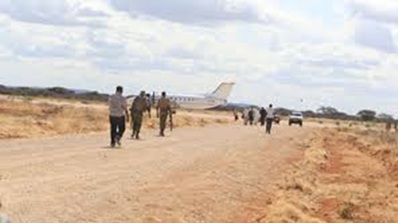
I am not Kenyan. I write these reflections as a visitor and as a professional who has travelled widely across the Horn of Africa for work related responsibilities. I have been to many borderland contexts and peripheral towns where the state’s presence is thin and infrastructure is uneven. Still, I was genuinely shocked when I landed at Mandera airstrip. It never crossed my mind that a county in Kenya, and especially a county so frequently discussed in national security and development conversations, would have an air facility in such a condition. What I saw did not feel like a place designed to serve civilian life, commerce, and dignity.
The surprise became heavier when I was told that the airstrip belongs to the Kenyan military and that Mandera does not have a civilian airport in the conventional sense. This single detail carries symbolic and practical weight. Civilian air connectivity in a remote border county is not a luxury. It is a pathway for medical evacuation, trade, investment, humanitarian logistics, education travel, and a basic sense of connection to the rest of the country. When a region’s air access appears primarily military, citizens can easily feel that the most organized face of the state is security rather than service. Even where officials justify such arrangements through risk management, the unintended message to ordinary people can be that civilian life comes second.
This is where Hassan’s argument lands strongly. His article frames the marginalization of Somali inhabited parts of Kenya as structural and inherited, rooted in colonial governance patterns and reproduced after independence through securitized administration and unequal investment. Readers can debate tone or emphasis, but the central point is difficult to ignore: when a region is treated first as a security zone, development becomes conditional, citizenship becomes negotiated, and public services arrive late, if at all.
My visit to Mandera also coincided with a public debate that had gone viral across social media and public commentary. Shortly before my trip, a Senate engagement with Mandera County officials was followed by widespread discussion about the alleged provision of “maize seedlings” to farmers. Many people reacted with disbelief because maize is commonly grown from seed, not seedlings. The story turned into national satire. Yet beneath the humor sat a serious governance question. When basic technical matters become public controversy, it raises concerns about planning, procurement discipline, extension services, and the systems that should prevent waste while protecting fragile livelihoods.
Some observers will explain such incidents by pointing to poor leadership at county level. Others will insist, as Hassan does, that the deeper problem is historical neglect, securitization, and a long pattern of unequal citizenship that weakens institutions and normalizes lower standards. In my view, these explanations are not mutually exclusive. Structural marginalization can explain why counties begin from behind in infrastructure and institutional capacity. It cannot, on its own, excuse repeated administrative failure, weak technical oversight, or opaque spending. At the same time, leadership critiques must not become an easy excuse to ignore national responsibilities and long term policy choices that have kept the region underdeveloped.
Hassan’s article also draws attention to the intergenerational psychological toll of such a history. Even a short visit can reveal how lived experience shapes public attitude. Where citizens have long associated authority with coercion or suspicion, mistrust becomes rational. Where promises have been made repeatedly without delivery, cynicism becomes a form of self-protection. Over time, this produces something more damaging than poverty: a lowered expectation of what the state is supposed to provide. When the unacceptable becomes normal, accountability becomes harder to sustain.
Yet this is not the whole story. Northeastern Kenya also carries strong evidence of resilience and capability. It is a region with commercial networks, cross border linkages, and communities whose economic creativity has often advanced faster than the public infrastructure around them. A county positioned at the meeting point of Kenya, Ethiopia, and Somalia should be seen not only through the lens of security threats, but also as a potential hub for trade, livestock value chains, regional cooperation, and climate resilience innovation. The language used to describe a place influences the policies applied to it. If a region is framed only as a risk, then investment becomes hesitant and securitized. If it is framed as an asset, policy becomes enabling.
A constructive rejoinder must therefore move from diagnosis to practical direction. Five areas stand out.
First, development planning should not be organized primarily through a security framework. Security concerns exist, but roads, hospitals, schools, water systems, and civilian transport infrastructure should be planned and delivered as public goods and rights, not as security concessions.
Second, trust requires rule based governance and real oversight. Where misconduct occurs, investigations must be credible, transparent, and followed by consequences. Professional security work and citizen trust are not enemies. They depend on each other.
Third, county service delivery must be anchored in technical rigor. Agricultural support should be based on sound agronomy, appropriate procurement, and clear extension messaging. If an intervention is mistaken, leadership should correct course openly and quickly.
Fourth, public financial transparency must become accessible to ordinary citizens. Budgets, procurement details, project status, and service delivery indicators should be communicated in plain language so communities can see what was promised, what was funded, what was delivered, and what outcomes were achieved.
Fifth, stigma must be challenged deliberately. When identity is treated as suspicion, policy becomes distorted and cohesion suffers. Responsible political leadership, media professionalism, and civic education all matter in dismantling harmful stereotypes.
These reflections are offered with humility. A visitor cannot own a community’s history, and I do not claim to speak for residents of Mandera, Garissa, or Wajir. Yet sometimes an outsider’s first encounter reveals what familiarity has been forced to normalize. My arrival at Mandera airstrip, and the conversations around everyday governance debates, made one point clear: infrastructure is not only concrete and tarmac. It is a statement about whose mobility is prioritized, whose economy is enabled, and whose dignity is taken seriously.
Hassan’s article challenges Kenya to confront an inherited system of suspicion and exclusion. My brief visit suggests that the legacy of that system is still visible not only in memory, but also in the physical and administrative reality of public life. If the future of the region is to be defined by dignity rather than inherited pain, then the work must be both national and local: sustained investment, de securitized development, accountable leadership, and a firm commitment to equal rights in practice. Only then can Northeastern Kenya be spoken about not mainly as a zone of threat, but as a region of opportunity fully connected to the promise of modern governance.
Hussien Mohamed Yusuf
Email: Hussienm4@gmail.com