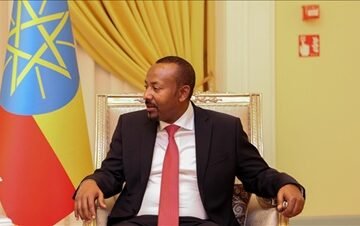
By Abdikarim Haji Abdi Buh Ethiopian Prime Minister Abiy Ahmed has secured one of the most overwhelming electoral victories in modern African political history, with his Prosperity Party officially winning 438 of the 501 parliamentary seats contested in the country’s latest general election. On paper, the result portrays a nation united behind its leader. On...
The Credibility Challenge Facing Somalia’s Opposition
By Ahmed Abdihakim Yusuf For any democratic system to function effectively, political power must be balanced by strong institutions and meaningful oversight. Beyond the three traditional pillars of government, the Legislature, the Judiciary, and the Executive, a credible and principled opposition is indispensable. Opposition parties and political movements play a critical role in safeguarding democracy...
Can Somalia Rise Again?
By Farah Aw-Osman Sometimes I ask myself a painful question: how did a people with one language, one religion, one culture, and one ethnicity end up becoming one of the longest collapsed states in the world? The truth is, Somalia did not collapse in one day, and it did not collapse because of one clan...
Somalia at a crossroads: Three decades of state reconstruction and Questions of monopoly of force
By Omar Abdi Shire Introduction Somalia remains one of the world’s fragile states. More than three decades after the collapse of the central government in 1991, the country continues to struggle with institutional weakness, dependence on external actors, social fragmentation, and a profound deficit of political trust. Yet after thirty years of state-building efforts, an...
Democracy in Retreat: The Hollowing Out of Puntland’s Institutions and the Rule of Law
By Mohamed A Yasin Puntland was once celebrated as one of Somalia’s most successful political experiments. Established in 1998 amid the collapse of the Somali state, it earned a reputation for relative stability, grassroots governance, and institutional development. While much of the country struggled with conflict and political fragmentation, Puntland presented itself as a model...
Leadership, Accountability, and the Puntland Question: A Debate Triggered by the Vice President’s Remarks
By Yusuf Said Hersi Few political statements in Puntland have generated as much discussion in recent weeks as the remarks delivered by Puntland’s Vice President, who declared: “Any official responsible for Puntland must exercise authority wherever they serve and confront opposition. If they are unable to do so, they should leave office.” At first glance,...
From proposal to Implementation: The legal, institutional, and civic architecture of Somalia’s two-year technocratic transition
By Dr. Abdirahman Mohamed Abdi Hashi, PhD, CPA Somalia: The way forward: Fourteen years later– Phase II The first paper, Somalia: The Way Forward — Fourteen Years Later, established the moral, constitutional, and political case for a two-year technocratic transition. It argued that Somalia cannot continue recycling indirect 4.5 politics, nor can it credibly rush into...
Somaliland Defies OIC, UN and Arab League with Jerusalem Embassy Opening
By Abdiqani Haji Abdi In a move likely to reverberate across the Middle East, the Horn of Africa, and the wider Muslim world, Somaliland President Abdirahman Mohamed Abdullahi “Cirro“ has officially inaugurated Somaliland’s new embassy in Jerusalem, marking one of the most consequential and controversial diplomatic decisions in Somaliland’s modern history. According to a statement...
I Am Somali: Tall, and I Don’t Want to Be Hidden
By Eng Mohamed Ali Mirreh For years, Somalis living in the United States and Europe have found themselves in the media spotlight. Whether in political debates, social commentary, or news reports, Somali immigrants appear more frequently than many other communities of similar size. Their visibility raises a question that many observers struggle to answer: Why...
The Rhetoric of “Civilizational Erasure”: Historical Distortion and Hyperbole in Contemporary Transatlantic Politics
By Buraale Xiniin Abstract This essay examines the growing intersection of right-wing populism, xenophobic rhetoric, and the manipulation of historical memory within the contemporary transatlantic alliance. Focusing on recent actions by European leaders, specifically the newly appointed Slovenian Prime Minister Janez Janša, and controversial rhetoric from high-ranking American officials like Secretary of Defense Pete Hegseth...