
By Ahmed Abdihakim Yusuf
For any democratic system to function effectively, political power must be balanced by strong institutions and meaningful oversight. Beyond the three traditional pillars of government, the Legislature, the Judiciary, and the Executive, a credible and principled opposition is indispensable. Opposition parties and political movements play a critical role in safeguarding democracy by scrutinizing government actions, holding leaders accountable, offering alternative policy visions, and ensuring that no administration operates without checks and balances.
In Somalia’s fragile political environment, where democratic institutions remain in the process of consolidation, the role of the opposition is even more important. The opposition serves not merely as a political rival to the government of the day, but as a guardian of constitutionalism, national unity, and public accountability. Its legitimacy depends on consistency, credibility, and a demonstrated commitment to principles that transcend short-term political interests.
Nevertheless, recent developments within the Mogadishu opposition have generated widespread debate and raised serious questions among ordinary Somalis and political observers. For the past several years, opposition leaders have been among the strongest critics of President Hassan Sheikh Mohamud and his administration, particularly regarding two issues that many Somalis consider to be of historic national significance: the controversial constitutional changes and the government’s proposed electoral framework. On both issues, opposition leaders have argued that major constitutional and electoral changes should emerge from broad national consensus rather than unilateral political action.
Many Somalis have viewed these concerns as legitimate and worthy of serious consideration. The opposition’s stance has therefore been seen by many as an effort to defend constitutional order, preserve political inclusivity, and prevent the excessive concentration of power within the executive branch.
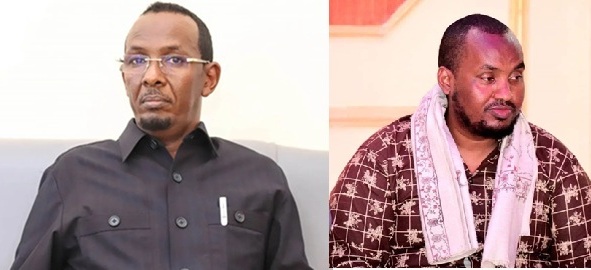
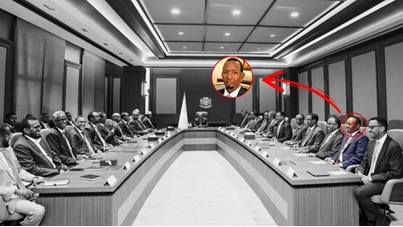
It is particularly astounding to see the emergence of Abdullahi Mohamed Ali (Sanbaloolshe) as a prominent figure within the opposition camp. Until recently, Sanbaloolshe was widely recognized as the key emissary of President Hassan Sheikh’s political agenda. He occupied influential positions within the government and frequently served as one of the administration’s most visible political loyalist. Indeed, only a short time ago, he represented on behalf of President Hassan in sensitive political negotiations with President Ahmed Madobe of Jubaland, Future Forum, the Salvation oppositions supporting and defending many of the very policies that the opposition has spent years challenging.
Certainly, individuals can change their minds or positions. Political leaders, like all people, have the right to reassess their views, alter their convictions, and even switch political allegiances. Such transformations are neither uncommon nor inherently objectionable in democratic politics. A genuine change of heart, when accompanied by reflection and transparency, can even be a sign of political maturity.
However, that is not the central issue. The real question is whether someone who only recently stood at the forefront of defending a particular political project or principle should immediately be elevated to a leadership role in the movement opposing that same principles. Changing sides is one thing; being entrusted to lead the very cause one was vigorously opposing only yesterday is quite another! Such a decision inevitably raises concerns about credibility, consistency, and political judgment.
A principled opposition should be built around individuals whose commitment to its core objectives has been demonstrated over time. When leadership positions are quickly handed to recent converts, especially those who previously championed the policies under criticism and disagreements, it risks undermining public confidence and diluting the moral authority of the opposition itself.
Moreover, Sanbaloolshe’s political record presents additional concerns. He has often been seen of resorting to divisive clan-based rhetoric and political mobilization when it serves his immediate interests. Rather than advancing a unifying national vision, he has repeatedly engaged in tribalistic political narratives that deepen social divisions and inflame tensions among Somali communities.
Particularly troubling is his tendency to invoke painful memories of Somalia’s civil war and historical grievances through the lens of clan politics whenever he perceives an opportunity for political gain. Such rhetoric may generate short-term political advantages, but it often comes at the expense of national cohesion, reconciliation, and long-term state-building efforts. Somalia’s future depends on moving beyond the politics of division and mistrust, not reviving the wounds of the past for temporary political benefit as known for Sambalooshe.
The opposition, if it seeks to present itself as a credible alternative to the current administration led by Hassan Sheikh, must therefore ask itself a fundamental question: what values and standards define its leadership? If its objective is to promote a new political culture based on accountability, inclusivity, and national unity, then the character, record, and conduct of those elevated to leadership positions matter greatly.
This is not simply about one individual. It is about the broader message being sent to the Somali public. If politicians can move effortlessly between opposing camps without clearly accounting for their previous positions, and if they can be immediately placed at the helm of causes they recently opposed, citizens may reasonably conclude that Somalia’s political struggles are driven less by principles and policy differences than by shifting alliances and personal ambitions.
The issue, therefore, is not whether Sanbaloolshe has the right to join the opposition. He undoubtedly does. The issue is whether the opposition strengthens or weakens its own credibility by placing such a controversial and recently converted political figure at the forefront of a movement built around resisting policies he once vigorously defended.
For many Somalis, that question remains unanswered. Until it is addressed convincingly, doubts will continue to linger, not only about Sanbaloolshe’s political transformation, but also about the coherence, integrity, and long-term vision of the opposition itself.
Another surprising development further highlights the growing questions surrounding the opposition’s coherence and political identity. Reports and political discussions suggest that majority within the opposition are actively seeking the support and in some cases the political elevation of Liban Ahmed Hassan, known as Liban Shuluq, a controversial figure widely known for his involvement in the Qat (Jad) trade and alleged connections to arms trafficking for Galmudug presidentcy. What makes this particularly noteworthy is that Liban Shuluq is also viewed favorably by President Hassan Sheikh Mohamud and his political allies.
If both the government and the opposition are competing for the backing of the same controversial figures, it inevitably raises fundamental questions about what truly distinguishes the two camps. Political competition in a democracy is expected to be driven by differences in vision, policy, leadership, and principles. Yet when the same personalities are embraced by both sides despite concerns surrounding their records and reputations, the distinction between government and opposition becomes increasingly blurred.
This development reinforces a perception already held by many Somalis: that political alignments in Mogadishu are too often shaped by expediency, personal networks, and short-term calculations rather than by clearly defined principles or ideological convictions. As a result, citizens are left wondering whether the contest is genuinely about competing visions for Somalia’s future or merely about who occupies positions of power.
The simultaneous courting of controversial figures such as Sanbaloolshe and Liban Shuluq risks undermining the opposition’s claim that it represents a fundamentally different political alternative to the current administration. Instead of presenting a clear contrast to the governing establishment, such actions can create the impression that the same political culture is being reproduced under a different banner.
Perhaps most concerning is the message this sends to the Somali public. At a time when citizens are demanding greater accountability, stronger institutions, and leadership grounded in national interests, the willingness of both camps to seek the endorsement of the same controversial actors suggests that political influence may still outweigh considerations of integrity, public trust, and national reconciliation.
The result is an increasingly blurred line between the Mogadishu opposition and President Hassan Sheikh’s political camp. When the same figures are welcomed by both sides, the public is left to ask a simple but important question: beyond personalities and political positioning, what meaningful differences actually separate the opposition from the government it seeks to replace?
Ahmed A. Yusuf
Email: aayuusuf44@gmail.com
_____________
Related Articles:
Why Sanbaloolshe is still in the room By Abdijalil Osman
Muqdisho blasts: Tears were our only hope By WardheerNews
MP Gurey’s threat over Sanbaloolshe’s dismissal By Ahmed A. Yusuf