
By Eng Mohamed Ali Mirreh
For years, Somalis living in the United States and Europe have found themselves in the media spotlight. Whether in political debates, social commentary, or news reports, Somali immigrants appear more frequently than many other communities of similar size. Their visibility raises a question that many observers struggle to answer: Why are Somalis so prominent wherever they settle?
To understand this, one must return to the long arc of Somali history, a history shaped by resilience, pride, and an unbreakable sense of identity.
A People Formed by Hard Land and Hard Choices
Somalis have historically been nomads, navigating the unforgiving plains of the Horn of Africa. Life in this environment demanded toughness, mobility, and a strong communal identity. Poetry, oral tradition, and clan structures evolved not as luxuries but as survival tools.
Early foreign travelers, British explorers like Richard Burton, Italian administrators, and Arab chroniclers wrote extensively about Somalis. They described them as proud, articulate, fiercely independent, and unwilling to be ruled by outsiders. Burton famously observed that Somalis were “a nation of poets,” highlighting their sharp intellect and mastery of language.
This was not flattery; it was recognition of a people who carried themselves with confidence even in the harshest conditions.
Resistance Against Foreign Aggression
When European colonial powers carved up Africa, Somalis did not submit quietly.
The most iconic resistance was that of the Dervishes led by Sayyid Mohamed Abdulle Hassan, who fought British and Italian forces for twenty years, from 1899 to 1920. This struggle remains one of the longest anti‑colonial movements in African history.
Somalis resisted not because they were militarily superior, but because they refused to accept domination. This spirit of defiance became a defining feature, deep-seated in Somali identity.
A Nation Rising Before the Collapse
Before the collapse of the Somali state in 1991, Somalia was far from the failed‑state image that later dominated global media. In the decades following independence, the country made remarkable progress:
- Education was free and accessible, including special programs for nomadic communities.
- Healthcare was free, supported by a network of hospitals and clinics.
- Somalia achieved near self‑sufficiency in food production during the 1970s.
- The country produced Africa’s first female fighter pilot, Captain Asli Hassan Abade.
- Somalia supported African liberation movements, including the ANC in South Africa, the Eritrean struggle, and anti‑colonial movements in Mozambique and Guinea‑Bissau.
Mogadishu was known as the “White Pearl of the Indian Ocean,” a city of culture, diplomacy, and ambition.
The Collapse: A Conspiracy and a Tragedy
The collapse of Somalia in 1991 was not merely an internal failure. It was the result of a complex web of Cold War politics, regional rivalries, and foreign interference. Arms poured into the country, alliances shifted, and opportunistic local actors—what can be called “useful idiots”—allowed external powers to manipulate clan tensions.
The result was catastrophic: the disintegration of central authority, civil war, famine, and the largest displacement in Somali history.
This collapse triggered a massive wave of migration. Somalis fled first to Kenya, Ethiopia, and Yemen, and later to Europe, North America, and Australia. They carried with them their culture, their faith, and their unshakable sense of identity.
A Global Diaspora That Refuses to Be Hidden
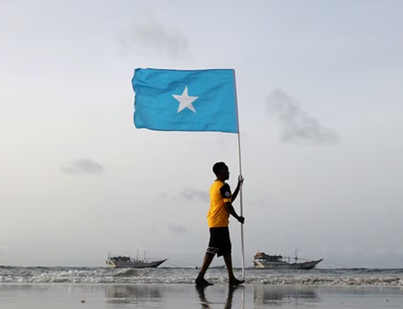
Wherever Somalis settle, they rarely fade into the background. They stand tall—both in presence and in spirit—and their visibility is no accident. It is the natural expression of a people shaped by centuries of resilience, self‑confidence, and an instinctive refusal to be diminished. This visibility is sometimes celebrated and sometimes misunderstood, but it is always unmistakable.
A recent incident captures this reality with painful clarity. A respected Somali international football referee, well known across Africa and recognized by global sports bodies was denied entry into the United States despite holding valid documentation and having officiated major international matches. He had been selected to officiate in the ongoing World Football Cup in North America—a rare honor that reflected not only his technical mastery of the game but also the international respect he had earned over years of distinguished service. Yet upon arrival, he was detained, questioned, and ultimately turned away without a clear explanation.
The news reverberated through Somali communities worldwide, who saw in his treatment a familiar pattern: Somalis being viewed with suspicion not because of anything they have done, but because of who they are. This referee was not a political figure, not a security risk, not an unknown traveler. He was a respected professional whose only “offense” was belonging to a highly visible community. His experience became a symbol of how Somali identity—proud, tall, and unmistakable—can attract both admiration and unfair scrutiny.
This leads to the question that puzzles many observers: Why are Somalis so visible wherever they go? The answer lies in a combination of cultural traits, historical habits, and the way Somali communities integrate into public life. Somalis tend to rise quickly into leadership roles, often faster than other immigrant groups. This is evident in the political sphere, where figures like Ilhan Omar have broken barriers in the U.S. Congress, and where Somali mayors and city council members now serve in cities across Minnesota, Ohio, Maine, and several parts of the United Kingdom. It is visible in business, where Somali entrepreneurs have built logistics companies, restaurants, retail chains, and tech startups. It is evident in sports, where athletes such as Abdi Bile and Mo Farah have become global icons. Leadership comes naturally to a people raised in a culture of debate, poetry, and public speaking—skills that translate seamlessly into civic life.
Somalis also do not hide their religion or culture. They practice their faith openly, maintain their traditions proudly, and build community institutions wherever they settle. Their modest dress, their mosques, their community centers, and their bustling Somali-owned businesses make them stand out in multicultural societies. This visibility is not a rejection of integration; it is an affirmation of identity.
Their contributions to host countries are equally visible. Somalis work in healthcare, transportation, education, public service, and small business. In Minnesota alone, Somali-owned enterprises contribute hundreds of millions of dollars to the local economy. They fill essential roles, start new ventures, and revitalize neighborhoods. Their presence is felt not only in cultural spaces but in the economic and civic life of the cities they call home.
But visibility has a double edge. It brings recognition, but it also brings scrutiny. Recent corruption cases in Minnesota were widely reported, but they were not unique to Somalis; many immigrant groups have faced similar issues. The difference is that Somalis are highly visible, and visibility magnifies both achievements and controversies. The overwhelming majority of Somali immigrants are hardworking, law‑abiding, and community‑oriented, yet their prominence means that any misstep—real or perceived—draws disproportionate attention.
Somalis do not choose visibility for its own sake. It is simply who they are: a people shaped by history, strengthened by adversity, and grounded in a culture that values voice, dignity, and presence. They stand tall not to be noticed, but because they were never meant to be hidden.
Conclusion: A People Who Refuse to Be Hidden
Somalis have endured colonialism, dictatorship, state collapse, famine, and displacement—yet in every corner of the world, they continue to rise, often faster and more visibly than anyone expects. Their resilience is not accidental; it is the product of a long history that taught them how to survive hardship without losing dignity. Their culture instilled in them a deep sense of confidence, a belief that one’s voice matters and should never be silenced. Their faith provided discipline and moral grounding, shaping communities that remain cohesive even in foreign lands. And their experience as a global diaspora sharpened their ability to adapt, rebuild, and succeed in environments far removed from the plains of the Horn of Africa.
Wherever Somalis go, they stand tall—not because they seek attention, but because history has shaped them into a people who simply cannot be hidden.
Eng Mohamed Ali Mirreh
Email: m.mmirreh@gmail.com