
By Abdikarim Haji Abdi Buh
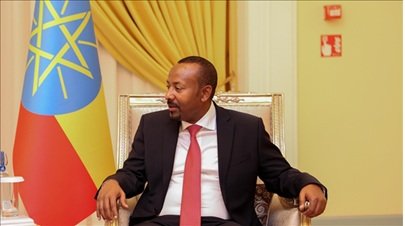
Ethiopian Prime Minister Abiy Ahmed has secured one of the most overwhelming electoral victories in modern African political history, with his Prosperity Party officially winning 438 of the 501 parliamentary seats contested in the country’s latest general election.
On paper, the result portrays a nation united behind its leader. On the ground, however, Ethiopia remains a country fractured by war, insurgencies, ethnic tensions, humanitarian crises, and deep political divisions. The extraordinary scale of the victory has left many observers stunned.
A parliamentary majority is one thing. A supermajority is another. But winning 438 seats out of 501—nearly 90 percent of the legislature—in a country where multiple regions remain engulfed in conflict has prompted serious questions about how representative the election was of Ethiopia’s political realities.
The official results clear the way for Abiy Ahmed and the Prosperity Party to form the next government and secure another term in office. Supporters of the Prime Minister celebrated the outcome as proof that Ethiopians continue to back his leadership despite years of instability and economic hardship.
For critics, however, the results appear almost surreal. The numbers suggest overwhelming national consensus at a time when large parts of the country appear anything but united. Perhaps nowhere is this contradiction more visible than in the Amhara region.
For more than two years, Amhara has witnessed escalating conflict between federal forces and the Fano movement, a powerful armed resistance network that has challenged the authority of Addis Ababa across large areas of the region. Reports of battles, military operations, drone strikes, arrests, and civilian displacement have become routine. In many districts, government control is fiercely contested. Yet despite this reality, the ruling party emerged from the election with a near-total parliamentary victory.
The same questions apply to Oromia, Ethiopia’s largest and most populous region. The Oromo Liberation Army (OLA) continues to wage an armed insurgency against the federal government. Clashes between government troops and rebel fighters have persisted across multiple zones, creating an environment where security remains fragile and political tensions remain high.
Opposition groups in Oromia have repeatedly accused the government of restricting political space and suppressing dissent. Against that backdrop, many analysts are struggling to reconcile the image of a country experiencing active rebellion with election results suggesting near-universal support for the ruling party.
The situation becomes even more striking when considering Tigray. The northern region, devastated by one of Africa’s deadliest conflicts in recent history, was effectively excluded from the election process.
The war that erupted in 2020 left hundreds of thousands dead according to some estimates and displaced millions. Although the 2022 Pretoria Peace Agreement formally ended major hostilities, Tigray remains politically unstable and economically shattered.
More than six million people and dozens of parliamentary constituencies did not meaningfully participate in the vote. In practical terms, one of Ethiopia’s most important regions was absent from an election that nonetheless delivered one of the largest victories ever recorded by a governing party.
For many observers, that reality alone raises questions about the comprehensiveness of the electoral process. Even election day itself highlighted the country’s security challenges. According to reports, 143 polling stations in the Amhara and Oromia regions failed to open because of security concerns.
The Fano movement and the Oromo Liberation Army openly rejected both the electoral process and its outcome. Yet despite the inability to conduct voting in numerous locations, despite ongoing insurgencies, and despite the exclusion of Tigray, the final results produced a parliamentary map dominated almost entirely by the Prosperity Party.
Political analysts note that genuinely competitive elections in deeply polarized societies rarely generate such lopsided outcomes. History shows that elections held amid active conflict often produce fragmented mandates, coalition governments, or closely contested results.
Ethiopia’s outcome was the opposite. The Prosperity Party emerged not merely victorious but overwhelmingly dominant. The contrast has drawn comparisons among some observers to electoral outcomes historically associated with dominant-party systems rather than fiercely contested democracies.
Government supporters strongly reject such criticism. They argue that armed groups do not represent the views of ordinary citizens and insist that millions of Ethiopians continue to support Abiy Ahmed’s vision for national unity, economic modernization, and state-building.
They point to major infrastructure projects, economic reforms, and efforts to expand Ethiopia’s regional influence as evidence that the Prime Minister retains substantial public support. Indeed, Abiy Ahmed remains one of Africa’s most recognizable political figures. When he first came to power in 2018, he was celebrated internationally as a reformer.
His promises of political liberalization, national reconciliation, and democratic opening generated enormous optimism both inside Ethiopia and abroad.
His role in ending decades of hostility between Ethiopia and Eritrea earned him the 2019 Nobel Peace Prize and elevated his global profile. Yet the years that followed proved far more turbulent than many anticipated.
Ethnic violence intensified. Political tensions deepened. Armed conflicts spread across multiple regions. The devastating war in Tigray fundamentally altered perceptions of Ethiopia’s democratic transition.
Today, Abiy begins another term facing challenges that remain largely unresolved:
1) The Amhara conflict continues.
2) The Oromia insurgency remains active.
3) Tigray remains fragile.
4) Economic pressures continue to burden millions of Ethiopians and
5) The humanitarian consequences of years of conflict remain immense.
For many observers, therefore, the central question is not whether Abiy Ahmed won the election.Officially, he did—and by a historic margin.
The more important question is whether such an overwhelming electoral mandate accurately reflects conditions in a nation where large sections of the population continue to experience instability, insecurity, and political alienation.
Winning elections is ultimately easier than winning peace. A parliamentary supermajority can pass laws, approve budgets, and dominate political institutions. It cannot by itself resolve armed rebellions, heal ethnic divisions, or restore trust among communities scarred by years of conflict.
The election may have delivered another commanding victory for Abiy Ahmed and his Prosperity Party. But it has also highlighted one of the great paradoxes of contemporary Ethiopia: a government powerful enough to secure nearly 90 percent of parliament, yet still confronted by wars, insurgencies, and unrest across some of the country’s most strategically important regions.
That contradiction is likely to define Abiy Ahmed’s new term far more than the impressive numbers recorded on election night.
Abdikarim Haji Abdi Buh
Email: abdikarimshak@gmail.com
Leave a Reply