
By Mohamed A Yasin
Puntland was once celebrated as one of Somalia’s most successful political experiments. Established in 1998 amid the collapse of the Somali state, it earned a reputation for relative stability, grassroots governance, and institutional development. While much of the country struggled with conflict and political fragmentation, Puntland presented itself as a model of constitutional order and democratic aspiration.
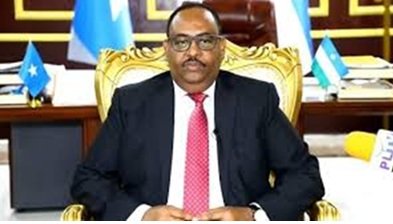
Today, however, many residents fear that legacy is being steadily dismantled. Since President Said Abdullahi Deni secured a second term in office, concerns over governance, accountability, and the concentration of power have intensified. Puntland’s democratic institutions have weakened dramatically, leaving the region increasingly dependent on presidential authority rather than constitutional checks and balances.
The most visible casualty has been the Puntland Parliament. The Puntland House of Representatives was designed to serve as the primary institution responsible for overseeing government actions, scrutinizing public spending, and holding the executive branch accountable. Yet in recent years, lawmakers have largely remained silent while major political and administrative decisions have been made without debate or public scrutiny.
For many Puntland citizens, Parliament has become a symbolic institution, existing on paper but increasingly absent from the governance process. This perception has been reinforced by the recent emergence of more than twenty legislators who have begun publicly questioning government conduct and demanding accountability. Their sudden activism has generated headlines, but also skepticism.
Many citizens are asking an uncomfortable question: Where were these voices during the years when constitutional disputes, controversial appointments, and governance concerns were unfolding?
After years of apparent silence, some observers view the recent criticism not as a democratic awakening but as another chapter in Puntland’s increasingly transactional political culture, where principles often appear secondary to political calculations and personal interests.
Equally troubling is the condition of the judiciary. An independent judiciary serves as the cornerstone of any functioning democracy. It protects citizens from abuse of power, guarantees equal application of the law, and provides an avenue for resolving disputes peacefully.
Yet legal professionals and civil society activists increasingly describe Puntland’s judicial system as weakened, vulnerable to political influence, and incapable of operating as an effective check on executive authority. When courts lose independence, citizens lose confidence that justice can be obtained through lawful means. In such circumstances, political power begins to replace legal principle, and institutions become instruments of authority rather than guardians of rights.
The growing centralization of power has extended deep into the executive branch itself. Government ministers, who are constitutionally tasked with managing public institutions and implementing policy, are frequently operating with no independent authority. Decisions that would ordinarily fall within ministerial mandates are increasingly concentrated within the presidency.
Former officials privately describe a system where even routine administrative matters often require presidential approval, creating bottlenecks, weakening institutions, and discouraging professional initiative. As power becomes concentrated in the hands of President Said, governance inevitably becomes more fragile. Institutions stop functioning as institutions and instead become extensions of individual authority.
The President’s frequent overseas travel has also become a source of public controversy. Particular attention has focused on repeated visits to the United Arab Emirates, where significant agreements and government business are reportedly discussed and finalized. Many of these engagements occur without the participation of relevant ministers, technical experts, or parliamentary oversight mechanisms.
Adding to public concern is the perception that family members and close associates often accompany official delegations while institutional representation remains limited. The absence of transparency has fueled speculation and mistrust. Citizens increasingly ask who negotiates these agreements, what commitments are being made on behalf of Puntland, and whether public interests are adequately protected.
In healthy democracies, major agreements involving public resources, security, infrastructure, or foreign partnerships are subjected to scrutiny and public debate. In Puntland, critics argue, such decisions increasingly occur behind closed doors.
Nowhere is the crisis of governance more visible than in the treatment of civil servants and security personnel.
For years, delayed salary payments have become normalized. Civil servants often receive salaries for only four or five months of the year, forcing many families into financial hardship and uncertainty. Teachers, health workers, and government employees routinely struggle to survive despite performing essential public functions.
The situation within the security sector is equally alarming. Police officers and soldiers tasked with protecting Puntland’s stability frequently face lengthy salary delays. In many cases, months pass without payment, leaving personnel frustrated and demoralized.
A disturbing pattern has emerged. Rather than receiving attention through institutional channels, security forces often resort to blocking roads, staging protests, or publicly expressing grievances before action is taken. Only then do authorities move quickly to address their concerns. The message this sends is deeply damaging. It suggests that peaceful complaints are ignored while pressure backed by armed personnel receives immediate attention.
Such a dynamic undermines discipline, weakens state institutions, and creates dangerous incentives within the security sector. More broadly, it reflects a government increasingly reactive rather than responsive—addressing crises only after they become public emergencies.
The cumulative effect of these developments is a growing sense of despair among many Puntland residents. The institutions that once distinguished Puntland from much of Somalia—its Parliament, judiciary, civil service, and constitutional framework—are increasingly viewed as weakened or ineffective. Public trust, once one of Puntland’s greatest strengths, is steadily eroding.
Yet the crisis extends beyond any single administration or political figure. At stake is the future of Puntland’s founding vision itself. The region was built on principles of consultation, power-sharing, constitutional governance, and collective responsibility. Those principles enabled Puntland to survive periods of national collapse and regional instability.
If those foundations continue to erode, Puntland risks becoming a state where institutions exist only in form while real authority is concentrated elsewhere. History offers a sobering lesson: democracies rarely collapse overnight. They weaken gradually—through silence, complacency, institutional decay, and the normalization of unchecked power.
For many Puntlanders, the question is no longer whether democratic institutions are under strain. The question is whether there is still time to restore them before the damage becomes irreversible.
Mohamed A Yasin
Email: moyasin680@gmail.com