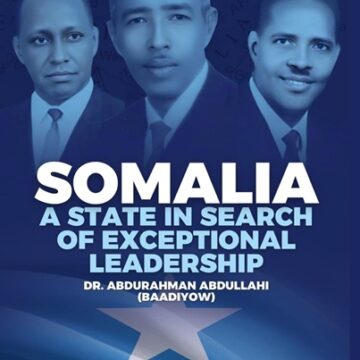
Reviewed By: Dr. Abdulkadir Osman Farah Author: Dr Abdurahman Abdullahi (Baadiyow)Publisher:Looh Press, England, UKYear: 2025Pages: 386 pages Wise leadership Once, Garaad Xirsi Faarax Xirsi (Wiilwaal), a traditional Somali leader, challenged his people, as he often did. He asked them to identify the core element that shapes social and political organisation among disputing men—and occasionally women....
A Defense Without Answers: Shapeshifting Leadership, Clan Optics, and the Questions Facing President Mustafe
By Shukri Mohammed I have read the articles by Abdi Sheik and Mohamed Olad, and before even turning to their content, one preliminary issue deserves attention. The intent and the names of Olad’s article were to fan an already perceived low-intensity conflict between two clan groups in the Hiiran Zone of Somalia. As the original...
A Political System Without Memory, A Nation Without Direction
By Dayib Sh Ahmed I was truly surprised and deeply troubled. What is wrong with Somalis? It seems we have learned nothing from what we have gone through. We keep repeating the same failures we experienced before, yet we still expect success. As the famous saying goes, “Insanity is doing the same thing over and...
Somalia’s Oil Finds: Is it an overhype or a game changer?
By Eng Mohamed Ali Mirreh Few issues have polarized Somalia’s political and economic discourse as sharply as recent oil discoveries. Government officials hail them as a historic breakthrough capable of transforming the nation’s fortunes, while critics dismiss the excitement as politically motivated hype detached from reality. The truth lies somewhere in between: Somalia’s geological potential...
Somalia’s lost century, the recurring illusions & the way out
By Aden M. Ismail Introduction. This essay is prompted by another published in WardheerNews on the “Incomparability” of Turkey’s relations with Somalia by Omar A Shire. Its argumentative spine is that Somalia’s recovery cannot be outsourced, just as its collapse cannot be entirely blamed on external factors. The problem is a chronically underdeveloped local political...
Somalia’s Turkey Hydrocarbons Agreement: Who Had the Authority to Sign It? Part III
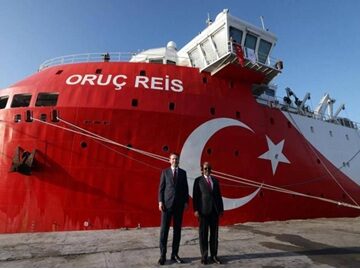
By Isha Qarsoon This is the third of three analytical essays examining the Agreement in the Field of Hydrocarbons concluded between the Government of the Republic of Turkey and the Federal Government of the Federal Republic of Somalia, signed in Istanbul on 7 March 2024 (the “Agreement”). The first essay examined what operational and regulatory...
Somalia’s Political Class and the Fate of the State, 1925–Present: A Strategic Historical Analysis Part IIA
By Abdisaid M. Ali The Civilian Republic, 1960 to 1969: National Unity of Purpose, Constitutional Rule, and the Incomplete State Formation Part II is divided in two because Somalia faced the same state formation challenge under two different political orders. The first sought to build the republic through constitutional rule, parliamentary politics, and gradual institutional...
Revenge crime from an Islamic perspective
By Sheikh Abdunasir Jamac Warsame, PhD Concept of Revenge Revenge is an unjustified killing and counter-killing.What constitutes revenge? It refers to the act of inflicting harm or pain on another individual without engaging in any criminal activity. It is impossible to locate a society devoid of all types of crime or an ideal society that...
The Prince, the Illusion, and the State: Somalia’s Unfolding Crisis
By Abdullahi A. Nor As Somalia’s leadership grows increasingly insulated, the gap between perception and reality is widening, raising fears of institutional breakdown at a critical national moment. When power stops listening, history suggests the fall is not gradual, it is sudden. There is an old story from the era of the Buyid dynasty. A...
Diplomacy beyond rhetoric: An incomparable ally for Somalia
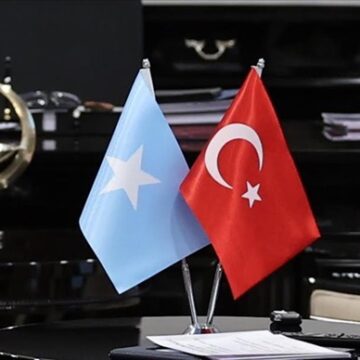
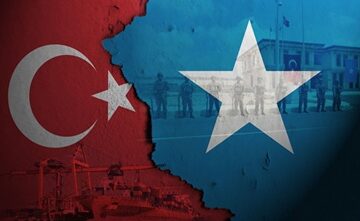
By Omar Abdi Shire Abstract This article, the first in a series of multi-perspective writings on Somalia–Turkey relations, examines the distinction between rhetorical diplomacy and substantive engagement in Somalia’s external relations. It argues that one bilateral relationship stands out as incomparable when evaluated through policy behavior. Moving beyond symbolic narratives of friendship, the article adopts...