
By Omar Abdi Shire
Abstract
This article, the first in a series of multi-perspective writings on Somalia–Turkey relations, examines the distinction between rhetorical diplomacy and substantive engagement in Somalia’s external relations. It argues that one bilateral relationship stands out as incomparable when evaluated through policy behavior.
Moving beyond symbolic narratives of friendship, the article adopts a policy-analysis approach that combines secondary sources, including international reports, academic literature, and official documents, with analytical interpretation. The article evaluates the relationship across key indicators, such as continuity of engagement, security cooperation, institutional capacity building, economics, infrastructure, education development, and diplomatic positioning during the crisis period. By situating this partnership within Somalia’s broader history of external interventions, the article demonstrates that its distinctiveness lies not in the volume of aid alone or the level of rhetoric, but in the consistent multi-dimensionalism of strategic commitment while acknowledging inherent power asymmetries and the risk of dependency. The analysis concludes that this partnership represents rare model in Somalia’s contemporary diplomatic history, one that transcends episodic participants and offers important policy lessons for sustainable state partner relations in fragile geographies.
Keywords.
Somalia, Türkiye, diplomacy, ally, rhetoric.
Introduction.
In international relations and diplomacy, relations between states are commonly framed in terms such as friendships, partnerships, allies and cooperative periodic actors. When the context is fragile, post-conflict, and an institutionally weak state, these designations often remain ad hoc or unilateral interest-based. In such an environment, there’s a heightened risk that external actors may exploit the fragility of the state to create dependencies that do not translate into a self-sustaining political order. Somalia is a salient example of this dynamic.
Following the collapse of the Somali state in 1991, Somalia emerged as a focal point of intense international intervention. The case of U.S intervention in 1992 during the reign of George Bush Snr clearly marked the beginning of this pattern. By then, Bush authorised a US- led mission in Somalia dubbed “Operation Restore Hope”, but which, rather than restoring hope, created further despair.
Historical accounts indicate that within a single day, more than 500 people were killed and 2.5million displaced, while 18 American soldiers were killed, with the fiasco laying the foundation for subsequent entrenched crises in Somalia, notably the spread of Jihadists in Somalia and their consolidation in the south of the country. This particular historical episode underscored the limits of foreign interventions regardless of their stated intentions and revealed how high-sounding rhetoric can have opposite outcomes.
Since then, Somalia was portrayed as a “failed state” synonymous with lacking control of its affairs. However, this perception began to shift on 19 August 2011 when Prime Minister Recep Tayyip Erdogan of Türkiye visited Mogadishu during the holy month of Ramadan. That visit, widely regarded as a turning point, signalled the beginning of a qualitatively different mode of external engagement that many observers have heralded as the true “Operation Restore Hope.’ In this context, the gap between rhetoric and practice leads to a central analytical question: how should engagements and partnerships be evaluated in a fragile-state context? In diplomatic terms, a fragile, institutionally weak, and externally dependent state requires a clear and systematic framework for external involvement. The significance of external actors cannot be reduced to their stated objectives or short-term interests. Rather, they must be judged by how impactful their policies are on the ground and how much they contribute to reviving the functioning institutions of that state, as well as fostering long-term stability. This is in contrast to the nature of engagements that reinforce fragmentation or dependency in practice.
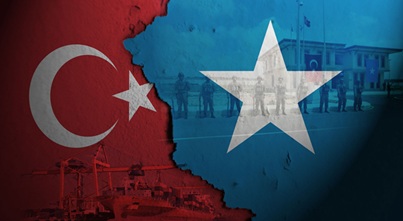
This article argues that Turkey’s relationship with Somalia constitutes an analytically incomparable partnership when evaluated through the lens of Somalia’s external engagements since the fall of the central state. Türkiye seems to stand out in political, institutional, economic, security, and social dimensions, with relations geared towards a long-term state-building.
Unlike many other partners whose involvement tends to be confined to specific sectors or short-term projects, Türkiye has committed to a comprehensive and sustained presence in Somalia without seeking to dominate or “own” the Somali state. Other partners often focus on narrow areas such as security, humanitarian assistance, or discrete infrastructure projects and do not necessarily build enduring institutional capacity. By contrast, Türkiye has invested in ministries, universities, hospitals, and security institutions, aiming to strengthen the Somali state from within and to foster locally owned development.
The concept of incomparability employed here is neither normative nor emotive. Neither does it imply moral superiority, unconditional alignment, or the absence of self-interest. Instead, incomparability is understood as relative distinctiveness, measured against situating the role of Turkey within the broader landscape of Somalia’s foreign relations. The article demonstrates how its policy behaviour structurally differs from past patterns of fragmented, sector-specific crisis-driven involvement.
Building on this narrative of partnership and partnership, the article seeks to address broader questions in diplomacy and state-building. The relationship between Türkiye and Somalia offers a distinctive case study of sustained presence, institution-building, and deepening trust. Political engagement, understanding this convergence, is important not only for analyzing Somalia’s foreign policy but also for rethinking how meaningful state-building can be constructed in contexts of prolonged fragility.
Breaking pattern of distance: Türkiye´s 2011 entry into Somalia
Recep Tayyip Erdogan’s visit to Somalia in August 2011 marked a decisive turning point for both Somalia´s post-conflict trajectory and Türkiye’s role in Africa. At this time, Somalia was experiencing its worst drought in 60 years, and civil war all over the country, which led to catastrophic famine that threatened 12 million civilians across the Horn of Africa. Mogadishu was widely perceived as one of the worst and most dangerous cities on earth, left to decades of civil war, warlordism, piracy, and Al-qaeda. Most international actors avoided direct engagement on the ground and operated remotely from Nairobi and Addis Ababa.
Against this backdrop, Erdoğan became the first non-African head of state to visit Somalia since the collapse of its central government in 1991. His visit was carefully planned rather than symbolic; he arrived with a large delegation that included ministers, parliamentarians, businessmen, aid workers, journalists, public figures and even his family members. It signalled Turkey’s intention to pursue a strategic engagement beyond humanitarianism.
The visit took place shortly after al-Shabaab was routed from Mogadishu by the Somali National Army and the African Mission in Somalia (AMISOM), and during the holy month of Ramadan, all amplifying an emotional tempo in Somali society. By physically entering Mogadishu at such a delicate moment, Erdoğan challenged the prevailing international narrative that Somalia was a “No-go zone” and demonstrated that direct engagement was possible in an environment that demands excessive caution by such high-profile actors.
Türkiye’s humanitarian involvement had already begun before the visit. Turkish Red Crescent (Kızılay) workers were restoring water supplies, clearing waste, building schools and health clinics, and establishing relatively decent settlements for internally displaced persons in the country. According to UN officials, Türkiye achieved in a few months what others had failed to accomplish over two decades. This seems to stem from good intentions and commitment. Additionally, Erdoğan’s visit accelerated institutionalised engagement.
In 2011 alone, Türkiye’s private sectors donated over $365 million, while the Turkish government contribute $49 million, making Türkiye one of Somalia’s largest donors. The visit also launched an unprecedented scholarship program through which more than 1,200 Somali students were brought to Türkiye on a full scholarship program, representing an investment of nearly 70usd million. This initiative aimed not only at humanitarian relief but at shaping Somalia’s. Future leadership by educating a new generation of Somali elites with strong personal and institutional ties to Türkiye.
The Somali public and political elite responded with extraordinary goodwill. Erdoğan was hailed as a saviour figure, awarded the title “Man of the Somali people, leader of the Muslim ummah,” etc. And honoured through important places and even children named after him and Türkiye, this popular legitimacy distinguished Türkiye from previous foreign actors and shows Türkiye as an incomparable friend to Somalia.
On the other hand, the 2011 visit as practical launch of Türkiye’s “virtuous power” doctrine, a foreign policy approach that combines humanitarianism, moral symbolism, on-the-ground engagement, and long-term strategic interests. Somalia became the testing ground for diplomatic influence, trade expansion, and political partnership across sub-Saharan Africa.
Read more: Diplomacy beyond rhetoric: An incomparable ally for Somalia
Omar Abdi Shire
Email: omarabdishire890@gmail.com