
By Ahmed A Hirsi
The importance of education in any given society and the relationship between economic growth and education are well documented. On the basis of that premise, Somalia needs thousands of schools in terms of both quantity and quality.
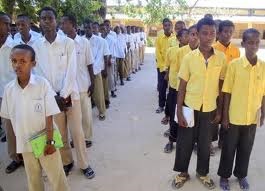 A well educated society is more likely to achieve and benefit from higher rates of economic growth thus the ability of the government to eliminate poverty and improve quality of life for millions of its citizens. However, education, per se, doesn’t guarantee economic growth, for example in Egypt a huge chunk of the population is well educated and yet Egypt still remains a poor county.
Various reports and research papers point out the expansion of school attainment doesn’t guarantee improved economic conditions either. Correspondingly, a highly functioning education system requires a supportive institutional structure. Somalia should be simultaneously building schools and institutions.
Sending droves of children and youths to schools and universities could prove worthless if the ever shifting demands of the labour market and a tailor suited curriculum that caters for these demands are not in place. Equipping students with the right skills is paramount too.
How did the Chinese and other Asian Economic Tigers Succeed?
According to an article published on Foreign Policy, in 2040, the Chinese economy will reach $123 trillion. China’s per capita income will hit $85,000; more than double the forecast for the European Union, and also much higher than that of India and Japan.
In other words, the average Chinese megacity dweller will be living twice as well as the average Frenchman when China goes from a poor country in 2000 to a superrich country in 2040.
The question that we need to ask ourselves is how did they do it?
The answer to this question is pretty simple. China is investing heavily on education.
Other data indicate that college-educated workers are three times as productive, and a high school graduate is 1.8 times as productive, as a worker with less than a ninth-grade education. Furthermore, a recent report by Asian Development Bank predicted that Asia would be the world’s economic leader in the future that 3 billion people would enjoy the same standard of living as Europeans, and Asia would hold 51 per cent of the global GDP by 2050.
Of course, the promise was followed by an “if” — if governments invest in education. The report warned Asia’s middle-income countries could get caught in a trap if the workforce does not have the necessary skills and abilities to innovate. So here we go again; skills and innovations are essential. I would therefore like to propose to the Federal Government of Somalia to focus more on skills and innovation.
I must also acknowledge that the resources of the Somali government are reasonably limited, but if the education related pledges from ‘Donor Countries’ such as United Arab Emirates and other friendly countries are channeled toward these issues, then equipping our youth with the right and necessary skills could be realized. Another important concern is that the Government has to create tools and strategies to minimize school dropout levels. Most successful nations, such as Singapore, Japan and South Korea; see nearly all children complete their education, at least until secondary school level.
Conclusion
The Somali Ministry of Education should focus on both quantity and quality of schools across the nation.
 Analytical skills, critical thinking and creativity rather than mere memorization should be supported. Training of teachers and creation of incentive schemes for both teachers and students need to be implemented.
Schemes to feed children from poor families should be introduced all over Somalia; similar schemes are currently in place in a number of countries across the globe.
Many years ago in Kenya, during President Daniel Arap Moi tenure there was a free milk scheme at Primary School level. Similarly, in the UK free dinner is offered to households who earn less than $13,000 per annum.
Obviously a hungry child will have trouble concentrating and learning. It is therefore imperative that Free Meal Schemes for all Primary School Children in Somalia is implemented.
Supportive institutional structures are necessary as well. Equipping students with the right and transferable skills that are required by the 21st Century Labour Market is essential.
Finally, we need to see nearly all children in Somalia and in the Diaspora complete their education, at least until secondary school level. Somalis in the Diaspora must actively participate, and support the Somali Government morally and financially in educating our youth.
Ahmed A Hirsi
Email: ahmed.hirsi@yahoo.com
——————
Ahmed is a Political Economist: Area of interest, Poverty reduction strategies.