
A specialist training programme in Somaliland has been launched to disrupt cheetah poaching and trafficking of animals to the Gulf.
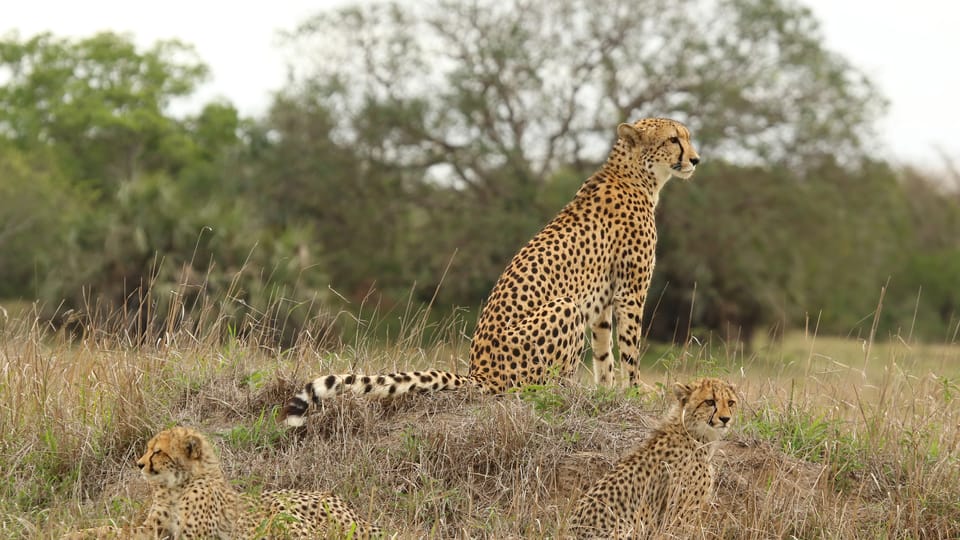
The East African country has been a key area of interest for anti-trafficking authorities in recent years, with cats smuggled out of Somaliland and into the Middle East, where they are sold on the black market.
Experts from the Cheetah Conservation Fund (CCF) said 300 cubs were poached from the Horn of Africa every year between 2010 and 2020.
Fewer than 7,500 cheetahs are believed to remain in the wild, with the animal listed as vulnerable by the International Union for the Conservation of Nature’s Red List of Threatened Species.
A five-day training course in Hargeisa is under way for representatives of the Somaliland government involved in law enforcement and the prosecution of wildlife crimes.
Training was supported by the CCF, the International Fund for Animal Welfare (IFAW) and Legal Atlas, a legal intelligence firm that provides expertise in enforcement and prosecution.
“The work we are undertaking to improve our laws and establish a national unit to conduct counter-trafficking activities is a major step forward in our decade-long fight against illegal wildlife trade here in Somaliland,” said Shukri Ismail, of the country’s Ministry of Environment and Rural Development.
“Since October 2020, we have not intercepted any illegal cub shipments in Somaliland. We hope this lull becomes permanent.”
The project aims to build capacity with law enforcement agencies, strengthen legal frameworks and create regional networks between legal jurisdictions in Ethiopia, Somaliland, Somalia and Yemen.
The four nations have been identified by CCF as both source and transit countries at the centre of the illegal cheetah cub trade.
With the ultimate aim of reducing poaching and illegal trade in cheetah cubs, the training course aims to expand knowledge of Somaliland environmental and wildlife conservation laws, and teach how to properly handle confiscated cubs and how to carry out efficient criminal investigations involving wildlife.
Cheetah cubs in the Horn of Africa are often taken from the landscape by rural farmers in retaliation for livestock predation blamed on cheetah mothers.
Sometimes cubs are sold as compensation for lost goats and sheep, but many are stolen by professional traffickers to supply illegal pet markets on the Arabian Peninsula.
Conservationists estimate three out of four cubs poached in the region die within two years due to malnutrition, dehydration and disease.
“Consistent application of wildlife laws is one of our goals,” said Legal Atlas’s director James Wingard.
“We have compiled legal frameworks for each of the four jurisdictions, as doing so makes it easier to spot gaps in legislation.
“Then we can assist the respective governments in strengthening their laws by revising them or by creating new ones.”
Read more: African training camp aims to stop cheetah trafficking to the Gulf
Source: The National News