By Hassan M. Abukar This article is the fourth of a 10-part series of true stories of Somali women and men and their blunt assessments of their relationships. The first six parts deal with Somali marriages in America and the last four with issues of courtship. The names and locations of these individuals have been...
November 24, 2026

Category: opinion
Post
The Ancient Kingdom of Punt and its Factor in Egyptian History Part IV
By Said M-Shidad Hussein On the Records Textual Accounts It seems that some scholars have not paid adequate attention to the fact that Pliny, a Roman author (d. 79 CE), and others, state that the Egyptians had contacted and influenced Somalia. There are at least two kinds of information in this regard. Firstly, he attests...
Post
Puntland: Youth and Their Business of the Day
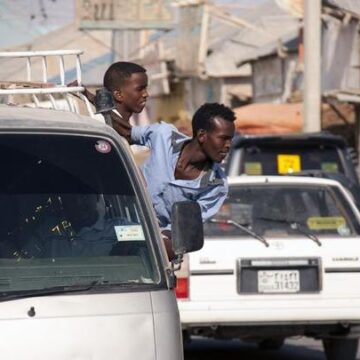
By Abdiwahab M. Ali “Welcome to Garowe,” thundered the soldier’s thick, husky voice. The soldier was tall, lanky, well-groomed and wearing stripped uniform, a button-down shirt open over a garish undershirt, standing in the punishing morning sun. “We reached the destination now;” declared the driver triumphantly, with quick, impetuous Reer Bari (northeastern) accent, “everyone...
Post
Rise and fall of a Revolutionary Somali Generation: Part II. Jigjiga: Past and Present
By Faisal A. Roble Preamble In part one of this series, Prelude to a Revolutionary Generation, I discussed factors that partly contributed to the political consciousness of the youth of Jigjiga. I also ruminated about the influence of dissident poets and Musicians from Somalia. Remarkable about this crop of dissidents (Abdi Adan Qays, Hadrawi, Said...
Post
I. M. Lewis and Somali Clanship: A Critique
Prof . Lidwien Kapteijns Introduction When large-scale violence occurs in Africa, initial analyses rarely go beyond characterizations of it (and, by implication, characterizations of the nature of the groups involved) as “ethnic” or “tribal.” Over time, more nuanced, historically based, and carefully contextualized analyses emerge. These often try to understand the complexities of, and changes...
Post
I. M. Lewis 1930-2014: A GREAT TREE HAS FALLEN
Prof Said S. Samatar When an Asantehene, or king dies, the Asantes of Ghana memorialize his passing with the adage: “A GREAT TREE HAS FALLEN.” I M Lewis died–to be in a better place—on last March 14 of a heart ailment. With his exit, a mighty force was taken from the earth to let him...
Post
Courtship and Marriage: The Somali Experience in America (Part III)
By Hassan M. Abukar This article is the third of a 10-part series of true stories of Somali women and men and their blunt assessments of their relationships. The first six parts deal with Somali marriages in America and the last four with issues of courtship. The names and locations of these individuals have been...
Post
Jail Ogaden and the Flawed Judicial System of the Somali Region in Ethiopia
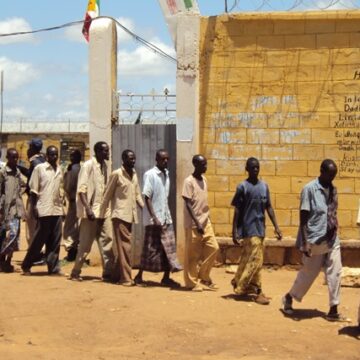
By Karamarda Group “There can be no free society without law administered through an independent judiciary. If one man can be allowed to determine for himself what is law, every man can. That means first chaos, then tyranny” U.S. Supreme Court Justice Felix Frankfurter, (1947). Political Transparency and good governance promotes justice, participation, pluralism, accountability and the...
Post
Edeggayn: Erey Loo Sed-buriyey
W/Q Xamse A. Kheyre Hordhac Tan iyo markii u horreysay ee idaacad afka Soomaliga ku baxdaa ay hawada soo gashay afartameeyadii, turjumaadda ereyada qalaad waxay ahayd mid ay la legdemaan hawl-wadeennada idaacadaha iyo warbaahinta kale ee Soomaalidu. Idaacadda BBC-da laanteeda afka Soomaaliga, tusaale ahaan, ayaa wararka caalamka ee ay baahiso marka hore warka isagoo af-ingiriisi...

Post
The Way Forward for Somalia
By Abdul Ghelleh For more than two decades, finding the right framework for a workable governance system for Somalia has been problematic for both governments in the West and academics from around the world. To this day, the need to reconstruct the Somali state is being merely considered as a means to counter Terrorism and Piracy,...