
By Yasmine J. Farah
I left Somalia when I was around the age of 6. Since that time, we have lived primarily in the United States. My knowledge of Somalia is on the borderline bipolar with a hint of schizophrenia. Anarchy made Somalia lose its narrative long before the people took up guns and madness became the equilibrium.
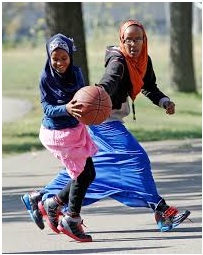 My knowledge of Somalia is from the billion thoughts scattered all over the internet. The stories they tell begin with men running with Russian Kalashnikov weapons and it ends with children starving to death. The grim images in front and behind their words can make any human sick with sorrow.
These images from these articles are all in the gallery of online search engines such as Google and Bing. They are endless pictures of Somali people in the worst kinds of human suffering beyond imaginable to the human mind. They are images that speak a trillion thoughts to the minds of the universe about what it is to be a Somali.
In their minds to be a Somali means to live in miserable conditions, to be violent like the endless boys in the images with guns, and what it means to be without food seen in the images of frail starving people. Image is more powerful than words. The world’s understanding of what means to be a Somali is from these images displayed in these online search engines.
It is nearly impossible to convince everyday people that Somalis are more than the online images or even the anarchy. It is impossible for people to understand that even in the anarchy, life still continues, and that Somalia is not unique to problems.
Upon telling a person that you originate from Somalia; it is normal for them to say “I am so glad you’re here” using the most mentally destroying sympathetic voice of all voices.
What is worse than these “sympathetic” minions is sitting in a classroom, where the teacher begins to tell a story of how the most starving people in the world reside in Somalia; you sit there wondering, where did this teacher get this information and you laugh pathetically because you remember the images of starving Somali children online, they win the argument meanwhile all the students are staring at you with sad puppy dog eyes, and you’re the only Somali in the room.
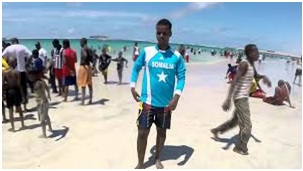
Everywhere I went I made it my business to tell people, where I came from, which always brought me heart ache because I would be bombarded with stories of dying people, starving children and apocalypse. It would be nearly impossible for them to believe about stories of families moving back. I would share with them YouTube videos of towns in Somalia, where children with uniform heading to school, cars and people living life just like any other town.
I would show them pictures send by my relatives in Somalia; pictures filled with calm and tranquility. The story of Somalia told by the universal people through series of images on the internet is the absolute truth, but it is not the only story. Many people lost their wealth, lives and loved ones in Southern Somalia, and parts of the north so we must never forget them, but moving forward means that the Somalis must find a way to take hold of the narrative. We must reframe how the world sees us by sharing our own stories and who we are as a collective people.
Who are we?
We (Somalis) are the best and the worst of God’s creations. Most Somalis do not care about what none-Somalis think of them. They are resilient, kindhearted and emotionally void people on this planet. They are extremely difficult people to understand, but at the same time they are very social. They love to take financial risks hence the reason they are able to create businesses out of nothing. This is the most basic definition of who we are because we are a lot more than words or images.
I have a problem with society’s definition of what it means to be a Somali because their definition is based solely on images and words. There is a new dawn in Somalia, and we are more than capable of telling our own narrative.
YJ Farah
Email: YazFarah@gmail.com
———-
YJ Farah is a writer for Scartree.com.