
By Dayib Sh. Ahmed
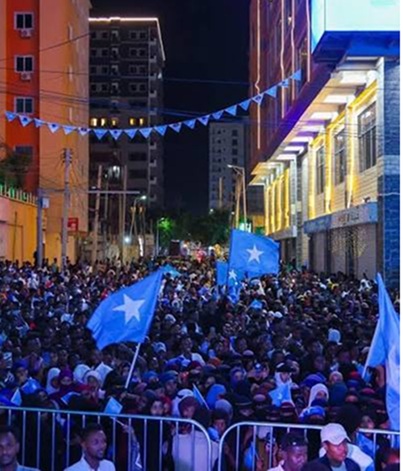
Every year, Somalis commemorate June 26, the day part of Somalia achieved independence from colonial rule in 1960, and July 1, when two of the five territories united to establish the Somali Republic. These two historic dates symbolize freedom, unity, hope, and the dream of building a strong and prosperous Somali nation. They also remind us that Somalis emerged from decades of brutal colonial rule, determined to shape their destinies. Yet, more than six decades later, every Somali must ask a difficult question; What does independence truly mean if the nation remains politically divided, institutionally dysfunctional, and unable to provide security, justice, essential public services, and equal opportunities for all its citizens?
Since independence, Somalia has endured decades of stormy politics. Military rule, civil war, state collapse and subsequent prolonged political transition with recurring disputes between federal and regional administrations have all contributed to weakening the state. Rather than building durable institutions founded on the rule of law and national consensus, successive governments have struggled to establish a shared vision capable of uniting the country. Neoclanism pundits who appear to live in an alternate universe are often celebrated by disenfranchised public for hollow political pronounciations. In this context, these demagogues present themselves as champions of moral and economic renewal for those who feel betrayed, though their promises are often rooted in unrealistic expectations and surreal thinking.
Today, too much of Somalia’s politics revolves around clan competition, short-term political alliances, and personal ambition. Meritocracy is overshadowed by patronage, while public institutions serve political interests instead of the national interest. Over the years, the rhetoric delivered by political leaders from Mogadishu, Garowe, Kismayo, Baydhabo, and Hargeisa has emphasized division, blame, and historical grievances instead of reconciliation, accountability, and national renewal. As a result, far too many leaders speak primarily to their political supporters rather than to the Somali people as a whole. Political opponents are portrayed as enemies instead of fellow citizens, while the urgent needs of ordinary citizens—security, education, healthcare, employment, infrastructure, and economic opportunity—receive far less sustained attention.
This failure is not directed at one administration, one political party, or one region; it applies broadly across Somalia’s political leadership. Whether governing from Mogadishu, Garowe, Hargeisa, or elsewhere, leaders should be judged by their commitment to good governance, constitutionalism, transparency, accountability, and service to the public—not by political slogans or clan loyalty. Somalia does not suffer from a shortage of patriotic citizens. It suffers from a shortage of leadership willing to place the national interest above political survival. Genuine leadership requires compromise, humility, honesty, and the courage to make decisions that benefit future generations rather than immediate political allies.
The Smokescreen of Neoclanism warlordism
American historian and Yale professor Timothy D. Snyder argues in his book On Tyranny: Twenty Lessons from the Twentieth Century, “Believe in truth.” He warns that abandoning facts means abandoning freedom: when truth disappears, citizens lose the foundation needed to challenge power, and politics becomes nothing more than spectacle where the greatest resources can create the most convincing illusions. This warning reflects the dangers of what I call “neoclanism”—a predatory political culture in which clan identity remains the primary organizing principle of power despite the existence of modern governmental institutions. I see neoclanism as a smokescreen: an ideological cover used by political actors to conceal deeper realities of exploitation, exclusion, and institutional weakness.
Under this system, the essential freedoms that every society should protect—including freedom of thought, freedom of speech, freedom of assembly, freedom of conscience, and freedom of protest—are gradually weakened and restricted. In my view, when political power becomes concentrated in the hands of a small elite that monopolizes resources and exploits public institutions, the collective freedom of the many is transformed into the exclusive privilege of the few. Ultimately, when the economic and social foundations of a society become concentrated entirely in the hands of a ruling oligarchy, the result is a political system that moves further away from democratic principles and closer toward authoritarian practices.
The structural decay extends far beyond the individual politicians who temporarily occupy positions of power. Whether figures such as Hassan Sheikh Mohamud, Abdirahman Cirro, Said Abdullahi Deni, Adan Madobe, Ahmed Madoobe, Ahmed Qoorqoor, Mohamed Abdullahi Farmaajo, and current occupant of the office of the Prime Minister of Somalia—whose public rhetoric has at times included crude, vulgar, and insulting remarks directed at regional states such as Jubaland and Puntland—or many others eventually disappear from the political stage. The underlying socio-economic crises remain.
The millions of desperate, disenfranchised people who are fired up by hyper-neoclanist or extremist messaging will still be there, ready to act upon the orders of whichever demagogue steps into the vacuum. Even those who deliberately choose to stay away from politics often find themselves affected by a deeply polarized environment. When political divisions become extreme, individuals who defend democratic values, human rights, and accountability may face intimidation, exclusion, or pressure to conform.
As Timothy D. Snyder warns in On Tyranny, authoritarian actors often seek ways to control and silence individuals by exploiting personal vulnerabilities. He writes, “Nastier rulers will use what they know about you to push you around, Tyrants seek the hook on which to hang you. Try not to have hooks.” His warning serves as a reminder that protecting personal integrity, defending truth, and maintaining independence of thought are essential safeguards against political intimidation and the abuse of power. In this context, a society that allows fear, misinformation, and political manipulation to replace accountability risks losing not only its democratic institutions but also the courage of its citizens to speak freely.
Our country, as we once knew it, no longer exists in the same form. The promise of independence, built on unity, freedom, and national dignity remains an unfinished dream. The institutions and legal protections that should safeguard ordinary citizens have been weakened, hollowed out, and, in many cases, transformed into instruments of political competition rather than foundations of justice. I believe that those who continue to champion good governance, democratic transparency, universal human rights, human dignity, and equal opportunity are increasingly becoming political orphans. In this environment, individuals who challenge powerful interests or demand accountability are often portrayed as enemies, foreign agents, or labeled as “radicals” simply for defending democratic principles and the rule of law.
As a result, political capture creates a climate of social isolation that may eventually lead to deeper forms of exclusion. Those who refuse to compromise their principles or blindly follow political authorities may face serious consequences, including harassment, unjust accusations, or forced exile. For example, I view the case of Sacdiyo Macalin Cali (also known as Sacdiyo Bajaaj), who is currently imprisoned and facing allegations that, in my view, appear to be fabricated and politically motivated, as a troubling reminder of the risks faced by individuals who challenge powerful political forces.
Sacdia’s case raises serious questions about political accountability, fairness, and the protection of citizens’ rights. She has publicly appealed for justice and has called on the current occupant of the highest office in Somalia to consider her situation with humanity and fairness, asking him to imagine if this were his own daughter facing such circumstances. She has also expressed that, like many citizens, she seeks the same opportunities, dignity, and protection that his own children deserve.
I believe that a nation cannot achieve true independence when fear replaces freedom, when loyalty is valued above competence, and when political conformity becomes more important than citizenship. A free society requires institutions that protect dissent, defend human dignity, and allow every citizen to participate without fear.
Reclaiming the Promise of Independence
Those who champion good governance, democratic transparency, universal human rights, human dignity, and equal opportunity are becoming political orphans. In my view, this environment allows critics and reformers to be portrayed as traitors, foreign agents, or labeled as “radicals” simply for challenging established political interests. Independence should mean more than commemorating historic dates with ceremonies, waving flags, and delivering patriotic speeches. It should represent a continuing responsibility to strengthen democratic institutions, uphold justice, respect constitutional processes, protect civil liberties, and create opportunities for every Somali, regardless of region or clan affiliation.
True independence is not measured simply by sovereignty. It is measured by the strength of institutions, the rule of law, accountable leadership, equal citizenship, and the ability of a nation to provide dignity, justice, and opportunity for all its people. However, when these principles are absent, independence becomes an unfinished promise. I mourn what we have lost. I mourn what we are about to lose. I mourn those who are imprisoned for their voices, their beliefs, and their pursuit of justice. I mourn those who have lost their lives while searching for safety, dignity, and a better future. I mourn those who perish on dangerous journeys while attempting to escape hardship, hunger, violence, and hopelessness. I mourn the families that have been separated, the dreams that have been shattered, and the generations that have been denied the opportunity to build a peaceful and prosperous future. I mourn a nation rich in history, culture, and potential, yet weakened by division, corruption, and the suffering of its people. Somali is now where the so call Independence of a citizen is cheaper than a banana piece. Nevertheless, our grief must become a source of responsibility rather than despair.
The pain of our losses should not silence us; instead, it should remind us of our responsibility to restore hope, protect human dignity, and rebuild a future where justice, freedom, and opportunity belong to every Somali. Yet, as political and institutional challenges continue to deepen, the consequences extend beyond politics alone. Social isolation can eventually become physical isolation when citizens lose trust in their institutions and feel forced to leave their homeland in search of security, dignity, and opportunity.
Therefore, as we reflect on June 26 and July 1, we must confront the forces that have contributed to Somalia’s unfinished journey toward genuine independence. We must challenge the political culture that allows demagogues and neoclanist systems to convert public authority into private advantage. We must reject the destructive promise that clan-based competition and exclusion can deliver national progress. The generation that secured independence in 1960 left behind a powerful legacy of hope, unity, and self-determination. Today, however, our generation faces a different responsibility: rebuilding trust between citizens and institutions while creating a political culture based on competence, accountability, justice, and equal citizenship rather than division and political favoritism.
Ultimately, the promise of independence will remain only partially fulfilled until Somalia’s leaders consistently place the national interest above factional interests and citizens demand accountability over personality, loyalty, and clan politics. The future of Somalia will depend not merely on commemorating its past, but on having the courage to confront its present challenges and build a political future founded on justice, dignity, unity, and shared opportunity. Independence is not only a historical achievement. It is an ongoing responsibility. Every generation must decide whether it will simply inherit the promises of the past or have the courage to fulfill them.
Dayib Sh. Ahmed
Email: Dayib0658@gmail.com
——
Dayib is a writer, political analyst and WardheerNews contributor
Leave a Reply