
By Osman Ali Hassan
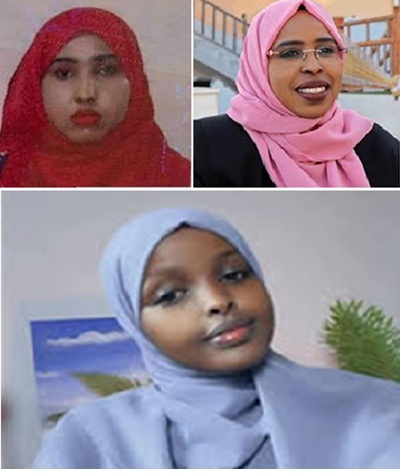
The “kangaroo court” of Somalia finds itself as the most tragic and potent illustration not in abstract legal theory, but in the lived and often extinguished realities of Somali women-rights. In Mogadishu, the formal judicial system, lauded in international mandates and strategic policy documents, reveals itself upon closer inspection to be a brittle facade, a “dry-drought dead-wood” incapable of nurturing justice, instead serving as the kindling for a fire that disproportionately roasts the weak, the poor, and the underrepresented, particularly women treated as second-class citizens within their own nation. The interconnected fates of Amina Mohamed Abdi, Ikraan Tahlil, and Sacdiya Bajaj are not isolated incidents but rather three starkly illuminated panels in a triptych depicting a system in crisis, a system whose ultimate mandate, as wielded by powerful interests, is to silence, contain, and consume those who dare to speak truth to power, especially when that voice belongs to a woman.
The foundational rot of this system is laid bare by the very institutions meant to support it. The United Nations Assistance Mission in Somalia itself acknowledges that the country’s justice system remains in a “very nascent state,” plagued by disjointed development, a lack of professional capacity, and a critical absence of institutional independence. Kangaroo Court decisions are often rendered with “scant rationale,” creating an environment of legal uncertainty where the rule of law is a distant aspiration rather than a lived reality. This institutional weakness is not a vacuum but a space filled by other, more ancient and patriarchal forces. The entrenched clan system, or Xeer, remains the “prominent provider of justice services,” particularly in rural areas, yet as legal experts and international observers note, these traditional mechanisms are “discriminatory, particularly against women, youth and minority clans,” treating women as lesser members of the clan and denying them the protections afforded to men. This dual system—a weak formal state court and a discriminatory traditional one—creates a perfect storm where a woman seeking justice is caught between two perilous shores, her rights and very existence contingent upon the whims of powerful clan elders or the corruptibility of a state official.
Amina Mohamed Abdi’s Case
It is within this treacherous landscape that the case of Amina Mohamed Abdi unfolds. A female Member of Parliament, she had already defied the patriarchal norms of her society by winning an open parliamentary seat against male opponents, a feat she achieved despite facing objections that her ambition was akin to “behaving like a prostitute.” Her political identity was forged in defiance, and her ultimate fate was sealed by her outspoken advocacy for another missing woman, Ikraan Tahlil. On 23 March 2022, Amina was assassinated in Beledweyne by a suicide bomber, an attack that also killed dozens of others. While Al-Shabaab claimed responsibility, the political and social context surrounding her death points to a more complex and sinister motive, as former Prime Minister Mohamed Hussein Roble publicly declared his certainty that the “people behind the assassination of lawmaker Amina Mohamed Abdi last week were the masterminds behind the disappearance and likely murder of former intelligence agent Ikran Tahlil.”
This direct link, drawn by the highest government official, suggests that Amina was not merely a victim of a terrorist organization, but a targeted political assassination by powerful domestic actors seeking to silence her. The mother of Ikran Tahlil echoed this sentiment, stating she felt Amina was “targeted for her outspoken support for Ikran Tahlil and securing justice for her family,” adding that “everyone who spoke out against the Ikraan case is being pursued.” Amina’s “crime,” therefore, was not just being a woman in politics, but using her position to shine a light into the dark corners of state power, a transgression that the dead-wood court of public violence deemed punishable by death.
Ikraan Tahlil Case
The second figure in this grim triptych, Ikraan Tahlil, is the ghost whose haunting presence catalyzed Amina’s fate. A cybersecurity expert employed by Somalia’s National Intelligence and Security Agency, she was abducted from her home near the agency’s headquarters in June 2021. Her family stated she had received a call from her superiors and was last seen getting into a vehicle near her home. In the face of mounting public pressure, NISA eventually claimed that Al-Shabaab had killed her, a denial the militant group itself contradicted. The mystery surrounding her disappearance, and the government’s failed and unconvincing attempts to explain it, became a potent symbol of state impunity. The lack of a transparent investigation, a fair trial for any suspect, or even the recovery of her remains speaks volumes, for it represents the ultimate failure of the formal justice system to protect its own citizens or hold its own institutions accountable.
Ikraan did not simply disappear; she was erased by a system whose mechanisms, whether controlled by shadowy figures within NISA or the political elite, operate with impunity, demonstrating that for a woman who knows too much, the “dry-drought dead-wood” of the state can be used not to fry, but to annihilate without a trace.
Sacdiya Bajaj Case
The third and most current panel of this canvas of injustice is the case of Sacdiya Bajaj, a social media activist and tuk-tuk driver sentenced to three years in prison by the Banadir Regional Kangaroo Court in June 2026. Her conviction, on charges of “insulting claim case of Ex-president- Mr. Hassan Sheikh daughter ” and so callled “public incitement,” is a textbook example of the courts being weaponized to silence dissent. Sacdiya’s true offense was also using her social media platform to voice the economic grievances of ordinary Somalis, criticizing government policies and drawing attention to issues like the clan-based distribution of positions.
Sadiyo argued that, under the law, she and President Hassan Sheikh Mohamud’s daughter, Jihaan Hassan Sheikh, are entitled to the same rights and opportunities as equal citizens. Yet, she contrasted their vastly different realities, saying that Jihaan enjoys privilege, influence, and access to every opportunity, while she struggles to make ends meet, driving a bajaj (three-wheeled taxi) to earn a living. It was this comparison, placing herself on equal footing with Jihaan Hassan Sheikh as a citizen before the law, that prosecutors seized upon, and this is the central basis for her conviction and the three-year prison sentence handed down against her.
Sadiya arrest and detention, described by Amnesty International as “arbitrary,” were clearly designed to intimidate and punish a critic. The trial itself, as condemned by human rights organizations like the Geeska Freedom Centre, was marred by “serious procedural irregularities, lack of credible evidence, and disregard for fundamental fair trial guarantees.” Her toothless defense lawyers described the sentence as “harsh” and “unjust,” and noted they would appeal.
Prominent opposition figures, including former President Sharif Sheikh Ahmed, condemned the ruling, calling it “a message of intimidation” aimed at silencing the youth. The question posed by many citizens is not if Sacdiya will be silenced, but how—whether she will be narrowed to an “invisible death” within the confines of a Mogadishu prison, forgotten by the state that imprisoned her, as she is left to “roast” in a cell, or whether she, like Amina and Ikraan, will simply disappear, a stark warning to any other woman who dares to demand accountability from the powerful. The pattern is chillingly clear: first, you are prosecuted for speaking; then, you are murdered for persisting.
This pattern of injustice is not merely anecdotal; it is systemic and gendered. The case of Hodan Mohamud Diiriye, a mother of ten who was executed by firing squad in February 2026 for the murder of a 14-year-old girl, offers a stark parallel. While the public outrage over the horrific crime was understandable and justice was done, nevertheless, her trial and execution were carried out with a haste and finality that contrasts sharply with the treatment of male perpetrators. Her toothless lawyer argued the trial was “unlawful,” pointing to the lack of adequate legal representation, a rushed process, and the court’s refusal to allow for a mental health assessment. Crucially, her request to appeal was ignored, a fact her lawyer attributed to her status as a woman, stating she was “seen as a lesser citizen and not equal to a man.”
This sentiment is reinforced by the parallel case of Sayid Ali Moalim Daud, a man who was also sentenced to death for murdering his pregnant wife, yet despite exhausting his appeals, his execution has been delayed, with human rights defenders suggesting his life is spared due to his membership in an “influential clan.” The discriminatory application of justice could not be more stark: a woman is hurriedly executed, while a man from a powerful clan is granted a reprieve, illustrating how the judicial system, or lack thereof, is merely an extension of the patriarchal and clan-based power structures it is meant to regulate.
Ultimately, the Mogadishu kangaroo court is not an institution that has strayed from its purpose; it is fulfilling its purpose within the current power structure. The “dead-wood” of the formal judiciary, dependent on the executive for its very existence and lacking a functioning Judicial Services Commission, has no spine to stand against the “clan based gang control by the warlords, blood-thirst commercial businessmen, and the 4.5 booming sale and buying politicians.” The judge who relies on the executive for his appointment is rendered a mere functionary of the powerful. The system’s inherent weakness and corruption do not serve the cause of justice; they serve the interests of those who benefit from maintaining the status quo of impunity. The court is the hot charcoal ash that remains after the fire of power has consumed the rights of the citizenry. Amina, Ikraan, and Sacdiya represent a trinity of resistance—a politician, an intelligence officer, and a working-class activist—all of whom were or are being targeted for the simple act of speaking out. Their stories are the coals that glow brightest in the dying embers of this dead-wood system, a haunting reminder that in Somalia, the fight for justice is, first and foremost, a fight for survival, and for women, it is a fight waged on a field that is already burning around them.
Yet this characterization of the Somali “kangaroo war lord tribal court” where the judge serves simultaneously as prosecutor, presider, and jailer evokes a powerful image of consolidated, unchecked power, and the absence of the country’s judicial institutions has opted for the rule of armed militias rather than the intricate legal system. However, this framing risks misrepresenting Somali customary justice by applying a Western, state-centric framework, for the Xeer court is not a “kangaroo court” dominated by a single, all-powerful figure, but rather a sophisticated, community-driven mechanism for maintaining social order where the state is absent. The roles of prosecutor, judge, and jailer are not fused in one person but are diffused across the victim’s family, a council of appointed elders, and the collective clan, respectively. While the system is not without flaws, notably its potential to discriminate against women and weaker clans, its core structure is designed to prevent the tyranny of a single judge. The image of a warlord acting as judge, prosecutor, and jailer is a more accurate description of the law of the gun, the very chaos the Xeer system strives to contain and resolve through consensus and compensation.
The tragic irony remains that for Somali women, whether they fall under the jurisdiction of the formal state courts, the traditional Xeer, or the brutal arbitration of armed militias, the outcome is often the same: a denial of justice, a silencing of their voices, and a profound vulnerability to the very structures that should protect them. As the stories of Amina, Ikraan, Sacdiya, and Hodan so devastatingly attest, the kangaroo court, in all its manifestations, is not an aberration but the logical endpoint of a society where power is unaccountable, where clan loyalty trumps citizenship, and where being a woman is itself a crime punishable by erasure, execution, or imprisonment. The international community, with its mandates and strategic documents, watches and wrings its hands, but the dead-wood burns on, and the women of Somalia continue to walk through the fire, their courage undimmed even as the system conspires to consume them.
In the end, the kangaroo court is not a place; it is a condition, a state of being for those who dare to demand justice in a land where justice has been bartered away to the highest bidder, the strongest clan, or the most ruthless warlord. Until the very foundations of this system are dismantled and rebuilt on the principles of equality, accountability, and genuine rule of law, the trinity of resistance represented by Amina, Ikraan, and Sacdiya will continue to be a trinity of sacrifice, their fates a grim prophecy of what awaits any woman who dares to speak, to question, or to survive in a system that has already decided her fate.
Osman A. Hassan
Email: abayounis1968@gmail.com
———–
Osman is WardheerNews contributor who writes about East Africa and Horn of Africa affairs