
By Isha Qarsoon
This is the second of three analytical essays examining the Agreement in the Field of Hydrocarbons concluded between the Government of the Republic of Turkey and the Federal Government of the Federal Republic of Somalia (FGS), signed in Istanbul on 7 March 2024 (the “Agreement”). This essay measures the Agreement’s commercial terms against Somalia’s own legal and commercial framework and against international standards. The third essay addresses whether the FGS had the legal authority to enter this commitment at all.
The Benchmark: Two Floors, Both Abandoned
Somalia’s framework for petroleum development establishes two distinct floors against which the Agreement’s terms must be measured. The first is the legal floor set by Somalia’s Petroleum Law, enacted by Parliament and signed by President Mohamed Abdullahi Mohamed on 8 February 2020 (Law No. 19). Article 24.6 specifies the mandatory contents of every Production Sharing Agreement (PSA), including royalty formulas, bonus provisions, minimum work obligations, environmental provisions, domestic supply obligations, and training requirements. Article 35.1 requires every PSA to provide SONOC a participation right of up to 20% and the relevant Federal Member State (FMS) a participation right of up to 10%. These are statutory requirements. A PSA or any concession agreement that eliminates them conflicts with an enacted law.
The second is the commercial floor set by Somalia’s Model PSA, published in January 2019. The Model PSA sets the signature bonus at $2 million per block (Clause 32.3),[1] surface fees at $100 per square kilometer during exploration (Cl. 32.1.1) and $500 during development and production (Cl. 32.1.2),[2] and a tiered royalty schedule in Schedule 8 combining a volume-based rate from 5% at 20,000 barrels per day to 20% at 200,000 barrels per day with a price-based component. The cost recovery ceiling is fixed through two defined terms: “Cost Oil Limit means 70% of the Available Crude Oil” and “Cost Gas Limit means 70% of the Available Gas,” operationalized in Clause 9.1.[3] These are not suggested ranges. They are defined terms that fix the ceiling at 70% for all purposes under any agreement that incorporates them. Together, the Petroleum Law and the Model PSA define what any competent negotiator acting in Somalia’s interest would have treated as the starting position. The Agreement abandons both, at every provision that matters, in TPAO’s favor, without compensating benefit to Somalia in any commercial category.
No Competitive Process, No Baseline Price for Exclusivity
Article 4.1 of the Agreement grants TPAO the sole and exclusive right to conduct petroleum operations across any Contract Area it designates, without a competitive licensing round, without block-by-block evaluation, and without performance benchmarks.[4] Somalia’s Model PSA was designed for competitive licensing: its Background clause C explicitly references a tender process through which the contractor is selected, and its commercial terms are calibrated to a framework in which multiple qualified contractors bid against each other for defined blocks. Competitive bidding for frontier offshore acreage conservatively generates several hundred million dollars in signature bonuses alone before a single well is drilled.
The Agreement replaces that framework with a single counterparty on terms that were not competitively derived and cannot be competitively tested. Somalia received nothing for the exclusivity it granted.
No Bonuses, No Fees, No Royalty Obligation
The Model PSA requires payment at every stage of the relationship. Payment of the signature bonus and first-year surface fees are conditions precedent to the agreement’s effectiveness, as established in Clause 3.1.1. Clause 32.3 fixes the signature bonus at $2 million per block. Clauses 32.1.1 and 32.1.2 set surface fees at $100 per square kilometer during exploration and $500 during development and production. Clause 13.3.1 establishes administrative fees for each regulatory approval ranging from $50,000 to $1 million. Schedule 8 sets out a royalty formula under which Somalia receives between 5% and 20% on crude oil depending on production volume and price, and between 5% and 25% on gas, reflecting a volume component topping out at 15% and a price component topping out at 10%.
The Petroleum Law requires every PSA to include a royalty formula as mandatory content under Clause 24.6(j), and authorizes bonus and other financial provisions under Clause 24.6(x). The Model PSA exercises that authorization by fixing a $2 million signature bonus as a condition precedent under Clauses 3.1.1 and 32.3, along with training fund and community fund obligations under clauses 27 and 32.4. The Agreement waives all of it.
Article 4.5 eliminates all bonuses and fees in express terms.[5] Because Article 4.1’s exclusivity operates without geographic limitation, the waiver applies across Somalia’s full petroleum estate. Article 4.6 replaces the mandatory royalty schedule with a royalty of “up to five (5%) percent of production of all Petroleum produced and saved from the Contract Area.”[6] The qualifier “if any” converts a provision the Petroleum Law requires every PSA to contain into a discretionary provision that may produce nothing. Somalia could receive zero royalty from producing fields under any production scenario. The combined pre-production waivers represent forgone revenue conservatively exceeding $150 million before a single barrel is produced.
A 90% Cost Recovery Ceiling Against Somalia’s Defined Standard of 70%
Article 4.7 entitles TPAO to recover its petroleum costs by retaining up to 90% of Crude Oil and 90% of Natural Gas produced from the Contract Area in each fiscal year, after royalties.[7] The Model PSA defines the Cost Oil Limit as 70% of Available Crude Oil and the Cost Gas Limit as 70% of Available Gas; Clause 9.1 then authorizes the contractor to take Cost Oil up to the Cost Oil Limit and Cost Gas up to the Cost Gas Limit.[3] The 70% ceiling is embedded in the definitional architecture of Somalia’s own published standard. The arithmetic is direct: at 70% cost recovery, a $1 billion production year generates $300 million in Profit Oil for sharing. At 90%, it generates $100 million. Somalia’s share of revenue from its own seabed is compressed to one-third of what its own Model PSA would have produced before the profit split is even reached.
The community fund and training fund payments, which under Clauses 27 and 32.4 of the Model PSA are contractor obligations borne against the contractor’s own returns and explicitly excluded from cost recovery under clause 32.5, are reclassified by Article 4.5 of the Agreement as petroleum costs recoverable from production. [8] What would normally reduce TPAO’s net return is instead charged against Somalia’s share. Somalia subsidizes its own social benefit payments. Ring-fencing, required by the Model PSA at clause 9.1.1.10—“The Petroleum Costs are not recoverable against other Contract Areas held by the Contractor in Somalia”—is absent from the Agreement. Somalia must insist on it in any individual PSA negotiation or the 90% ceiling will be further exacerbated by cross-block cost aggregation.
The International Standard
The most instructive and best-documented international benchmark for measuring Somalia’s Agreement is Guyana’s 2016 PSA for the Stabroek Block, concluded with an ExxonMobil-led consortium. It is the only case in which a frontier state publicly acknowledged, through official government statements and subsequent legislative reform, that a specific PSA had transferred too much value to the contractor. The 2016 PSA contained a 2% royalty, a 75% cost recovery ceiling, no ring-fencing, zero corporate tax on the contractor (paid instead by the government from its own profit share), and an $18 million signature bonus.[9] Guyana’s Ministry of Natural Resources described the contract as “the greatest giveaway of our history,”[10] and the Attorney General called it “the worst contract on the planet.” The contract’s Article 32 stabilization clause prevented unilateral renegotiation, trapping Guyana in terms it could not legislate away without triggering contractor compensation rights.
In November 2022, Guyana’s government announced a reformed Model PSA establishing a 10% royalty, a reduced 65% cost recovery ceiling, and a new 10% corporate tax, with signature bonuses of $10 million for shallow water blocks and $20 million for deepwater blocks.[11] That reformed framework is now the documented floor below which informed resource governance does not descend.
Somalia’s Agreement descends below Guyana’s discredited 2016 terms at every variable: 90% cost recovery against Guyana’s 75% ceiling, a discretionary royalty of ‘up to 5%, if any’ against Guyana’s 2% royalty, and no bonuses of any kind against Guyana’s $18 million signature bonus. The 2016 Stabroek Block PSA triggered years of constitutional and political crisis in Guyana and was described by the government’s own Ministry of Natural Resources as ‘the greatest giveaway of our history.’ Somalia’s Agreement is worse on every comparable fiscal term. Guyana at least conducted its bad deal through competitive licensing and retained unencumbered acreage for future bidders. Article 4.1’s blanket exclusivity leaves Somalia with neither option.
Beyond the headline fiscal terms, the Model PSA contains additional protections that further cushion Somalia’s revenue position: mandatory ring-fencing under Clause 9.1.1.10 of the Model PSA, guaranteed state participation under Article 35.1 of the Petroleum Law, and a stabilization clause limited to defined fiscal parameters under Clause 44 of the Model PSA. The Agreement dismantles all of them. The fiscal damage established by the cost recovery, royalty, and bonus comparisons understates Somalia’s total exposure. The provisions that follow compound it further.
State Participation: Lost Fiscal Upside
Article 35.1 of the Petroleum Law requires every PSA to include SONOC’s right to participate up to 20% and the relevant FMS’s right to participate up to 10%. The Model PSA implements this at Clause 16, providing the FGS a right to acquire up to 10% participating interest five years after the start of commercial production. State participation is Somalia’s primary instrument for capturing equity returns from its own resource base beyond the royalty and profit split—returns that flow directly to SONOC’s balance sheet and to state revenues.
Article 4.4 of the Agreement gives TPAO the unilateral right to determine its own participating interest under each PSA at whatever percentage it deems appropriate, with no floor and no mandatory allocation for SONOC or any FMS [12] If TPAO declines to accommodate SONOC’s statutory participation right, Article 12.3—which provides that “where this Agreement establishes the rules other than those provided by the national legislation of the Parties’ states, the rules established by this Agreement shall apply”—resolves that conflict in TPAO’s favor.[13] The fiscal consequence is that Somalia may be confined to its diminishing share of Profit Oil with no equity participation in the upstream economics of its own offshore estate.
The Stabilization Clause as Fiscal Lock
Article 8.3 of the Agreement requires Somalia to compensate TPAO from its own share of Profit Oil for any Change of Law—defined in Article 8.1 to include any legislation, regulation, judicial decision, or administrative action at any level of Somali government—that increases TPAO’s costs or reduces its returns, with compensation to be paid “within one year from the effective date of the Change of Law.”[14] Article 12.3 simultaneously subordinates Somali domestic law to the Agreement. Any parliamentary attempt to restore the royalty formula required by the Petroleum Law, any legislative reinstatement of bonus obligations, any regulation imposing ring-fencing, triggers a mandatory cash payment from Somalia’s production share. The Model PSA’s stabilization clause at Clause 44 is limited to defined fiscal parameters and expressly preserves Somalia’s right to legislate on health, safety, environment, and conservation at Clause 44.2. Article 8 of the Agreement contains no such carve-outs. The fiscal damage and the legal mechanism that prevents its repair are parts of the same instrument.
The Profit Split: A Fight Over a Residual TPAO Controls
By the time individual PSA negotiations commence, Somalia will have already conceded: exclusivity across its full petroleum estate under Article 4.1; a 90% cost recovery ceiling under Article 4.7 against a Model PSA defined ceiling of 70%; a complete waiver of all bonuses and fees under Article 4.5; a discretionary royalty capped at 5% under Article 4.6 against a mandatory statutory formula; SONOC’s participation right subject to TPAO’s unilateral discretion under Article 4.4; community and training fund costs reclassified as recoverable petroleum costs under Article 4.5; and a Change of Law indemnity payable from Somalia’s own production share under Article 8.3.
The PSA negotiation is a fight over Somalia’s share of a residual whose size TPAO structurally controls, conducted with no competing bidders and no credible alternative to accepting whatever split TPAO proposes. That asymmetry is not incidental to the Agreement’s design. It is the design.
What Was Sold and By Whom
Turkey treated this transaction as a matter of national strategic importance warranting parliamentary ratification. Turkey’s parliamentary justification document states explicitly that Somalia’s offshore areas hold an oil reserve potential of 30 billion barrels and six billion cubic meters of confirmed natural gas. Somalia treated the same commitment as requiring nothing beyond a ministerial signature. The minister who signed this Agreement, and whoever advised and authorized him, disposed of Somalia’s primary long-term development asset on terms that fell below Somalia’s legal floor at the royalty, bonus, and state participation provisions, and below its commercial floor at every remaining comparable provision. The disparity in seriousness between the two parties is not incidental to the outcome. It is the explanation for it.
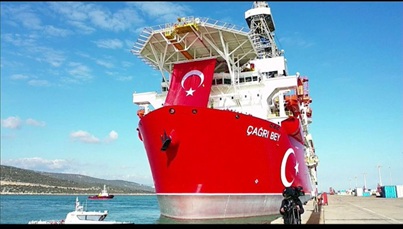
At 90% cost recovery against a Model PSA defined ceiling of 70%, no royalty obligation against a mandatory statutory formula, no bonuses against a $2 million per block requirement, state participation subject to TPAO’s unilateral discretion against a 20% statutory right, and no ring-fencing, the instrument delivers precisely what Turkey’s Energy Minister described at the departure ceremony in Mersin: a Turkey that finds oil abroad will have a far stronger treasury. Somalia’s return is a percentage of a residual whose size TPAO structurally controls, from a sector whose regulatory framework Somalia can no longer amend without paying TPAO from its own share of that residual. Part Three examines whether the FGS had the constitutional and statutory authority to enter this commitment at all.
Isha Qarsoon
Email: Ishaqarsoon1@gmail.com
—————–
Isha Qarsoon is a platform dedicated to addressing critical issues pertaining to good governance, corruption, and social challenges in Somalia.
Read Part I: Facts & Figures: Who Really Controls Somalia’s Oil and Gas?
__________
Endnotes
[1] Model PSA Clause 32.3: “A signature bonus in the amount of US dollars [2,000,000] shall be paid by the Contractor to the Ministry promptly upon execution of the Agreement by the Parties.”
[2] Model PSA Clauses 32.1.1 and 32.1.2: surface fees of US$100 per square kilometer per Calendar Year during the Exploration period, rising to US$500 per square kilometer per Calendar Year during the Development and Production period.
[3] Model PSA Definitions (clause 1): “Cost Oil Limit means 70% of the Available Crude Oil” and “Cost Gas Limit means 70% of the Available Gas.” Clause 9.1 provides that the Contractor is entitled to recover Petroleum Costs “by taking and separately disposing Cost Oil up to the Cost Oil Limit and Cost Gas up to the Cost Gas Limit.” These are fixed defined terms, not negotiable ranges.
[4] Agreement Article 4.1: “The Federal Republic of Somalia hereby grants to the Turkish Designated Entity the sole and exclusive right to conduct Petroleum Operations within and with respect to the Contract Area.” There is no competitive licensing requirement, no minimum number of blocks, and no expiry of exclusivity tied to PSA execution.
[5] Agreement Article 4.5: the Contractor shall not be obliged to pay to the Federal Government any signature bonus, development bonus, production bonus and any other bonus whatsoever for the fulfilment of its obligations under the PSA under this Agreement and “the Contractor shall not be obliged to pay to the Federal Government any surface fees and administrative fees.” Somalia’s Petroleum Law Article 24.6(d) independently requires every PSA to include bonus provisions as mandatory content.
[6] Agreement Article 4.6: “The Federal Government shall own and be entitled to a royalty, if any, in cash or in kind up to five (5%) percent of production of all Petroleum produced and saved from the Contract Area.” The phrase “if any” and the ceiling of 5% together mean the royalty is both discretionary in existence and capped at a rate that falls below the floor established by Somalia’s Model PSA Schedule 8 at comparable production volumes. Somalia’s Petroleum Law Article 24.6(c) independently requires every PSA to include a royalty formula as mandatory content.
[7] Agreement Article 4.7: “the Contractor is entitled to recover Petroleum costs by taking and separately disposing of an amount equal in value to a maximum of ninety percent (90%) of Crude Oil and ninety percent (90%) of Natural Gas produced from the Contract Area during that fiscal year and not used in Petroleum Operations after the payment of all royalties due to the government.”
[8] Agreement Article 4.5: “The amounts payable by the Contractor under the community fund and training fund shall become part of, be considered as and be included in Contractor’s expenditures for the fulfilment of the minimum expenditure obligation and shall be included in Petroleum costs for the purpose of cost recovery.” Model PSA Clause 32.5 explicitly excludes the community fund contribution from recoverable Petroleum Costs.
[9] 2016 Stabroek Block PSA between the Government of Guyana and Esso Exploration and Production Guyana Limited et al., dated 7 June 2016. Key terms: 2% royalty; 75% cost recovery ceiling; no ring-fencing; government obligated to pay contractor’s corporate income tax from its own profit share; $18 million signature bonus. See also: Institute for Energy Economics and Financial Analysis (IEEFA), Summary of 2016 Petroleum Agreement Between Guyana, ExxonMobil, et al. (May 2022).
[10] Guyana Ministry of Natural Resources, press statement (April 2024): “…the document (the oil contract) remains the greatest giveaway of our history.” Attorney General Anil Nandlall separately described the PSA as “the worst contract on the planet.” (Kaieteur News, August 2022.)
[11] Guyana Vice President Dr. Bharrat Jagdeo, press conference, 3 November 2022, announcing revised Model PSA terms: 10% royalty (up from 2%); 65% cost recovery ceiling (down from 75%); 10% corporate tax (new); 50/50 profit split retained; signature bonuses of US$10 million for shallow water blocks and US$20 million for deepwater blocks. See OilNOW, “Guyana hikes royalty to 10% in major overhaul of PSA fiscal terms,” 4 November 2022.
[12] Agreement Article 4.4: “Turkish Designated Entity shall have the right to determine the percentage of its Participating Interest under the PSA for each Contract Area that the Turkish Designated Entity deems appropriate.” There is no floor, no mandatory SONOC allocation, and no requirement that the percentage be disclosed or justified to Somalia before adoption in the PSA.
[13] Agreement Article 12.3: “Where this Agreement establishes the rules other than those provided by the national legislation of the Parties’ states, the rules established by this Agreement shall apply.” Read with Article 4.4, this provision means that if TPAO declines to accommodate SONOC’s statutory participation right under Petroleum Law Article 35.1, the Agreement’s terms prevail over the statutory requirement.
[14] Agreement Article 8.3: “If any Change of Law has the effect of impairing, conflicting or interfering with the implementation of the Project, or limiting or adversely affecting the value of the Project or any of the rights, indemnifications or protections granted or arising under this Agreement or any other agreement, or of imposing directly or indirectly any Costs on the Turkish Designated Entity and/or the Contractor, the Federal Government shall compensate the Turkish Designated Entity and/or the Contractor for the Costs incurred… Such compensation shall be realized in kind from the Federal Government’s share of the Profit Oil and Profit Gas, within one year from the effective date of the Change of Law.” Article 8.1 defines Change of Law to include any legislation, regulation, judicial decision, or administrative action by any Somali authority at any level.