
By Isha Qarsoon
This is the first of three analytical essays examining the Agreement in the Field of Hydrocarbons concluded between the Government of the Republic of Turkey and the Federal Government of the Federal Republic of Somalia (FGS), signed in Istanbul on 7 March 2024 (the “Agreement”). This essay examines what control Somalia retains over its own petroleum sector after Turkey exercises what the Agreement permits. The companion essay measures the Agreement’s commercial terms against Somalia’s own Model Production Sharing Agreement (“Model PSA”) and international standards. The third essay addresses whether the FGS had the legal authority to enter this commitment at all.
What Was That Celebration Really About?
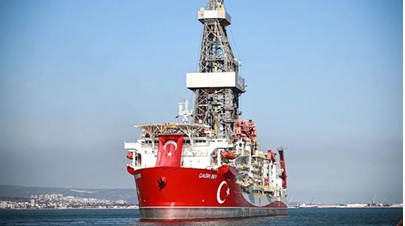
On April 10, 2026, Somalia held national celebrations as the Turkish drillship Çağrı Bey docked formally in Mogadishu, with President Hassan Sheikh Mohamud reportedly presiding and Turkish Energy Minister Bayraktar in attendance. Ordinary Somalis who had waited decades for their offshore potential to mean something had reason to celebrate, or would have, if the Agreement that sent that ship to Somali waters had been written for their benefit. It was not. At the departure ceremony in Mersin, Turkiye, Minister Bayraktar was unambiguous: the goal was to make Turkey energy independent, because a Turkey that finds oil abroad will have a far stronger treasury. The people on the dock and the minister at the podium were not celebrating the same thing.
The Nature of the Instrument
This Agreement is not a cooperation framework. Cooperation agreements establish principles within which specific commercial arrangements are subsequently negotiated on their own terms, preserving the host state’s ability to set conditions, evaluate competing interests, and decline unsatisfactory offers. This Agreement does the opposite. Article 4 pre-determines every structural commercial question: exclusivity, cost recovery ceiling, royalty, bonuses, assignment rights, and change of law protection, while deferring only the profit split to downstream negotiation.
It is a master concession document granting TPAO [1] a blanket exclusive option over Somalia’s entire petroleum estate, exercisable at TPAO’s sole discretion, with no legal obligation to ever drill, spend, or commit. [2] The Agreement runs for five years and renews automatically for successive three-year periods unless Somalia notifies Turkey through diplomatic channels at least six months before expiration. Inaction is renewal. TPAO may hold Somalia’s petroleum estate under exclusive option through successive automatic renewals without designating a single Contract Area or drilling a single well. That TPAO’s drillship Çağrı Bey arrived in Mogadishu in April 2026 raises the question of whether a PSA conforming to the Agreement’s or to the Model PSA’s terms has been executed, or whether drilling will proceed on the basis of the Agreement alone.
Somalia’s Petroleum Law, enacted by Parliament and signed by President Mohamed Abdullahi “Farmajo” in February 2020, established the Somali Petroleum Authority as the institution charged with licensing and PSA negotiation, and required competitive licensing through published rounds. Somalia’s Model PSA, published in January 2019, set the mandatory commercial floor for any petroleum contractor. This Agreement does not engage with that framework. It displaces it. This essay measures the Agreement against Somalia’s own Model PSA and against one of the most criticized petroleum agreements ever concluded. The fiscal and commercial consequences of that displacement are examined in the companion essay. The constitutional consequences are examined in a future essay.
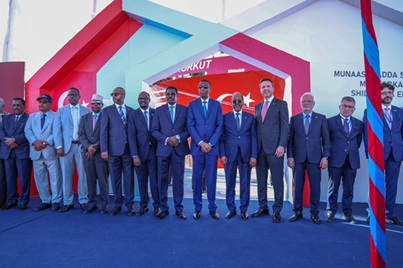
The Agreement was signed by Abdirizak Omar Mohamed, then Minister of Petroleum and Mineral Resources, who was subsequently removed from office. Turkey treated the transaction as a matter of national strategic importance: President Erdogan transmitted it to the Grand National Assembly under Article 90 of the Turkish Constitution for parliamentary approval and presidential ratification. Turkey’s parliamentary justification document describes Somalia’s offshore areas as holding an oil reserve potential of 30 billion barrels and six billion cubic meters of confirmed natural gas reserves and frames the Agreement explicitly as an instrument of Turkey’s Africa Opening Strategy. Turkey understood precisely what Somalia was committing.
Somalia Surrendered the Right to Conduct Competitive Licensing
Article 4.1 grants TPAO the sole and exclusive right to conduct petroleum operations within any Contract Area it designates across Somalia’s entire territory, onshore and offshore.[3] Under the Agreement, the FGS is obligated to conclude a PSA with TPAO for each Contract Area that TPAO “deems appropriate.”[4] Somalia does not offer blocks. TPAO selects them. Somalia does not publish terms. TPAO’s terms are fixed in this Agreement. There are no competing bids.
The practical consequence is permanent for the duration of this Agreement. TPAO’s selection right has no deadline, no geographic limit, and no quantitative ceiling. The Agreement runs for five years with automatic three-year renewals under Article 12.4, and TPAO’s exclusivity runs for the full duration without any obligation to designate Contract Areas on any particular timeline. Under the Agreement, Somalia cannot invite any oil company to bid on any block without first knowing which blocks TPAO intends to claim. TPAO has presumably not claimed any blocks as it has not yet completed exploration. Any PSA Somalia concluded with a third party over a block TPAO subsequently claims would create a direct conflict between two exclusive grants, and Somalia would bear the legal exposure on both sides.
Article 4.1 compounds this through its seismic exclusivity provision. TPAO holds the exclusive right to conduct seismic acquisition, processing, and interpretation across every Contract Area it designates.[5] Since seismic survey is the instrument through which acreage prospectivity is initially assessed, TPAO surveys Somali territory, identifies the most commercially attractive blocks (through collection of seismic data and exploratory drilling), and then designates those blocks as Contract Areas, all before Somalia or any competing party holds comparable subsurface data. A third-party investor cannot conduct independent seismic work over any area TPAO has surveyed or intends to survey. What remains available for competitive licensing is, at best, the acreage Turkey has assessed and rejected.
Somalia Surrendered Control Over Previously Licensed Acreage
Somalia had previously granted petroleum exploration licenses to several companies covering specific onshore and offshore blocks, including licenses granted by the pre-1991 and post-2012 governments as well as concessions granted between 1991 and 2012 which have been annulled by Somalia’s 2020 Petroleum law. The Agreement is silent on all of them. Article 4.1’s blanket exclusivity grant contains no reference to prior concessions, no carve-out for previously licensed acreage, and no mechanism for resolving conflicts where TPAO designates a block already subject to an existing license.
A government negotiating a grant of exclusivity over its entire petroleum estate did not address what happens to rights it had already conveyed to others. Somalia bears whatever legal and financial exposure that omission creates.
Read more: Facts & Figures: Who Really Controls Somalia’s Oil and Gas? Part I
Isha Qarsoon
Email: Ishaqarsoon1@gmail.com
_________
Isha Qarsoon is a platform dedicated to addressing critical issues pertaining to good governance, corruption, and social challenges in Somalia.