
By Dayib Sh. Ahmed
From Limited Strikes to Uncontrolled Escalation
Wars seldom remain confined to the limited objectives envisioned by their planners. History consistently shows that conflicts initiated with narrow military or political goals tend to expand into prolonged and multidimensional struggles with significant geopolitical and economic consequences. In this context, the ongoing war between the United States and Iran can be understood within a broader historical pattern in which localized confrontations risk escalation into wider regional or even global crises. American military strategy has often been influenced by confidence in technological superiority and the expectation of achieving rapid, decisive outcomes. Yet historical experience repeatedly challenges this assumption. During the Vietnam War, U.S. policymakers initially believed that overwhelming firepower and advanced military capacity would quickly defeat communist forces. Instead, the conflict evolved into a prolonged and costly war, sustained by external support from the Soviet Union and China, ultimately becoming a central episode of Cold War rivalry rather than a contained intervention.
A similar lesson emerges from the First World War, which illustrates how quickly regional crises can generate long-term destabilization. In 1914, even before formal declarations of war, financial markets began to react to rising uncertainty. Although the assassination of Archduke Franz Ferdinand and his wife Sophie did not immediately trigger global economic collapse, Austria-Hungary’s ultimatum to Serbia—widely interpreted as making war increasingly unavoidable sparked panic and a global shift toward financial security and market withdrawal. As the war expanded and prolonged, these economic disruptions intensified dramatically. By the final years of the conflict and its aftermath, the strain on global economies had deepened significantly; in the United States, for example, the price of basic goods such as bread roughly doubled between 1913 and 1920.Taken together, both the First World War and the Vietnam War demonstrate a recurring historical reality: conflicts that begin with limited intentions often produce unintended consequences that extend far beyond the battlefield, reshaping global politics, alliances, and economies in ways that initial planners rarely anticipate.
Similarly, a comparable miscalculation occurred during the Soviet Union’s invasion of Afghanistan in 1979. Moscow initially anticipated a short campaign to stabilize a friendly regime. Yet, it soon faced a prolonged insurgency backed by the United States and its allies. As a result, the war drained Soviet resources and contributed to the broader weakening of the Soviet system. Taken together, these cases illustrate a consistent pattern regional wars often evolve into arenas of indirect great-power competition. Therefore, the same risks apply in the present. A U.S.–Iran war would not remain strictly bilateral; rather, it could gradually expand into a wider strategic contest involving global powers, with consequences extending far beyond the battlefield.
Iran’s Asymmetric Power and the Global Economic Battlefield
To begin with, Iran presents a uniquely complex strategic challenge. Its vast geography, mountainous terrain, dispersed urban centers, and population of over 90 million make it resistant to quick military defeat. Historically, geography has played a decisive role in shaping conflict outcomes. For instance, Napoleon’s failed invasion of Russia in 1812 and Germany’s campaign against the Soviet Union during World War II both demonstrate how terrain and scale can undermine even the most powerful armies. Beyond geography, Iran has developed a military doctrine centered on asymmetric warfare. In contrast to conventional approaches, Tehran relies on missiles, drones, naval disruption tactics, cyber capabilities, and allied non-state actors across the Middle East. In essence, this strategy is designed not to defeat a stronger adversary outright, but to prolong conflict, impose costs, and erode political will over time.
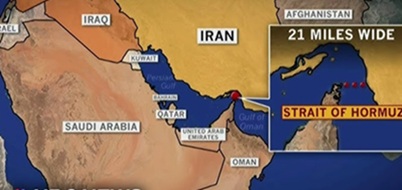
Notably, such approaches have proven effective in modern warfare. Insurgencies in Iraq and Afghanistan used guerrilla tactics and improvised explosive devices to frustrate technologically superior forces. By extension, Iran could apply similar principles on a much larger scale, expanding conflict across multiple fronts through regional partners in Iraq, Syria, Lebanon, and Yemen. Most importantly, Iran holds leverage over one of the world’s most vital economic chokepoints: the Strait of Hormuz. Roughly one-fifth of global oil supply passes through this narrow corridor. Therefore, even limited disruption can trigger a global economic shock.
Recent developments underscore the scale of this risk. Since mid-February 2026, persistent drone and missile threats have effectively halted commercial shipping through the Strait of Hormuz not through a formal naval blockade, but by making passage too dangerous for insurers, shipping companies, and crews. Consequently, the strait has remained largely inaccessible, resulting in a de facto closure driven by risk rather than physical obstruction. At the same time, the United States has announced a naval blockade in response, further heightening tensions and emphasizing the strategic importance of this critical maritime chokepoint.
The broader consequences have been far-reaching and, in many cases, unexpected. Beyond the unprecedented disruption to global oil supplies, the crisis has exposed vulnerabilities in essential supply chains. Key materials—including urea and ammonia used in agricultural production, helium vital for semiconductor manufacturing, and naphtha, a core input in producing everyday plastics such as garbage bags and water bottles—have all experienced significant shortages, revealing the depth of global economic interdependence. Moreover, the consequences extend far beyond oil. Disruptions have affected critical materials such as fertilizers, helium, and petrochemicals, thereby demonstrating how interconnected global supply chains amplify the impact of regional conflict. In this way, Iran would not need to achieve a conventional military victory, instead, it could secure strategic impact by sustaining instability and imposing long-term economic costs.
Global Ripple Effects: Great Power Competition and Historical Lessons
At the global level, a prolonged U.S.–Iran war would create opportunities for rival powers to advance their interests. Historically, major conflicts have often invited indirect intervention. During the Cold War, for instance, both the United States and the Soviet Union exploited regional conflicts to expand influence without engaging in direct confrontation. In a similar vein, Russia could use such a conflict to intensify pressure in Eastern Europe, particularly in the context of the ongoing war in Ukraine. With American attention divided, Moscow might seek to consolidate gains without provoking direct escalation. Meanwhile, China could exploit the situation in the Indo-Pacific. Increased U.S. military commitments in the Middle East could shift the strategic balance around Taiwan, thereby encouraging Beijing to expand “gray-zone” activities naval patrols, air incursions, cyber operations, and economic pressure while avoiding outright war.
Taken together, the cumulative effect of simultaneous crises could strain U.S. capabilities and weaken the credibility of its global commitments. Even so, without direct confrontation, incremental pressure across multiple regions could gradually reshape the global balance of power. Equally important, the economic dimension further amplifies these risks. The outbreak of World War I in 1914 offers a powerful historical parallel. At that time, even before major battles began, global markets collapsed. Bank runs spread, stock exchanges closed, and international trade plummeted. Simultaneously, shipping halted as insurance costs soared, and global supply chains fractured almost overnight.
Over time, the long-term consequences proved profound. Financial power shifted from London to New York, global trade declined sharply, and inflation surged worldwide. Notably, even victorious nations suffered lasting economic damage. As the French Prime Minister Georges Clemenceau later observed, “It is far easier to make war than to make peace.” Today, similar dynamics are visible. In a highly interconnected global economy, even a short conflict can produce lasting disruptions. Supply chains may take months or years to recover, energy prices can remain volatile, and secondary effects such as inflation, food insecurity, and political instability may persist long after the fighting subsides. In particular, low- and middle-income countries are especially vulnerable. In regions like the Horn of Africa, where food security is already fragile, disruptions in fertilizer supply and energy markets can become matters of survival.
Conclusion: The Enduring Danger of Strategic Miscalculation
In conclusion, a war between the United States and Iran would carry risks far beyond the immediate military confrontation. Iran’s geography, asymmetric capabilities, and control over critical energy routes make a quick or decisive victory unlikely. At the same time, the broader geopolitical and economic consequences could fundamentally reshape the international system. Ultimately, the central danger lies in the illusion of limited war. What begins as a contained conflict could expand into a prolonged global struggle, drawing in major powers, destabilizing markets, and weakening alliances. Thus, military success on the battlefield would not necessarily translate into strategic success if the conflict undermines long-term stability and shifts the global balance of power.
More than a century ago, the British writer Norman Angell argued in The Great Illusion that economic interdependence made war irrationally costly. While he was correct in principle, events proved otherwise in practice. Interdependence did not prevent World War I, rather, it amplified its consequences. Therefore, that lesson remains deeply relevant today. In an interconnected world, the costs of war extend far beyond national borders and immediate objectives. The fundamental question is not simply whether a war can be won, but whether its consequences can be contained.
History suggests that they rarely can.
Dayib Sh. Ahmed
Email: Dayib0658@gmail.com
——
Dayib is a writer, political analyst and WardheerNews contributor