
By Abdisalam Ali Farah (Biligsey)
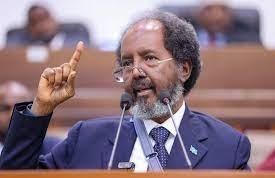
As President Hassan Sheikh Mohamoud’s term expires, the ghosts of 1991 are stirring. This time, the world may not be watching.
Somalia has stood at the edge of catastrophe before. In 1991, the country tumbled over it — and spent the next three decades trying to climb back. Now, as President Hassan Sheikh’s four-year term races toward its May 15, 2026 deadline with no agreed political settlement in sight, Somalis and their international partners face a haunting question: are we about to watch history repeat itself?
The warning signs are unmistakable. Opposition groups are organizing. Regional administrations are distancing themselves from the center. And a president who came to office promising reconciliation is instead governing by exclusion, leaving the country’s fragile federal architecture in tatters.
A Constitution of One
When the Somali people agreed, in 2004 in Mbagathi, Kenya, to a federal structure, it was not an accident of history. It was a hard-won compromise — a framework designed to hold together a nation shattered by clan warfare and warlordism. It was imperfect, as all political settlements are. But it was legitimate.
President Hassan Sheikh has shown no patience for that legitimacy. He has drafted a new constitution — unilaterally, with his entourage — that effectively sidelines some Federal Member States (Puntland, Jubaland) whom he saw as non-compliant. Both administrations now find themselves declared unwanted and negligible under what his government calls the “New Social Contract.” That is not a social contract. It is an imposition.
In its place, the President is steering Somalia toward the kind of rigid, centralized authority that Somalis know all too well — the same model that produced the political catastrophe of the late 1990s and the civil war that followed. The irony is bitter: the very system that destroyed Somalia the first time is being revived by a man who earned his education in the ruins of that destruction.
The Anatomy of Authoritarian Drift
To understand how Somalia arrived at this point, it is worth examining what President Mohamoud has actually done during his four years in office — not what he has promised, but what he has delivered. He has created an election commission of his own design and declared that the country will move to a one-person-one-vote election in which he is, conveniently, positioned as the sole serious candidate and sole beneficiary. He has exhibited the classic hallmarks of authoritarian governance: he dictates terms, tolerates no dissent, and expects unconditional compliance on every issue.
Most damning of all is the corruption that has flourished under his watch. Thousands of Somali citizens have been forcibly displaced from their homes and their land seized. Hundreds of government-owned buildings have been sold to the highest bidder through transactions that bear the fingerprints of the presidency itself. In a country where state institutions are already tissue-thin, this is not merely scandalous — it is existential.
The Ghost of 1991
In 1991, it was Mohamed Siad Barre — a soldier with no formal schooling and a monopoly on violence — who brought the Somali state to its knees. What followed was a fratricidal war of almost unimaginable brutality, a collapse of law and order, and a humanitarian catastrophe that scarred generations.
The looming crisis of 2026 carries a different, more troubling texture. Hassan Sheikh Mohamoud is not an illiterate strongman. He holds a “doctorate”. He has benefited from the Somali state and from the international community’s decades-long investment in rebuilding it. And yet he appears to be engineering the same conditions that produced the collapse his generation lived through. That is not ignorance. It is a choice.
With May 15 approaching and no political settlement on the horizon, opposition factions are openly preparing for armed confrontation as a last resort. The consequences of that confrontation cannot be predicted with any precision — but the general trajectory can. Some Federal Member States may conclude that an independent path is preferable to perpetual subordination.
In the 1990s, for all its horror, Somalia at least had the world’s attention. International actors mobilized, flawed and inconsistent as their interventions were. Hundreds of thousands of lives were saved. Millions were sheltered.
That attention cannot be guaranteed today. After 36 years of unconditional support to Somalia’s state-building project, donor fatigue is real and deepening. Europe is consumed by the war in Ukraine. The United States and its allies are stretched thin by the Middle East. The political bandwidth for another Somali crisis is close to zero.
Somalia, in other words, may be left to bleed alone this time. That is not an argument for despair. It is an argument for urgency.
The Call Somalis Must Answer
This crisis will not be resolved by the international community. It will not be resolved by any single faction or regional administration. It will be resolved — if it is resolved at all — by Somalis, across political lines, choosing their children’s future over their present grievances.
That means civil society must find its voice. Religious leaders and the Ulema carry enormous moral authority in Somali communities — they must use it. Traditional elders, whose legitimacy runs deeper than any constitution, must convene and speak. Youth and women’s organizations, which represent Somalia’s actual future, must refuse to be spectators to their own country’s destruction.
Political actors on both sides of the current divide — in the government and in the opposition — must be pressed, without relent, to step back from the precipice and pursue a negotiated settlement before the clock runs out.
Somalia has survived things that would have erased most nations from the map. That resilience is real. But resilience is not unlimited, and time is not on anyone’s side. May 15 is not just a date on a calendar. It is a deadline for a decision: whether Somalia will choose, once again, to step back from the edge — or whether it will allow one man’s political ambitions to consume what generations of Somalis have sacrificed to rebuild. As they say, time and tide wait for no man. The moment to act is now.
Abdisalam Ali Farah (Biligsey)
Email: biligsey2005@gmail.com