
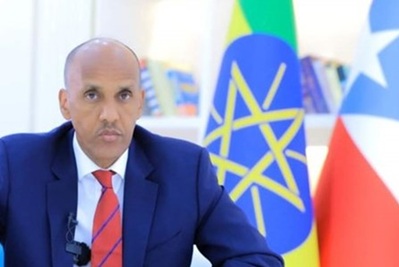
By Abdullahi A. Nor
President Mustafe Omer has been in the same seat for about eight years. Prime Minister Abiy parachuted him from Mogadishu without consulting the people in the region. His peddlers were many social media activists, such as Messay Kebede and Naemin Zeleka, who at the time opposed EPRDF but now want to topple PM Abiy.
President Mustafe has so far succeeded in avoiding pressure from his people by manipulating PM Abiy and effectively using social media to his advantage. He employs a bunch of paid social media activists and YouTubers, mainly in Addis Ababa, to lionize him. Anytime he feels pressured, he reaches out to a deep deposit of Amharic social media to dismantle watered-down legitimate criticism. In return, he handsomely pays them from the region’s meager budget.
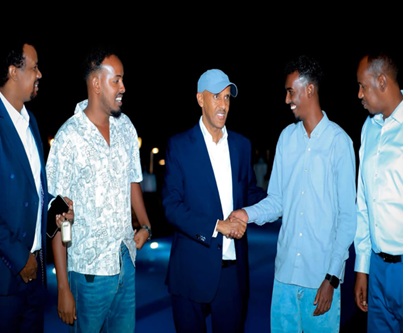
region to build a false imaga
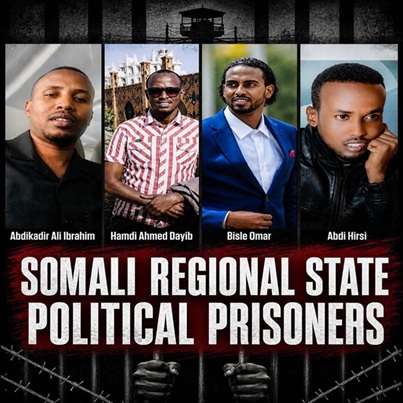
However, the ranks of opposition to his rule are widening. As I draft this piece, the Jidwaq Diaspora held a press conference in Minneapolis to denounce what he has done to their community. In addition to the young Abskul activist kidnapped from Addis who is now in prison in Jigjiga, Sultan Abdirahman Sultan Bade, a respected regional elder, is forced to take refuge in Addis Ababa. Mustafe categorizes communities in the region as friends or enemies.
On his enemy list are the Rer-Abdile (the largest section of the Mohamed Suber of the Ogaden), Geri Kombe, Harti Kombe, Arab of Issaq, Abaskuul, Sheekhaash, and others. He sowed division between Jidwaaq and Geri Kombe. One way to divide them has been to marginalize the Geri because, according to his thinking, the Geri is the only Non-Absame clan in the Faafan zone that had historically weight in Jigjiga.
In a particular way, he targeted Geri for the last seven years. He punished them and minimized their power as much as he could. He has been zealously trying to erode their share of power and marginalized them to appease outsiders. He intimidates them by saying that if they oppose him, “he will let the Oromo take their land.” He instilled a communal fear of terror in their elders and political elites. Such a sinister approach has never been applied to the region before him. To let a Somali clan know that the president will “cede their region to the neighboring Oromo” and use that as intimidation is unprecedented. That disqualifies him as a regional leader and a violation of the regional constitution.
Mustafe Omar has stripped the Geri of its share of power in the region and in the Faafan zone. The removal of individuals from key government ministries and senior posts reinforces a selective political purging. A case in point is, the recent dismissal of the head of the judiciary, carried out without regard for principles of power-sharing or fair community representation. This and many acts which I will soon post in the form of tallied information further underscores a troubling trend of marginalizing the Geri. Reports now indicate that President Mustafe is deliberately blocking the naming of a Jigjiga stadium after a distinguished figure from the Geri community, an act that breaks sharply with long-standing traditions of honoring merit and shared heritage without prejudice. He conveniently forgets that the Geri spilled blood and sweat for the cause of the region more than any other community. The Geri has played a key role in the history of the Somali region. His fear of the great history of the Geri cannot be dismissed by his administration which we hope will end soon.
Mustafa does not want to see a coalition of Gaarwaaq (Geri and Jidwaaq) alliance with the Issaq, and Gadabuurs. These are the groups he does not want to see united in the Faafan zone, for if they are united, the balance of power sharing could change, and the next presidency could change hands. So far, he has succeeded to co-opt individuals from the Jidwaaq, and that is what temporarily sustains him in power. How long that will last is not known. These clans will soon or later come together and expose him.
On the broader question, Mustafe has benefited politically from the peaceful situation in the Somali region. What he does not say is that peace came because the ONLF has silenced the guns of war. Outside propaganda and sponsored news through YouTubers, two major factors, brought badly needed stability in the region. First, Addis Ababa sought a policy of accommodation of the Somali nation. The second factor was that the Ogaden National Liberation Front (ONLF), established in its current form in 1984, accepted Addis’ gesture for a peaceful resolution to regional and national issues. The ONLF is a product of the Western Somali Liberation Front (WALF), which carried out an armed struggle between 1974 and 1984. With Mustafe at the helm for the last eight years, he intentionally and for selfish reasons destroyed the peace deal between Addis and ONLF. ONLF is now in exile and could resume its armed struggle in the east.
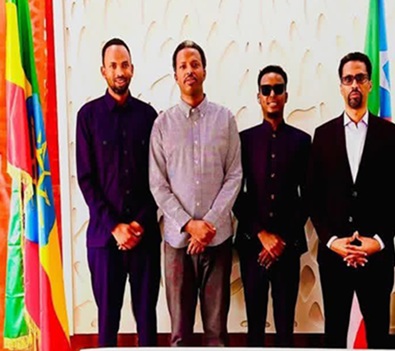
One of Mustafe’s ways to mislead Ethiopians at the center is to paint a picture that ONLF is a Diaspora team incapable of stopping PP’s vision. In a recent interview with the Addis Ababa-based The Reporter, he told them, “These diaspora-based ONLF members are very extremist. Most of the ONLF members who were on the ground are integrated into the government.” The truth that adults in the house know well is that the leadership of ONLF has always been based outside Ethiopia. The ONLF was never housed in Addis Ababa or Jigjiga. Starting with Hassan Moalin, who was a long-time spy for Addis Ababa, and his ilk are now sold as the real ONLF. But that is expedient for Mustafe to entertain Addis Ababa. The truth is that the entire leadership of ONLF, including his geriatric uncle, Admiral Mohammed Omer, was in exile, yet still gave a black eye to EPRDF. In his own Mechavilian way, Mustafe is saying his subclan, the Rer-Issaq, is home, and the Rer-Abdule is entertaining an armed struggle. His audience is a single individual – PM Abiy Ahmed. Mustafe knows how to create conflicts but not harmony. He has perfected his art of manipulating Abiy, and it has worked for him so far.
When PM Abiy took office in 2018, appointing Mustafe Omer
as interim president was not a well-thought-out process. It was expedient and a lazy choice. Only three criteria were used to qualify him. First, he was an activist against the rule of Abdi Muhumed Omer, with whom he had a past relationship when both worked as high-ranking officials in the Somali region during the long EPRDF rule. They have had a hate-love relationship. They worked together but competed for fame. In between, many have been hurt on both sides. Mustafe benefited and cashed in on the plight of the victims. The second factor was that he had close relationships with the social media activists of the time, such as Mesay Kebada and Naemn Zaleke. None of them knew him well, except that they were, like him, social media activists with no binding ideology. None of them worked or governed even a single Kabele.
Mustafe’s assignment in Somalia’s Halane camp was a lowly position that could not have prepared him for the responsibility PM Abiy bestowed on him. For Mustafe, the position given to him was a God-sent gift similar to the “Mana” the Israelites received from Heaven. The third factor was that he hails from the Ogaden tribe, to whom the presidency of the region is reserved unjustifiably. He did not have a resume to qualify him for such a responsibility, except for an Ogaden. What was not known about Mustafe’s background is now manifesting itself in polarizing and boomeranging in Abiy’s face.
The way he is running the region’s affairs is disastrous for the following three reasons: First of all, by his nature, Mustafa is an unnecessarily controversial, confrontational, and extremely polarizing figure, who produces enemies like the Sunfish or Mola mola, which “lays 300 million eggs in a single spawning cycle.” And that is creating disharmony in the region. Second, he is still an activist locked in minutia at the expense of governing the region. In short, he is not a statesman. The time he spends on Facebook and other social media to stage-manage his image is a priority for him. This kind of preoccupation takes away from governing.
Many are surprised that Mustafe has no central belief system or conviction. Many articles have been written on this subject, and they have proven him to be a man of all weathers. He will not hesitate to bite the hands that fed him, even if that hand is that of PM Abiy. When he gets the right moment, he will even betray the man who made him move overnight from a lowly office clerk to the president of a region with about ten million.
As multiple articles have written, he says different things to different audiences. His contradicting messages in Amharic and Somali are antagonistic in concept. To Amharic speakers, he is a pan-Ethiopian nationalist to the extreme. To Somalis, he is pro-greater Somali unity. When he is with his kin and kith, he is “a pure Ogaden.” In a recent talk, he said his father and mother are Ogaden; his grandmothers on both his father and mother are Ogaden; his great grandparents are also Ogaden.” That shows you how isolated he is from the wider community in the region. His outlook is limited to the narrow circles he came from.
People who speak Amharic or Somali may hear one side of Mustafe’s messages. But delivering his speeches differently to different audiences proves there is more than one person. One speaking to Addis Ababa and the other to Mogadishu and Nairobi. The two audiences do not have anything in common, but he cleverly tries to hold them in their corners, each thinking that Mustafe is telling them the right message. Additionally, some of the information he tells his audience is false. For example, in 2019, he told a pan-Somali conference in Djibouti that he built over 400 schools. How can he build 400 schools when he was in office for no more than nine months? This tells you his lack of knowledge of governance and the white lies he tells his audience.
That kind of white lie can only come from someone who thinks people are “fools all the time.” To those who know him, he always bragged about his love affair with Machiavelli’s “The Prince.” Mustafe embraces the slogans in this ancient book. He brags about his sinister tactics as he shifts his loyalty and alliances from Amhara to Oromo, and back again to Amhara if political conditions change. To him, this is politics, and he would pursue this kind of Machiavellianism at any cost.
Mustafe’s leadership has resulted in widespread confusion in the region. He arbitrarily arrests activists, elders, and religious groups. He also established a culture of clan dominance, which is in its worst form in the region. Many would tell you in private that he is worse than his predecessor. Even if this could be questioned, the fact that people are comparing him to his predecessor is a lost cause. Corruption is at an all-time high. Leakage of money from the region to Kenya, Turkey, and Dubai is no longer a secret. Gasoline exits the region as it enters from Addis. Money laundering is conducted through Togwajale.
The consensus is that he is only occupying the seat, not because he is liked by the people of the region, or because of good governance. On the contrary, the region is broke, malgoverned, and disunited. Corruption is rampant, and internal unity is waning. He is therefore there because that is what PM Abiy so far preferred. Even Mustafe brags about it publicly, saying, “Only Abiy can remove him.”
If PM Abiy is ready to carry and own this claim, so be it, but history will also keep its part of the balance sheet on both Abiy and Mustafe.
Abdullahi A. Nor
Email: abdulahinor231@gmail.com