
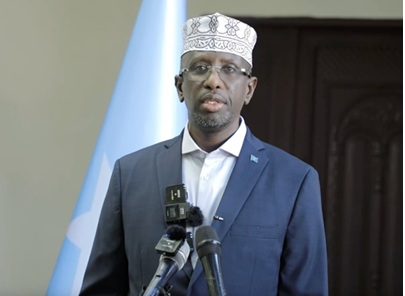
Mogadishu – (WDN) -A political firestorm is gathering in Mogadishu as former president Sharif Sheikh Ahmed launches one of his most direct and uncompromising condemnation yet on the administration of President Hassan Sheikh Mohamud.
At the center of the controversy are explosive allegations surrounding elections in Baidoa—elections that Sharif stated it have been reduced to a transactional process, where access to political office is effectively being priced. According to the former president, candidates are being compelled to pay $1,150 to participate, raising serious concerns about the commercialization of Somalia’s fragile democratic framework. But the accusation goes deeper than money, it strikes at the legitimacy of the entire process.
Sharif described what he portrayed as a hollow and opaque system, where candidates are instructed to gather 50 supporters, yet no credible verification exists. “You are told to bring 50 people to endorse you,” he said, “but when you examine the lists, there is no one actually accountable. The requirement exists on paper, not in reality.” The implication is clear: a process that appears structured outwardly but lacks substance at its core.
Then came the escalation. In remarks that cut through Somalia’s typically cautious political language, Sharif delivered a stark and personal message to the president, one that blended political condemnation with moral indictment. “Mr. President, you have inflicted as much suffering on this country as you can. For the sake of your faith, step aside,” he declared.
He painted a bleak and unsettling portrait of the country’s condition: prisons stretched beyond capacity, communities uprooted, poverty deepening, and a population pushed to the brink. His message was not framed as a policy disagreement—it was an accusation of systemic failure.
“People are exhausted. They have been displaced, impoverished, and left struggling to survive. This cannot continue,” he said. “Where is this country being taken?”
Sharif’s intervention lays bare a widening political fracture—one that is no longer confined to behind-the-scenes negotiations but is now unfolding in full public view. The dispute over elections has become a proxy for a deeper battle over power, legitimacy, and the direction of the Somali state.
As the clock ticks toward the end of the government’s term, the stakes are rising sharply. What was once political tension is rapidly hardening into confrontation—and the space for compromise is narrowing by the day.
WardheerNews