
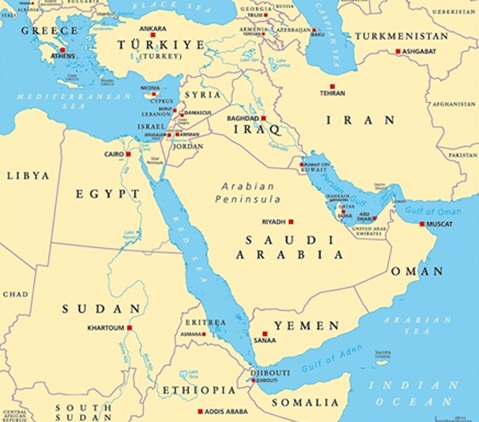
Addis Ababa (WDN) – In an extraordinary escalation of rhetoric over Ethiopia’s quest for access to the Red Sea, the country’s naval chief has openly suggested that military force remains an option if diplomatic and legal efforts fail to secure what Addis Ababa describes as its lost maritime rights.
Admiral Kindu Gezu, Chief of the Ethiopian Navy, declared that Ethiopia would exhaust diplomatic and legal channels to regain access to the sea but made clear that the country was not ruling out force.
“Our demand is clear. We believe the Ethiopian people and government will do everything within their power, using diplomatic and legal means, to regain the port we unjustly lost,” he said.
He then delivered a far more alarming message, presenting Ethiopia with what he described as two alternatives should diplomacy fail: accept permanent landlocked status or use force to return to what he called its historic Red Sea homeland.
The admiral’s remarks are particularly significant because they come from the head of Ethiopia’s naval establishment, not merely from a political commentator or nationalist voice. His explicit reference to military force raises fresh questions about whether Ethiopia’s maritime ambitions could eventually translate into a confrontation with its neighbours.
Eritrea at the centre of Ethiopia’s maritime ambitions
Admiral Kindu specifically referred to the Eritrean ports of Assab and Massawa, arguing that they historically belonged to Ethiopia. He characterised Eritrea’s independence as an unjust and unlawful separation that deprived Ethiopia of its legitimate maritime access.
Such assertions strike at the heart of the sovereignty and territorial integrity of Eritrea, an independent state since 1993. They also risk reopening historical grievances between the two countries, whose relationship has been marked by decades of conflict, mistrust and fragile reconciliation.
The implications are particularly troubling for the Horn of Africa, a region already burdened by unresolved border disputes, competing geopolitical interests and fragile security arrangements.
A regional security crisis in the making?
Ethiopia has increasingly presented access to the sea as a strategic necessity, arguing that its landlocked status imposes economic and security constraints on a country of more than 120 million people.
However, the language employed by its naval leadership goes beyond an economic argument for commercial port access. By invoking historical ownership and openly discussing the possibility of military action, Addis Ababa risks transforming a legitimate debate over maritime access into a dangerous territorial confrontation.
For Eritrea, any attempt to obtain Assab or Massawa through coercion would constitute a direct challenge to its sovereignty. For neighbouring countries, the prospect of another military confrontation between Ethiopia and Eritrea would threaten an already fragile regional balance.
The international community has every reason to take these statements seriously. Ethiopia’s search for maritime access must be pursued through negotiated arrangements, respect for international law and recognition of existing national borders.
What makes the admiral’s declaration especially alarming is the suggestion that Ethiopia might ultimately regard war as an acceptable alternative to remaining landlocked.
The question confronting the Horn of Africa is no longer simply how Ethiopia will secure access to the Red Sea. It is whether its leaders can pursue that ambition without dragging the region into another devastating conflict.
WardheerNews
Leave a Reply