
By Life & Peace Institute
The complexity of Somalia’s situation is evident from the sheer number of domestic, regional and international forces directly engaged in the conflict. The scope of this research project was limited to identifying major Somali political entities, documenting their ideological orientation and political objectives and strategies to achieve their goals. This report is by no means an exhaustive compendium of political actors in Somalia – or even in south-central Somalia.
Although the outfits and administrations whose members were interviewed for this project remain the most prominent and active political actors, there are many more Somali factions and forces that continue to be relevant in different parts of the country but have not been covered in this study. Given the multitude of actors, their shifting alliance and continuous disintegration of Somali polity, any claim of being comprehensive or definitive would be erroneous.
This report also does not claim to make a prognosis of the conflict. It does not purport to present an analysis of the conflict’s root causes or history. What it does provide is a snapshot of views, political positions and overall strategies of key Somali political actors during a particular period of six months since the election of the current federal government and adoption of the new provisional constitution in August and September 2012. The objective is to identify points of convergence and divergence among (and within) these factions to explore the possibility of finding nonviolent conflict transformation strategies.
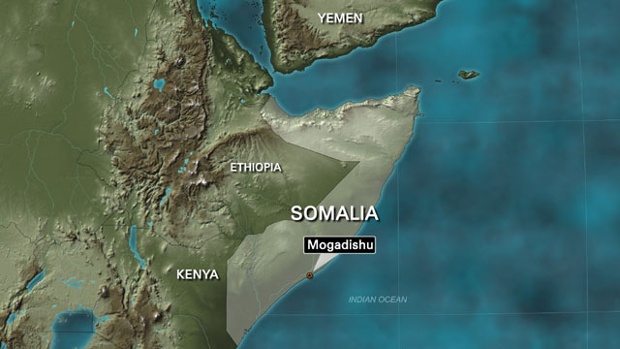
In addition to the above qualifications, it has to be recognized that doing field research on Somali politics is also problematic for a number of other conceptual and practical reasons. For example, what constitutes ‘Somalia’ is itself contentious and hard to define. The pre-civil war state has been broken into pieces. Somaliland had declared independence in 1991, campaigns for recognition as a state and has not been involved in the conflict in south-central regions. Puntland’s assumption of autonomy in 1998 and the emergence of several mini-states in south-central Somalia, with varying degrees of allegiance to the internationally recognized federal government, have further distorted the geographical and administrative limits of the term ‘Somalia’. Therefore, what we mean when we say ‘Somalia’ has to be qualified by various labels (such as the Puntland State of Somalia, the Interim Juba Administration, south-central Somalia etc).
Read More: Alternatives for Conflict Transformation in Somalia
Life & Peace Institute
Säbygatan 4
SE-753 23 Uppsala, Sweden
E-mail: info@life-peace.org