
BY AlEX DE WAAL

Back in 2002, Meles Zenawi, then prime minister of Ethiopia, drafted a foreign policy and national security white paper for his country. Before finalizing it, he confided to me a “nightmare scenario” — not included in the published version — that could upend the balance of power in the Horn of Africa region.
The scenario went like this: Sudan is partitioned into a volatile south and an embittered north. The south becomes a sinkhole of instability, while the north is drawn into the Arab orbit. Meanwhile, Egypt awakens from its decades-long torpor on African issues and resumes its historical stance of attempting to undermine Ethiopia, with which it has a long-standing dispute over control of the Nile River. It does so by trying to bring Eritrea and Somalia into its sphere of influence, thereby isolating the government in Addis Ababa from its direct neighbors. Finally, Saudi Arabia begins directing its vast financial resources to support Ethiopia’s rivals and sponsor Wahhabi groups that challenge the traditionally dominant Sufis in the region, generating conflict and breeding militancy within the Muslim communities.
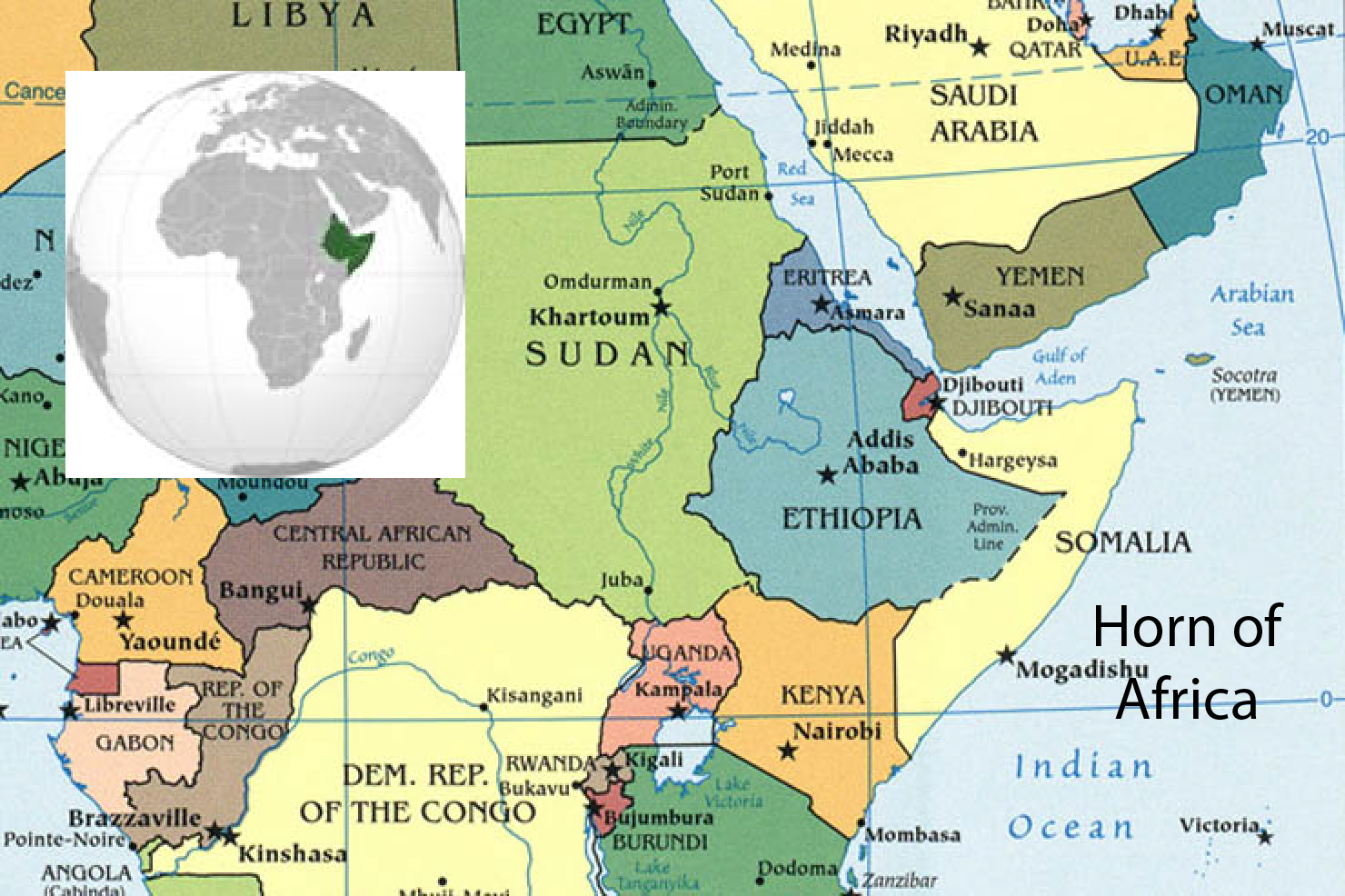
Fourteen years later, reality has exceeded Zenawi’s nightmare scenario; not only has every one of his fears come to pass, but Egyptian President Abdel Fattah al-Sisi and Saudi King Salman bin Saud are working hand-in-glove on regional security issues — notably in Yemen and Libya — which has raised the stakes of the long-running Egypt-Ethiopia rivalry. If the worsening tensions in the Horn of Africa erupt into military conflict, as seems increasingly possible, it wouldn’t just be a disaster for the region — it could also be a catastrophe for the global economy. Almost all of the maritime trade between Europe and Asia, about $700 billion each year, passes through the Bab al-Mandab, the narrow straits on the southern entrance to the Red Sea, en route to the Suez Canal. An endless procession of cargo ships and oil tankers passes within sight — and artillery range — of both the Yemeni and African shores of the straits.
Zenawi’s nightmare scenario, in other words, may soon become the world’s — and no one has a white paper to prepare for it.
A crisis in the Horn of Africa has been a long time in the making. The regional rivalries of today date back to 1869, when the Suez Canal was opened to shipping, instantly making the Red Sea one of the British Empire’s most important strategic arteries, since almost all of its trade with India passed that way. Then as now, the security of Egypt depended on control of the Nile headwaters, 80 percent of which originate in Ethiopia. Fearful that Ethiopia would dam the river and stop the flow, Egypt and its colonial masters attempted to keep Ethiopia weak and encircled. They did this in part by divvying up rights to the Nile’s waters without consulting Addis Ababa. For example, the British-drafted Nile Waters Agreements, signed in 1929 and 1959, excluded Ethiopia from any share of the waters. As a result, Egypt and Ethiopia became regional rivals, intensely suspicious of each other.
The Nile remains a high-profile source of tension between the two countries to this day; Sisi’s state visit last year to Ethiopia failed to achieve much, in large part because of Egypt’s unease over a huge Ethiopian hydroelectric project on the Blue Nile. But another important source of friction between the two countries has centered for some time on two of Ethiopia’s volatile neighbors — Eritrea and Somalia — which Cairo has long viewed as useful partners to secure its interests along the Red Sea littoral. Ethiopia has shown it will resist what it views as Egyptian encroachment near its borders. From 2001 to 2004, for instance, Ethiopia and Egypt backed rival factions in Somalia, which prolonged that country’s destructive civil war.
These fractures in the Horn of Africa have been deepened by Saudi Arabia’s reassessment of its security strategy. Worried that the United States was withdrawing from its role as security guarantor for the wider region, it resolved to build up its armed forces and project its power into strategic hinterlands and sea lanes to the north and south. In practice, that has meant winning over less powerful countries along the African coast of the Red Sea — Sudan, Eritrea, Djibouti, and Somalia — a region that Ethiopia has sought to place within its sphere of influence.
The Saudi presence along the African Red Sea coast has grown more sharply pronounced since its March 2015 military intervention in Yemen, which drew in Egypt as part of a coalition of Sunni Arab states battling Iran-backed Houthi rebels. The coalition obtained combat units from Sudan and Eritrea, and scrambled to secure the entire African shore of the Red Sea. Then in January of this year — under pressure from Saudi Arabia — Djibouti, Somalia, and Sudan all cut diplomatic ties with Iran. By far the most significant of these was Sudan, which has had long-standing political and military ties with Tehran. For years, Iranian warships called at Port Sudan, and Iranian clandestine supplies to the Palestinian militant group Hamas passed freely along Sudan’s Red Sea coast (occasionally intercepted by Israeli jet fighters). Now Sudan is part of the Saudi-led coalition pummeling the Iran-backed Houthis.
Read more: Africa’s $700 Billion Problem Waiting to Happen
Source: FP