
By Abdirahman Hashi (Burhan)
The political turmoil in Somalia presents to be deeper than the election impasse. The public grievances are against abuse of power, violation of the constitution, embezzlement of public money, cronyism, nepotism, misappropriation of public assets, parochialism, extortion, violence, and public misleading. These constitute serious criminal offenses that could have led to the conviction and impeachment of the president had there been effective legislative and judiciary branches.
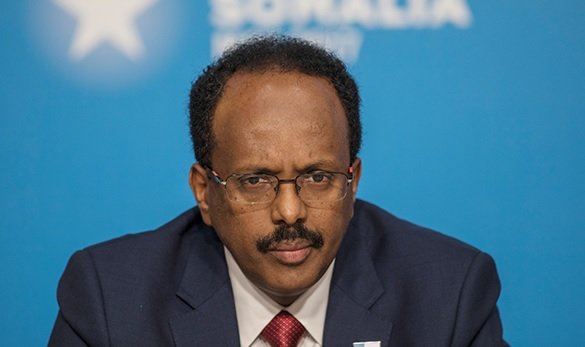
In light of the current crisis, Farmajo has proven to be unfit for the presidency he had been entrusted with. As his tenure ended, the country is rudderless, polarized and on the brink of another civil violence. There are a number of lessons that we can learn from the ex-president’s poor leadership and the ensued unprecedented political quagmire.
Unrealistic Expectations
Farmajo was unknown in the society until ex-president Sheikh Sharif introduced him as his first prime minister not for leadership credentials that Farmajo possessed but because of undue acts of lobbying based on mere clan politics. “What goes around comes around”, Sheikh Sharif and those who endorsed Farmajo for personal gains are now paying the price of their ill-fated choice. Like his predecessors, three major factors had contributed to Farmajo’s presidency: political corruption perceived as a norm as a result of societal moral decadence, clan politics and external money.
These elements have enabled foreign actors to easily meddle in the federal elections (parliamentary & presidential) in a manner that allows them to determine election outcomes and have strong influence on those with the highest leadership roles in the country. As the incompetence, untrustworthiness and poor leadership of Farmajo became apparent, public consciousness toward acknowledging the direct relation between the perpetual regression of Somalia and bureaucrats shaped by corruption is increasing significantly. It is a healthy realization that if changed into an action can be a catalyst for the radical change that the country needs in this critical time.
Mobilizing Clans Against Each Other
As a survival strategy, dictators often use all kinds of propaganda techniques as well as breeding tribalism, mistrust, hostility and disunity in the society by mobilizing clans and sub-clans against each other. What fuelled the civil war in Somalia was the consequence of 21 years of brutal military dictatorship that was exercising this immoral divide and rule tactics.
Farmajo and his cronies have heavily invested in this toxic strategy that somehow shaped what looks like recurrence of the socio-political dynamics in the 70s and 80s where the clans and sub clans that the tyrannical regime had brainwashed with preferential treatments in exchange for showing blind obedience and antagonizing the clans that the regime ostracized for contesting its brutality are now responding to Farmajo’s ruses. Although both politicians and intellectuals are warning the public against the blood feud that Farmajo and his minions are inciting, the risk of backlash is quite high particularly if the situation gets out of control.
Resilience of Jubaland and Puntland States
From the very beginning, Farmajo and his cohorts (local & foreign) estimated the only way he could stay in power is to forcefully eradicate the federal system in favour of a kleptocratic regime that works under his dictates. Substantial federal resources were wasted on this illusive dream. A campaign propagating the myth that federalism is not only counterproductive for Somalia but is also a foreign agenda meant to keep Somalia fragmented was launched.

Employing tribalism, bribery and extortion, Villa Somalia unleashed a campaign to replace the heads of the existing federal member states with its cronies. It has succeeded in the Southwest, Galmudug and Hirshabeele states but failed in Jubaland (JP) and Puntland (PL) states, which is a critical issue that Somalis need to understand. The resilience that JL and PL states have demonstrated signifies two important elements: First, under the current circumstance where a strong central government is out of the picture and Somalia’s sovereignty is threatened by complex foreign interferences, the fact that federalism is crucial for the national autonomy is undisputable; the roles that JL and PL administrations have played in defending the federal constitution demonstrates how vital is the system particularly in this critical time.
In the absence of their strong stance, Farmajo could have easily turned the nation into his personal fiefdom. Somaliland (SL) was the next target had he succeeded in subduing JL and PL. With all the international support toward strengthening capacities of militaries and security/intelligence sectors, his government has failed to ensure the security of one county in Mogadishu because of corruption and incompetence. How would the situations of JL, PL, and SL look like if they were under the control of Villa Somalia! Definitely, they would have been similar or even worse than the states that Farmajo deprived their citizens of their intrinsic right of self-determination.
Second, despite their limitations, JL and PL states were founded on the will and self-determination of their citizens that gave their leaders the legitimacy and support they needed to challenge the madness in Villa Somalia. Unfortunately the heads of Hirshabele, Southwest and Galmudug have been nothing more than a rubber stamp for Farmajo because they came to power as a result of his influence not the will of the people they claim to represent. If those three states were free from the manipulation of Villa Somalia, the member states could have easily created a roadmap for solving the electoral issues without Farmajo.
The Political Opposition
In the face of a perilous situation, the opposition has demonstrated great courage that has inspired the public. The opposition has also demonstrated remarkable political maturity that challenged Farmajo and his team and at the same time exposed their sinister agendas intending to highjack the fate of the country. In democracy, “no healthy democracy exists without a vigorous opposition”.
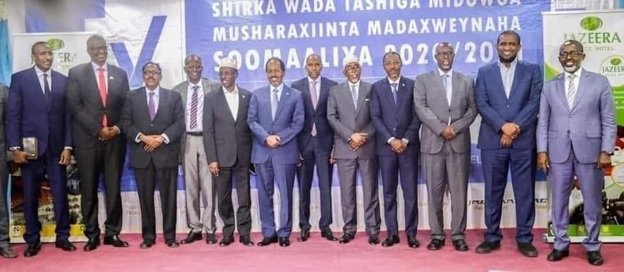
The Pulitzer-winning historian Richard Hofstadter argued that “modern democracy was created by the competition between political parties and is unthinkable without them”. If Farmajo is observing democracy, then why is he against its fundamental principles? Why is he suppressing freedom of expression and using life bullets against peaceful demonstrators? To achieve its goals, the opposition must sustain the alliance between its members and that with the progressive member states and never succumb to Farmajo’s intimidation.
Double Standard of the International Community
In the past thirty years, the interventions sponsored by the international community in war-torn African countries including Somalia have not been successful. According to some analysts, the failure is due to the gap between the policies and the actions on the ground. Policies are often comprehensive with clearly stated focus on encouraging economic growth, bolstering democratic institutions and improving peace and security.
On the ground, the focus is on “militarization” and “securitization” under the auspices of war on terror policies, which only strengthen those who are in power and their desires to remain in power against the will of their societies.
In the wake of the current political crisis, it is the first time that Somali intellectuals and commoners are equally denouncing the international community for its support of Farmajo’s egregious abuses of power. People believe Farmajo could not have defied the constitution and use of force to remain in Villa Somalia while his term has ended without having assurance from the international community because his administration cannot survive one day without the support of the international community. Let the situation in Ethiopia be a lesson to us. Somalia is even more vulnerable to violence than Ethiopia who had one of the strongest economies and armies in the continent.
As high profile international diplomats recommended, the international community should not waste more time in ignoring the legitimate concerns of the impoverished masses while nurturing Farmajo’s untenable greed for power, but should quickly support other legitimate stakeholders to help end this political quagmire.
Abdirahman Hashi (Burhan)
Email: ahashi55@gmail.com