
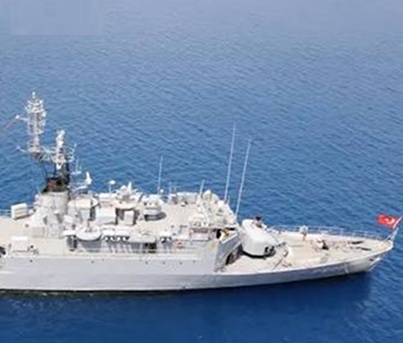
Mogadishu (WDN) — A dramatic and potentially dangerous escalation has reportedly unfolded along Somalia’s southern coastline after a Drones off a Turkish naval vessel positioned near the hijacked cargo ship Lutuf allegedly opened fire on a group of men returning from the vessel, killing four and injuring two others.
According to information obtained by WardheerNews, the six men had traveled to the Lutuf aboard a small boat, reportedly providing services or supplies to the vessel while it remained under the control of Somali pirates. The men were reportedly attacked after returning to the shoreline.
Sources say the strike occurred shortly after the group reached the coast and was carried out by a Turkish warship operating near the location of the hijacked Lutuf. Four of the six men were reportedly killed, while the remaining two sustained injuries.
The circumstances surrounding the incident remain unclear, and there has been no official statement from the Turkish government, the Somali Federal Government or Puntland authorities confirming that a Turkish vessel carried out the strike.
The reported attack, if confirmed, would represent a remarkable escalation in Turkey’s involvement in the unfolding Lutuf piracy crisis.
A Naval Response Takes a Dramatic Turn
The Lutuf was seized by Somali pirates earlier this week after being intercepted off Somalia’s southern coast. The pirates reportedly used another vessel, the Sward, which had previously come under their control, to facilitate the operation.
The situation has now developed into a much larger maritime standoff. According to information available to WardheerNews, three vessels—the Lutuf, Sward and Asana—are currently being held in the Garmaal area, where the pirates are reportedly maintaining control over the ships while demanding ransom payments.
The presence of Turkish naval forces near the hijacked vessels has added an entirely new dimension to the crisis. Rather than simply being a conventional piracy incident, the confrontation now appears to involve a powerful foreign naval force operating close to vessels controlled by armed pirates along Somalia’s coastline.
The reported deaths of four men have intensified concerns over what is happening around the hijacked vessels. According to sources, the six men were traveling in a small boat and had approached the Lutuf to provide services to those aboard the vessel. After completing their task, they reportedly returned toward the shoreline.
It was during or shortly after their return that they came under attack. The exact circumstances remain unknown. Were they mistaken for pirates? Was the vessel they were using considered a threat? Did the Turkish warship have intelligence indicating that armed individuals were operating from the shoreline? Or was the incident connected to an attempt to prevent supplies or assistance from reaching the hijacked ship? Those questions remain unanswered.
The involvement of the Sward may also be critical to understanding the latest development. Sources indicate that the pirates who seized the Lutuf had previously taken control of the Sward and subsequently used it in the operation against the cargo vessel.
The two vessels are now reportedly being held in the same coastal area, alongside the Asana. The pirates have reportedly demanded ransom payments for the release of the vessels and their crews.
This means that the Turkish naval presence may now be aimed not simply at monitoring the Lutuf, but at disrupting the pirates’ wider maritime network and preventing the hijacked vessels from being moved or resupplied.
Why Has Turkey Become So Involved?
The reported strike also raises the central question surrounding the Lutuf crisis: why is Turkey taking such an unusually aggressive interest in this particular vessel?
As previously reported, there are indications that the Lutuf could be carrying cargo connected to Turkish commercial, construction or strategic activities in Somalia.
Those reports have not been independently verified. But if the vessel is carrying Turkish-owned or strategically sensitive equipment, Ankara may regard its recovery as a matter extending beyond ordinary commercial piracy.
Turkey already maintains a significant military and security relationship with Somalia and has invested heavily in the country’s infrastructure, maritime security and defense institutions.
The reported presence of Turkish warships near the Lutuf therefore represents a potentially important demonstration of Ankara’s willingness to protect its interests along Somalia’s coastline.
Silence From Authorities
Perhaps most striking is the absence of an official explanation. No government has publicly accepted responsibility for the reported strike. WardheerNews attempted to obtain information from Puntland officials regarding the incident but was unable to reach officials capable of providing an immediate response.
The lack of official information has left residents and observers attempting to reconstruct events from fragmentary reports emerging from the coastline. That uncertainty is particularly troubling given the reported loss of life.
If a foreign naval vessel did carry out the strike, the incident would raise serious questions about the rules of engagement being applied in Somali territorial waters, the intelligence behind the operation and the status of civilians or service providers operating near hijacked vessels.
The Lutuf crisis has already demonstrated that Somali piracy, despite years of international efforts to suppress it, has not disappeared entirely. But the reported Garmaal strike suggests something potentially more serious: the return of piracy could now be drawing a direct military response from one of Somalia’s most powerful foreign security partners.
Three vessels remain reportedly under pirate control. Ransom demands remain unresolved. And four people are now reportedly dead following an incident whose circumstances have yet to be publicly explained.
For Somalia, the stakes are no longer limited to the safe release of hijacked ships. The country is now facing questions about foreign military operations along its coastline, the protection of civilian lives, the authority of local administrations and the increasingly complex security interests surrounding its strategic waters.
Until Ankara, Mogadishu or Puntland provides a clear account of what happened at Garmaal, one disturbing question will remain at the center of the crisis: What exactly happened when those six men came ashore—and why did a Turkish warship reportedly open fire?
Leave a Reply