

By Abdiqani Haji Abdi
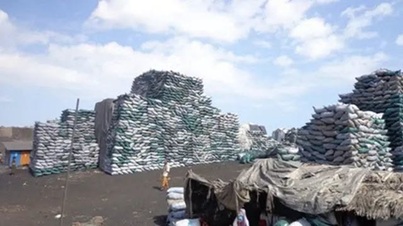
Somalia’s charcoal trade remains a major driver of deforestation and environmental degradation, as large numbers of trees are cut to meet domestic and commercial demand for charcoal. The destruction of forests is accelerating land degradation, increasing vulnerability to drought and climate shocks, and undermining the livelihoods of communities that depend on healthy ecosystems. Despite efforts to curb the trade, weak enforcement and continued demand have allowed the charcoal economy to persist, raising urgent questions about how Somalia can balance energy needs with the protection of its rapidly diminishing natural resources.
Several vehicles transporting charcoal have reportedly been set on fire recently near the settlement of Warmaxan along the road linking Wanlaweyn and Afgooye, highlighting a growing and increasingly dangerous struggle over Somalia’s charcoal trade and the rapid destruction of the country’s remaining forests.
The incident comes amid mounting concern over the large-scale cutting of trees across parts of Lower Shabelle, where charcoal producers and timber traders are reportedly clearing forests at an accelerating rate. Trees are being cut not only to produce charcoal but also to supply construction timber to markets in Mogadishu and elsewhere.
Local sources say the trade has become increasingly organized, with trees felled in large quantities before the wood is divided between charcoal production and construction materials. What was once a small-scale survival activity has increasingly evolved into a lucrative commercial enterprise—with potentially devastating consequences for Somalia’s already fragile environment.
A Forest Crisis Hiding in Plain Sight
Somalia has suffered decades of environmental degradation caused by drought, desertification, conflict, displacement and weak natural-resource management.
The country’s forests and rangelands are not merely sources of fuel and timber. They provide protection against soil erosion, support livestock production, help retain moisture and contribute to the ecological balance on which rural communities depend.
Yet across parts of Lower Shabelle, residents say trees are disappearing at an alarming rate. Every truckload of charcoal represents more than a commercial commodity. Behind it are trees that may have taken years to grow but can be destroyed within minutes. The consequences are long-term.
Deforestation can accelerate soil degradation, reduce pasture, increase exposure to drought and contribute to the loss of agricultural productivity. For communities already struggling with climate shocks and insecurity, environmental destruction can further undermine livelihoods.
Who Is Benefiting?
The charcoal trade has also generated serious allegations of corruption and political protection. Residents, environmental activists and other observers have repeatedly alleged that individuals with connections to influential Federal Government officials are involved in, or benefit financially from, the charcoal and timber business.
Some of these allegations have circulated extensively on Somali social media, where individuals and networks alleged to be connected to the trade have been publicly identified. However, claims of direct involvement by senior government officials require independent investigation and documentary evidence before they can be treated as established facts.
The persistence of such allegations nevertheless raises a fundamental question: How can a large and visible trade continue along major transportation routes without some degree of protection, tolerance or corruption within the enforcement system? That question deserves a serious answer from the authorities.
Many are also asking – where are the environmental institutions?
The apparent weakness of environmental enforcement is particularly troubling because Somalia has government institutions whose responsibilities include protecting forests, rangelands, agriculture and natural resources. Yet residents in affected areas say they rarely see effective government intervention against large-scale tree cutting.
The ministries responsible for livestock, forestry, rangelands and agriculture have an important role in protecting Somalia’s natural environment. But without adequate resources, personnel, monitoring systems and political authority, environmental laws can exist largely on paper.
That creates a dangerous vacuum. And wherever state institutions fail to enforce the law, someone else eventually fills the space.
Al-Shabaab Steps into the Vacuum
Al-Shabaab, which maintains significant influence in parts of Lower Shabelle, has increasingly targeted charcoal production and transportation.
The group has attacked charcoal trucks and burned vehicles involved in the trade, presenting its campaign as an effort to stop environmental destruction. The irony is difficult to ignore.
An armed organization that rejects the authority of the Somali state has effectively positioned itself as an enforcer of environmental rules in areas where legitimate government institutions have struggled to do so. But Al-Shabaab’s methods are hardly an environmental solution.
Destroying vehicles, threatening traders and using violence to impose regulations cannot substitute for functioning environmental governance. At the same time, the group’s ability to intervene demonstrates how profoundly the absence of effective state institutions has distorted the relationship between security, commerce and natural-resource management.
The lesson is stark: when government disappears from the enforcement landscape, armed groups can impose their own rules.
The Checkpoint Question
The movement of charcoal toward Mogadishu also raises questions about the security checkpoints along the Afgooye corridor. Sources familiar with the trade allege that charcoal trucks are allowed to pass through checkpoints after making payments to security personnel.
Such practices would suggest that corruption is helping sustain a trade that is environmentally destructive and potentially subject to government restrictions. The issue deserves investigation.
The Afgooye–Wanlaweyn corridor is an important transportation route connecting communities in Lower Shabelle with Mogadishu. If large numbers of charcoal and timber trucks are moving along these roads, it is reasonable to ask how they are passing through security and administrative controls.
Who authorizes them?
Who inspects their cargo?
Who collects the money?
And where does that money ultimately go?
These questions cannot simply be dismissed as political accusations. They concern the protection of Somalia’s natural resources and the integrity of public institutions.
Burning Trucks Are a Symptom, Not a Solution- The destruction of charcoal trucks may stop individual shipments, but it does not solve the underlying problem. The people cutting trees are responding to economic incentives. The traders are responding to demand. The transporters are responding to profit.
And communities facing poverty may have few alternatives to participating in the charcoal economy. That means the solution cannot depend solely on military action or the destruction of vehicles.
Somalia needs a broader strategy combining environmental enforcement, alternative livelihoods, sustainable energy options, community-based forest management and stronger regulation of commercial timber and charcoal markets. Without those measures, the cycle will continue.
A National Crisis Demanding Accountability
The Federal Government’s silence over the latest incident is increasingly difficult to overlook. The authorities have yet to provide a comprehensive public explanation regarding the burning of the charcoal vehicles near Warmaxan, the allegations surrounding corruption in the trade, or the broader destruction of forests in Lower Shabelle.
If the government genuinely intends to protect Somalia’s environment, it must demonstrate that commitment through action. That means investigating credible allegations of corruption, strengthening environmental agencies, monitoring transportation corridors, prosecuting illegal deforestation and ensuring that local communities have alternatives to environmentally destructive livelihoods.
It also means confronting those who profit from the destruction of Somalia’s natural resources—regardless of their political connections. The burning trucks near Warmaxan may appear at first glance to be another security incident on a dangerous road. But the smoke rising from those vehicles represents something much larger. It is the smoke of a country watching its forests disappear while the institutions responsible for protecting them struggle to enforce even the most basic environmental rules.
Somalia cannot afford to lose its forests while simultaneously losing the institutional capacity required to protect them. The charcoal trade is therefore not merely an environmental issue. It is a question of governance, corruption, security, poverty and the future survival of communities already living on the front lines of climate change. If the state does not act, Somalia risks reaching a point where there will be fewer forests left to protect—and fewer institutions capable of protecting them.
Abdiqani Haji Abdi
Email: Hajiabdi0128@gmail.com