
By Osman Ali Hassan
Wajir County can be understood through the simple but powerful image of a mountain divided into a windward side and a leeward side. On a mountain, the windward side receives the greater force of the wind and usually more rainfall, while the leeward side lies in the shadow of the mountain and often receives much less moisture. The difference between the two sides can therefore become a useful metaphor for understanding political representation, government resources, public institutions, social services, economic opportunities, and development within Wajir County. In this comparison, Wajir North, Wajir East, Wajir Central, Tarbaj, and Eldas can be viewed as forming the windward side, while Wajir South represents the leeward side. The purpose of this comparison is not to suggest that geography alone determines political or economic outcomes. Rather, it provides a simple way of describing how residents may perceive the distribution of political influence, government institutions, public investment, and social services across the county.
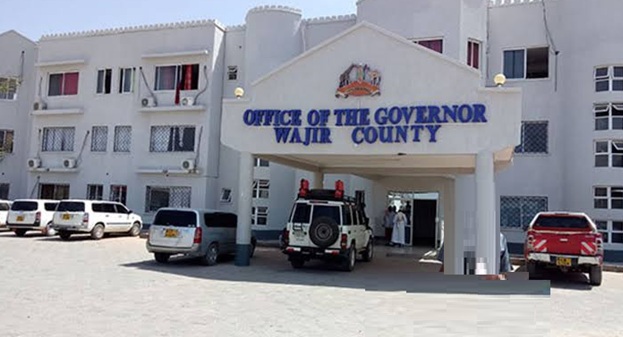
Wajir County is geographically large, socially diverse, and economically challenged. Its people have historically depended heavily on pastoralism, livestock, small-scale trade, public employment, humanitarian assistance, and other activities suited to an arid and semi-arid environment. Because of the size of the county, distance between settlements and administrative centers can have a major effect on access to government services. A government office located in Wajir town may technically serve the entire county, but physical distance, transportation costs, road conditions, communication difficulties, and the concentration of economic activity around the county headquarters can make access much easier for some residents than for others. This is where the windward and leeward mountain comparison becomes meaningful. The windward side represents the part of the county that appears to receive greater political visibility, institutional concentration, administrative attention, and economic activity, while the leeward side represents the part that many residents perceive as being further from the center of political and government power.
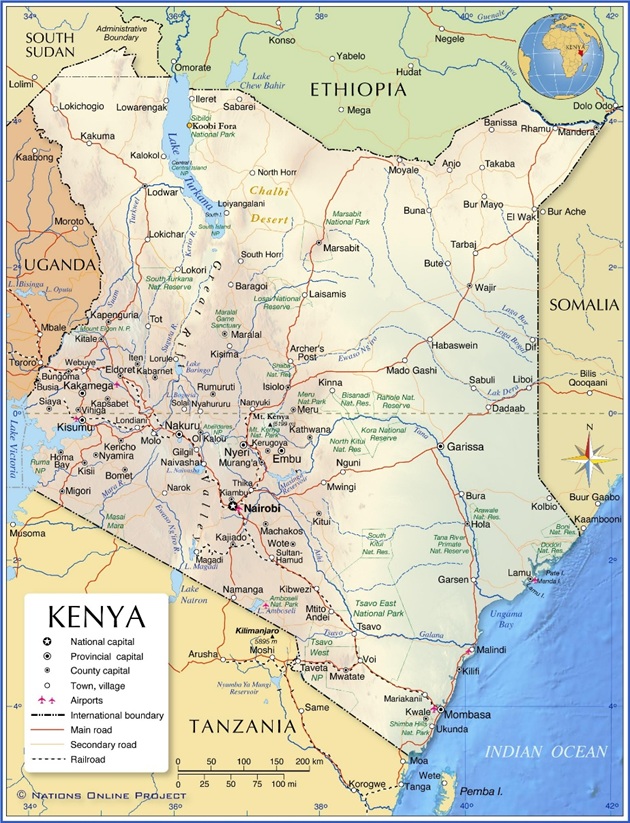
The political geography of Wajir County makes this comparison especially important. The county contains several constituencies and wards with different levels of political representation and different geographical circumstances. Wajir North, Wajir East, Wajir Central, Tarbaj, and Eldas are positioned in this metaphorical windward zone, while Wajir South occupies the leeward position. In political terms, representation is not simply a matter of the number of elected leaders. It is also about the location of political institutions, the influence exercised by political leaders, the ability of communities to communicate their needs to decision-makers, and the extent to which government programs become visible in different parts of the county. The windward side in this comparison appears particularly powerful because it contains Wajir town, the principal urban and administrative center of the county.
Wajir town is not simply another settlement. It is the place where many of the county’s major administrative, commercial, political, educational, financial, and social activities are concentrated. Government offices, businesses, banks, nonprofit organizations, transport services, educational institutions, and other service providers naturally tend to establish themselves where there is a larger concentration of population and economic activity. Once these institutions become concentrated in one location, they can attract even more economic activity and employment. This creates a cycle in which the center becomes increasingly important while distant areas remain dependent on the center.
This process can be compared to rainfall falling on the windward side of a mountain. When rain falls repeatedly on the windward slope, vegetation can grow, settlements can expand, and economic activity can become more sustainable. On the leeward side, however, the rain shadow can create a drier environment. In the same way, when government institutions, private businesses, nonprofit organizations, financial services, and political offices are concentrated around Wajir town and surrounding windward constituencies, residents in those areas may experience a greater immediate presence of government and economic opportunity. Residents of Wajir South may have to travel much farther to reach some services, offices, markets, financial institutions, educational opportunities, or administrative centers.The comparison becomes even more powerful when considering the political leadership associated with the windward side.
The windward political structure, as described by this metaphor, benefits from a concentration of several forms of representation and political influence. The county governor is a countywide leader, but the location of the county headquarters and much of the county administration in Wajir town naturally gives the urban center significant institutional importance. The woman representative provides another countywide political voice in the National Assembly. A nominated Member of Parliament also contributes to the wider political representation associated with the county. These positions do not constitutionally belong to one side of the county, because their mandates are intended to serve the whole county or the wider national constituency. Nevertheless, from the perspective of residents, the physical and political concentration of leaders and institutions can create the perception that some communities are closer to political power than others.
Wajir South, in the leeward position, presents a different picture in this metaphor. Its principal parliamentary representation is through its elected Member of Parliament, while the Deputy Governor is another important political figure associated with the county administration. Again, the Deputy Governor serves the entire county rather than one constituency, and therefore it would be inaccurate to treat that office as constitutionally belonging exclusively to Wajir South. Nevertheless, if political offices, government institutions, and development projects are physically concentrated elsewhere, residents of Wajir South may reasonably experience the practical effects of political distance even when they have formal representation. This distinction between formal representation and practical access is extremely important. A community can be constitutionally represented and still feel politically marginalized. Representation on paper does not automatically guarantee equal access to public resources. A Member of Parliament may speak for a constituency, a governor may administer an entire county, and a national government may establish projects for the benefit of all citizens. Yet the real test of equality is whether residents can see and experience government services in their daily lives. A government that exists mainly through offices in a distant town may feel remote to a person living many kilometers away. For this reason, the debate about Wajir South should not be reduced to whether it has a political representative. The deeper question concerns whether political representation translates into roads, health facilities, schools, water systems, markets, financial services, employment opportunities, administrative offices, security services, and other forms of development.
The geographical size of Wajir South makes this issue particularly significant. If Wajir South has the largest land area among the areas being compared, distance itself becomes a development challenge. Government services designed around a centralized administrative model may work relatively well for people living close to Wajir town, but they can become expensive and difficult to access for people living in distant rural communities. A resident may need transportation simply to obtain a government document, access a financial institution, attend a medical appointment, pursue an educational opportunity, or interact with an administrative office. The cost of transportation, food, accommodation, and lost working time can turn an apparently free government service into an expensive undertaking. Population also matters.
A large population creates greater demand for schools, hospitals, water, roads, markets, security, administrative services, youth programs, employment opportunities, and social protection. If population growth is not matched by investment, communities can experience pressure on existing facilities. A health center may become overcrowded. A school may lack classrooms. Water points may be insufficient. Roads may remain difficult to use during certain seasons. Young people may have few opportunities to acquire technical skills or find employment. Women may face difficulties reaching maternal and reproductive health services. Traders may have limited access to credit and reliable markets. These problems become more serious when the communities are far from the county’s administrative and commercial center.
Read more: The Wajir Windward and Leeward Divide
Osman A. Hassan
Email: abayounis1968@gmail.com
———–
Osman is WardheerNews contributor who writes about East Africa and Horn of Africa affairs