
By Ismail Ali Ismail (Geeldoon)
Introduction
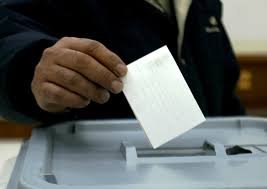
The Somali people and the International Community (IC) are both looking forward to 2016 as a year to be pregnant with many very consequential changes in Somalia.. By the last quarter of that year the country is supposed to have a finished constitution approved by popular referendum; fully functioning constituent states of the federation; multiparty politics; free and fair general elections on the basis of adult suffrage; the election of the Head of State by Parliament; an independent judiciary, which will include a constitutional court; and a cabinet government led by a Prime Minister who, far from being under the thumb of the President, is accountable to Parliament . With the achievement of all this, the country is supposed to step out of a ‘post-transitional’ transition to a permanent and regular form of governance. However, there are some forebodings owing to the current state of preparedness, which leaves much to be desired.
There has scarcely been any progress since I expressed my presentiments in an article titled “Whither Goest Thou Somalia” ( vide, Wardheernews.com, February 5, 2014). My purpose then was to give an early warning signal that the country was going astray and heading away from 2016. (The IC has also been giving early warnings.) Since then, not a single corrective measure has been taken. On the contrary, the situation has been aggravated further by paralyzing constitutional crises authored by none other than the President himself and encouraged by a corrupt Parliament used to making pecuniary gains from such recurring crises. I have discussed this matter in greater details in my last article, “The Poisonous, Putrid Politics of Somalia” (See, Wardheernews.com, November 26, 2014).
Will 2016 Deliver for Somalia?
The year 2008 made history in the United States because Barrack Obama was elected as the first black president. The year 2016 is similarly expected to make yet another history in the same United States owing to the likely election of Hillary Clinton as the first woman president. For Somalia too 2016 has been planned to be a historic year in which all political transitions will come to end and the country will settle to a definite form of stable government after a quarter century of chronic and internecine instability, coupled, for the most part, with half-hearted attempts to revive the Somali State in the form of ‘transitional governments’. However, it is becoming increasingly obvious to all who have eyes to see that that cherished vision will not materialize and 2016 will just prove to be another sterile and woefully wasted year.
Excuses will be plenty and all those unproductive leaders in Parliament, Government and at the apex of the State structure will fight tooth and nail for the extension of their terms which will, in all probability, be granted, not for recognizing ‘achievements in difficult circumstances’ but, in reality, as a reward for abject failure. However, statements from Mr. Kay and the IC have been optimistic – even at this belated hour – that general elections would be held on the basis of one-person one vote, as planned, before September 2016. But, it is difficult to see at this hour how this would materialize as scheduled, given the fact that scarcely any of the obvious prerequisites (such as a secure environment, a finished and popularly approved constitution, functioning constituent states of the federation, and the constitutional court) has been or will be met by any appointed date in 2016.
Neither the Government nor the country is in any mood of preparing for an election. Nor is any would-be or current politician is in any such mood. Consequently, there are no political parties being formed as yet. There are tentative efforts, mainly in Mogadishu and Nairobi, to create some alliances with a view to forging national parties, but so far nothing appears, even faintly, on the horizon. Some religious factions, notably Al-Dammal-Jadid (The New Blood) of the current president (Hassan Sheikh Mahmoud) and Aal-Sheikh (The Sheikh Family) of the former president (Sheikh Sharief Sheikh Ahmed), may end up forming their own parties (possibly under different banners) in order to compete for power. Other recently formed political groups, such as the “Forum for Unity and Democracy” led by former prime minister Abdulweli Sheikh Ahmed, may also metamorphose into full-fledged political parties.
Not surprisingly, there are even no regional parties though one may consider secessionist ‘Somaliland’ as an exception. But, even there, despite all pretensions to nationhood and sovereignty, the three political parties that exist are in the hands of the same clan – lock, stock and barrel. Here also is a problem of national unity that cries out for resolution ere long since it is, clearly, a sine qua non to the formation of constituent states in the north of the country. Even in Puntland where peace, security and stable administration prevailed for seventeen years, no parties have been formed. The inescapable and bitter fact is that the real political parties in Somalia are and have always been, no matter what names were used, our respective clans. And it is a reality we have progressively aggravated, instead of attenuating, its nefarious effects. A multiparty system is essential for democracy to thrive; and when operating in a parliamentary form of government, it is an antidote to the perennial disputes between the Head of State and Head of Government, which plagued and poisoned Somali polity in recent years.
The approach of the federal institutions (Parliament, President and Government) to solving the country’s fundamental and seemingly intractable problems has neither been bold, nor methodical, nor consistent, nor even honest: the evidence is abundant, glaring and incontrovertible. Deep-seated problems, such as absence of genuine national reconciliation; a cultural disdain for the rule of law; official corruption fed by continuing impunity and encouraged by public indifference; the lack of badly needed forces of law and order (Police and Army); the lack of any measure of patriotism; and a national government that is nowhere to be found in the country, except in Mogadishu where it is protected from its own people by foreign forces that, apparently, have a vested interest in the status quo.
These problems pose challenges of Himalayan proportions, which require no less than a government on a war footing in order to conquer them. Yet, federal institutions are doing the very opposite of what is required of them. Vision 2016 may amount to a strategic planning. But it has been rendered a dead letter by willful dissipation of resources, cheap and divisive politics, and utter lack of concentration in any single area at any time. They are blissfully unaware that the main idea behind Vision 2016 is not merely to finalize certain documents and make voting arrangements, but to lay down solid foundations of national unity as well as peace and security for a constitutional democracy that will grow and endure far beyond 2016.
Saving Vision 2016
In this section, I wish to draw on a conversation I had with Abdulweli Sheikh Ahmed, former prime minister, when he visited the US capital about two weeks ago, as well as Abdurahman Hosh Jibril’s informative, but also thought-provoking, article, ‘Fixing Vision 2016: Some Options for the Somali Federal Institutions’. The former led the Government for a year before his fall in December last year, and the latter (better known Hosh) has been involved in shaping policy as a minister (especially of constitutional affairs) and prominent MP.
While I observe and analyze events from a distance, with the aid of the Internet, other communications media and a wider social network, both Abdulweli and Hosh are insiders: in fact, they are history-makers. They have been shaping events and policy which the likes of me observe critically from outside the ring in which they play their political games. Often one sees things – the faults, the master strokes and the cheating – so much better from outside the ring. But, the games in which these two gentlemen were involved are of the sort that touch the lives of so many and chart the course of history. I have never met or conversed with Hosh, but I know he is a learned man in law and constitutional matters. It is for this reason that I was startled when he said in a VOA discussion of the recurrent dispute between successive presidents and prime ministers that the President should appoint, as Prime Minister, someone who shared his views. While in a presidential system everyone executes the policies of the President, in a parliamentary system everybody executes policies laid down by a cabinet led by a prime minister, not the president who, as in our system (current as well as past), has been and remains ceremonial. I expected Hosh to defend the Constitution rather than ingratiating himself with the President.
Now, in the light of Hosh’s article and my conversations with Abdulweli I cannot but conclude that Vision 2016 has been reduced to holding an election next year. After ignoring warnings for so long, it has now been suddenly realized that there cannot be one-person-one-vote as previously planned. Consequently, there is a frantic search for an electoral system that will allow a different kind of voting without meeting the necessary benchmarks, which Hosh mentioned in his article. A proportional representation (PR) system, which may require political parties to compete for elections and in which the entire country will be considered as one constituency is being given much thought. Absentee voting which will allow citizens in the Diaspora to participate is being considered. However, nothing is certain or final, and the mechanisms to put the system in operation are far from being clear. It is essential to discuss any proposed electoral system before legislation, but I will leave that for another day as it is an exhaustive topic, which will take much research and space.
But, holding a general election was supposed to come after, not before, a constitutional referendum, which, like an election, requires voting. Are we not putting the cart before the horse by being unduly preoccupied with the general election before the constitution is finalized and approved by the public? Obviously, a popular referendum, like a general election, is not feasible in the present circumstances of the country.

The question that no one has a satisfactory answer for is what is to be done to save Vision 2016? There is still time – sixteen months before September, 2016 – if the will is there; and much can be done. Hosh discussed four options, none of which is feasible – except the last, which is ‘Extension and its variations’. My own view is that extension will, as I said in the foregoing, be tantamount to rewarding mischief and abject failure. Einstein is said to have said that ‘Madness is doing the same thing over and over again and expecting a different result’. By the same token, giving a new lease of life to the same rapacious people and expecting them to be vegetarian tigers is insane.
But Hosh also mentioned the suggestion of an early impeachment of President Hassan Sheikh Mahmoud. That, however, would have been a good suggestion if Parliament had not been complicit. Maybe those who are calling for impeachment had Lord Curzon in mind when he said in India, ‘It takes a thief to catch a thief’. President Hassan would not have been able to play, as he did, with the fate of a suffering nation – his own – without the complicity of a parliament amenable to palm greasing. Parliament divested itself of any sense of duty and justice when, at the behest of a paying president, it summarily sacked two prime ministers without the right to be heard. Maybe it will sack the President too without hearing his plea to be heard, and, as the expression goes, he will be ‘paid in his own coins’. A venal parliament impeaching a venal president on grounds of venality is like the ‘pot calling the kettle black’.
To conclude, one feasible but radical option would be: to make a clean sweep of Parliament and President, and put in their place a technocratic government with full powers to do nothing but finish Vision 2016 in 2018. Alas, this is more theoretical than practical because the mechanics of its implementation are elusive at this juncture. As I keep repeating, ‘Good governance needs good people’.
Ismail Ali Ismail (Geeldoon)
Email:geeldoonia@gmail.com
—-
Ismail Ali Ismail (Geeldoon), is an author and political analyst, who writes about politics and governance. Mr. Geeldoon is a regular contributor of WardheerNews and the author of the book, Governance: The Scourge and Hope of Somalia. Now retired, he was a senior civil servant in Somalia and, later, a senior professional staff-member of the United Nations. He now resides in Virginia, USA.