
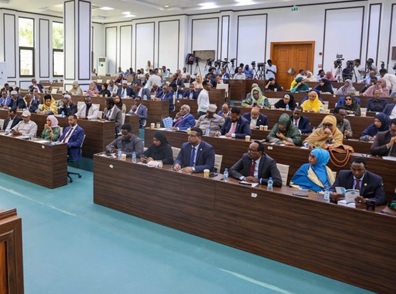
Mogadishu (WDN) – A fierce political contest for the position of Speaker of Somalia’s House of the People, which its mandate has already expired, has officially begun following the election of Sheikh Adan Mohamed Nur (Adan Madobe) as President of South West State on Thursday in Baidoa.
A fierce political battle for the position of Speaker of Somalia’s House of the People has officially begun following the disputed election of Sheikh Adan Mohamed Nur “Adan Madobe” as President of South West State in Baidoa on Thursday. The contest comes at a time when the mandate of the current federal institutions has already expired.
Adan Madobe’s departure from the federal parliament has immediately triggered a scramble among politicians from South West State, the federal member state traditionally allocated the influential position of Speaker under Somalia’s power-sharing formula.
The vacancy comes at a particularly sensitive moment for Somalia’s political institutions. While federal authorities continue operating under a controversial one-year extension the constitutional legitimacy of Parliament itself has become increasingly disputed, adding another layer of uncertainty to the contest for one of the country’s highest offices.
Among the first to formally enter the race is State Minister for Interior Affairs and Member of Parliament Saadaad Mohamed Nur (Aliyow), who announced his candidacy while attending events in Baidoa.
Addressing lawmakers and supporters, Saadaad declared that he had consulted extensively with President Hassan Sheikh Mohamud, Prime Minister Hamza Abdi Barre, and respected community elders before making his decision.
“I officially announce my candidacy for the position of Speaker of the House of the People,” Saadaad said. “This decision has been discussed with the President, the Prime Minister, and community leaders. I ask members of Parliament for their support so that I can work toward a united Parliament whose members enjoy full independence, immunity, and respect.” His early declaration is widely seen as an attempt to gain momentum before additional contenders formally enter the race.
Meanwhile, reports from Mogadishu indicate that Minister of Ports and Marine Transport Abdulkadir Mohamed Nur (Jama), who recently secured a parliamentary seat without competition or proper procedures, has quietly begun lobbying lawmakers and building political alliances in preparation for a possible bid for the speakership.
Political sources also suggest that several other figures from South West State are preparing to announce their candidacies, setting the stage for what could become one of the most closely watched parliamentary contests in recent years.
Beyond the competition itself, however, a larger constitutional debate continues to loom over the process. The race is unfolding against the backdrop of mounting arguments from opposition politicians, constitutional experts, and legal observers who question the legitimacy of major political decisions being taken by federal institutions whose mandates, they argue, have effectively expired.
Electing a new Speaker while broader disputes over electoral timelines, constitutional changes, and mandate extensions remain unresolved risks deepening the country’s political divisions. Supporters of the government, however, maintain that federal institutions must continue functioning to avoid a constitutional vacuum and ensure continuity of governance.
The reopening of Parliament in the coming days is therefore expected to be more than a routine legislative session. In addition to selecting a new Speaker, lawmakers are likely to face growing scrutiny over the legal and political foundations of their continued tenure.
What might otherwise have been a straightforward parliamentary succession has now evolved into a broader test of Somalia’s constitutional order, with the outcome likely to influence debates over legitimacy, governance, and the country’s future political direction.
As candidates maneuver behind the scenes and alliances rapidly shift, the battle for the Speaker’s chair is increasingly becoming a proxy struggle over a far more consequential question: who has the authority to govern Somalia at a time when the mandate of its key institutions remains the subject of intense political dispute?
WardheerNews
Leave a Reply