

By Samuel Hall.org
According to UNHCR Somalia, approximately 1.2 million people living in Somalia and 1.1 million Somalis residing outside of Somalia are a ‘population of concern’ due to their displaced status. For a country with a total population estimated at 12.5 million people, this accounts for almost 20% of the population displaced and thus in need of assistance. In South Central alone, displaced populations account for 80% of Somalia’s total number of IDPs. IDPs living in Mogadishu live in IDP settlements guarded by gatekeepers who control access within the settlement and determine what goods and services flow in and out of it. They determine livelihood availability for the IDP families residing within their settlements as well as their access to basic services. Their own livelihoods depend on the control of these IDP settlements and the aid that is given to these camps. Economisation of aid is the term that is often used to describe a scenario whereby aid is resold or diverted to benefit a few at the exp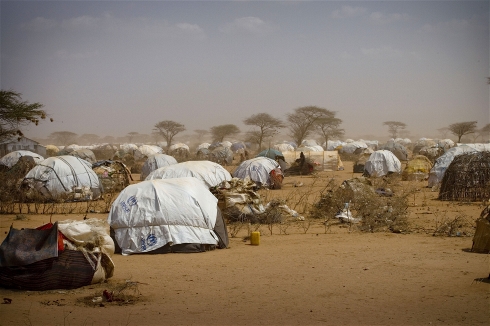 ense of many who desperately need it.
Across the border, Somali refugees, for example those living as urban refugees in Kenya’s cities or in Dadaab and Kakuma camps have suffered deteriorating conditions within Kenya. Constantly under threat of deportation to Somalia, many of these families are under threat of being sent to a country they left decades ago. UNHCR and the governments of Kenya and Somalia signed a tripartite agreement last year through which they agreed on the voluntary and informed return of Somali refugees from Kenya to Somalia.
Despite refuge in neighbouring countries, the grievances and challenges faced by the Somali displaced are many, particularly livelihood capacities and selfreliance that have not had a fertile ground to develop with some of the encampment policies followed by host countries. This is a regional/cross border issue, highly politicized and dynamic, which demands a multi sectorial response that goes beyond the existing humanitarian agenda.
How to build resilience for these communities to sustain and survive further shocks?
At present, the Somalia compact makes mention of displaced communities under the following
statement: The Compact also recognizes the need to address the development needs of the Somali population whoare displaced inside the country, or returning from surrounding countries.
In addition, displaced groups have also been recognised in the communiqués of various conferences held on Somalia’s New Deal in the past two years:
Read more: NEW DEAL FOR SOMALIA’S DISPLACED?
Source: samuelhall.org