
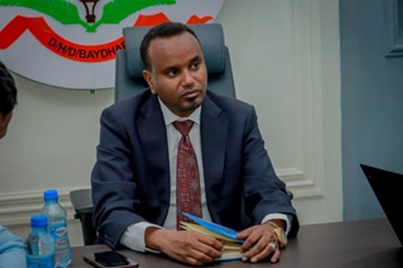
Baidabo (WDN) — Tensions are rising in Baidabo following reports that federal-aligned forces have placed the city’s mayor and district commissioner, Abdullahi Ali Watiin, under house arrest, an action that if confirmed, marks a significant escalation in the ongoing political struggle over South West State.
According to multiple sources, security forces moved against Watiin on short notice, confiscating his weapons and seizing the vehicles assigned to his office before restricting his movement. The operation was carried out quietly but has quickly reverberated across the city, fueling speculation about a broader political crackdown.
Watiin, who served under the administration of former South West State President Abdiaziz Laftagareen, is now reportedly set to be transferred to Mogadishu. No formal charges have been announced, and federal authorities have yet to publicly clarify the legal basis for the move—raising further questions about due process and the intent behind the operation.
The silence from officials has only deepened unease on the ground. In Baidabo, residents and local leaders are openly questioning the motives behind what appears to be a targeted action against a senior regional figure. For many, the development reinforces a growing perception that the balance of power between the federal government and regional administrations is shifting—forcefully and without consensus.
Some regional politicians have gone further, describing the situation as an erosion of local autonomy and accusing federal authorities of consolidating control through coercive measures rather than political agreement. Such claims, while contested, underscore the fragile state of federal relations in Somalia at a time when cooperation is already under strain.
The implications could be far-reaching. Baidabo is not just a regional hub—it is the interim capital of South West State and a critical center of political coordination. Any disruption to its leadership risks triggering administrative paralysis, intensifying local grievances, and further complicating an already volatile political landscape.
This latest development comes against the backdrop of unresolved constitutional disputes, contested authority between Mogadishu and federal member states, and a rapidly narrowing political timeline as national mandates approach expiration. In such a climate, even isolated actions carry national consequences.
Until the federal government provides a clear and transparent explanation, the arrest of Abdullahi Ali Watiin is likely to remain a flashpoint—one that raises deeper questions about governance, legality, and the future of Somalia’s federal system.
WardheerMews
Leave a Reply