
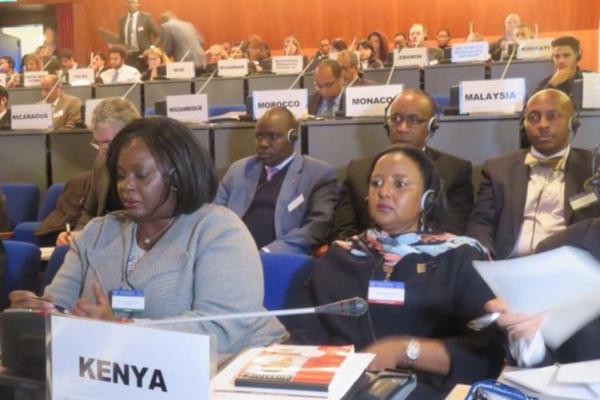

Foreign Affairs CS Amina Mohammed (r) and Defence CS Raychelle Omamo at the ASP meeting in Netherlands on Wednesday. Photo/COURTESY
Western countries teamed up with powerful global NGO on Friday to oppose Kenya’s push to withdraw the use of recanted testimony against Deputy President William Ruto.
A charged debate took place at The Hague as Foreign Affairs Cabinet Secretary Amina Mohamed threatened mass withdrawal from the ICC by African States.
She addressed the Assembly of States Parties to the Rome Statue, which set up the ICC.
“It is becoming difficult to feel comfortable and it is as if the Assembly would be better off without us…Our question to you today is, are we a heavy load that you wish to get rid of?” she asked.
But Kenya seemed to have lost the first round after the plenary referred the matter to the 18-member Assembly of States Parties bureau comprised mostly Western countries.
The bureau is expected to make its recommendations by next week.
Ruto and radio journalist Joshua Sang are accused of crimes against humanity in connection with the 2007-08 post-election violence.
At least 33 countries, including a number of EU states, Switzerland, Australia, Canada and Costa Rica rejected the Kenyan request, saying it would undermine the judicial independence of the ICC.
“Hearing all voices is important, but it would be inappropriate to express views under active consideration by the ICC,” an Australian representative told the ASP.
Before the ASP began, ICC chiefs, including Prosecutor Fatou Bensouda and President Silvia Fernández de Gurmendi, warned against entertaining the Kenyan bid, saying the matter is sub judice and Kenya is threatening the Court’s independence.
The narrative was repeated by Kenyan NGOs that claimed at least eight ICC witnesses in the case against President Uhuru Kenyatta had died under mysterious circumstances.
Kenyans for Peace With Truth and Justice, a coalition of more than 30 NGOs, said Kenya is trying to intimidate the ICC, particularly Bensouda.
In a strongly worded statement, Africog chief Gladwell Otieno said the ASP must not allow any decisions that could impact the independence and integrity of the ICC.
“The Kenya case has run into unprecedented challenges, with eight witnesses dead/disappeared in one case [Uhuru Kenyatta’s], and another 16 out of 42 prosecution witnesses in another case withdrawing/recanting their testimony,” KPTJ said.
The civil society organisations reported to the 123 ICC signatory states how President Uhuru defied the warning of Hague Judges about prayer rallies, which they said are characterised by anti ICC rhetoric.
“The warning not only fell on deaf ears but was responded to by a defiant commitment to scale up the rallies. The President urged that the prayer rallies proceed despite the Chamber’s warning, stating that the ICC cannot dictate to Kenyans not to pray,” the civil society groups said.
KPTJ joined other powerful global NGOs, including the Coalition for the International Criminal Court, Human Rights Watch and Amnesty International, in opposing the reversal of the controversial Rule 68 on evidence against Ruto.
However, Mohamed said Kenya’s six years experience with the ICC has enabled it to understand the institution up close and personal.
“I do not know any other country that can make that claim under the same circumstances,” she said.
According to the CS, of all Kenya’s challenges, including terrorism, dealing with ICC remains the most challenging.
Source: The Star