
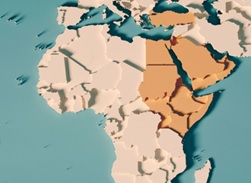
Addis Ababa (WDN) – Ethiopia’s determination to secure reliable access to the sea is becoming one of the most consequential geopolitical issues in the Horn of Africa. As Africa’s second-most populous country, Addis Ababa has repeatedly argued that remaining landlocked imposes significant economic and strategic costs. Yet its pursuit of maritime access has also generated concern among neighboring coastal states, particularly Somalia, whose political and institutional fragility makes it especially vulnerable to external pressure.
Ethiopian lawmaker Fethi Mahdi, Deputy Chair of the Foreign Relations and Peace Affairs Standing Committee of the House of Peoples’ Representatives, said Ethiopia’s demand for sea access goes beyond transportation and trade. He described it as an economic, legal and historical necessity.
According to Fethi, approximately 95 percent of Ethiopia’s imports and exports currently pass through a single port- Djibouti, imposing substantial annual costs on the country. He argued that dependence on one maritime corridor increases the price of goods, contributes to inflation and undermines Ethiopia’s export competitiveness.
He also invoked Ethiopia’s historical connection to the Red Sea, pointing to the ancient port of Adulis and the maritime links of the Aksumite Kingdom. He argued that Ethiopia historically maintained access to the sea and that its loss was not resolved through a process Addis Ababa considers legitimate.
The Ethiopian argument also invokes international maritime law, including the UN Convention on the Law of the Sea (UNCLOS), which recognizes certain rights of landlocked states to access the sea through neighboring countries.
But that principle does not give Ethiopia the right to seize another country’s territory or coastline. Any permanent maritime corridor must ultimately rest on negotiated agreements that respect the sovereignty, territorial integrity and borders of coastal states. That distinction is critical.
Ethiopia’s search for sea access is understandable from an economic and strategic perspective. But the question facing the region is whether Addis Ababa will pursue that objective through mutually agreed commercial arrangements—or whether the weakness of neighboring states could create incentives for more ambitious territorial or political demands.
Somalia is particularly exposed to this pressure. The country continues to struggle with political fragmentation, constitutional disputes, insecurity and weak state institutions. In such an environment, the fear is not simply that Ethiopia wants access to the sea, but that Somalia’s inability to consolidate effective national institutions could make its territory and coastline increasingly vulnerable to external geopolitical competition.
The stakes extend beyond Somalia and Ethiopia. Any confrontation over maritime access could destabilize the wider Horn of Africa, affecting trade routes, regional security and relations among Ethiopia, Somalia, Djibouti and Eritrea.
Fethi insists that Ethiopia wants a diplomatic solution based on dialogue and mutually beneficial agreements, arguing that sea access could promote regional integration and economic growth. That approach will ultimately be tested by how Ethiopia pursues its objective.
For Ethiopia, access to the sea is increasingly portrayed as an economic necessity. For its neighbors, however, the central question is whether that necessity can be satisfied without compromising their sovereignty. In a fragile and politically divided Horn of Africa, that distinction could determine whether Ethiopia’s maritime ambitions become an engine of regional integration—or another source of regional instability.
WardheerNews
Leave a Reply