
By Ali H. Abdulla
Bullooy Bullooy hoy Bullooy, Allow Belo kaa xijaab,
Bullooy afar buug akhriye, Hoy Bullooy beedna aan aqoon,
Bulloy bahal aan kugeyin, Bulloy haw beer nuglaan. Ustaad Axmed Naaji Sacad
It is rumored that when Tarik Bin Ziad invaded Andalusia, he burnt all the ships that ferried his soldiers from North Africa to prevent them from running away when the going got tough. A disputed famous saying is attributed to him in which he gives his soldiers two tough choices: to either die valiantly by the swords of the enemy, or to die shamefully by drowning in the sea.
 “The enemy is in front of you, and the sea is behind you: so where is the way out?”
It seems that Somalis are today facing a similar situation. Their country is endowed with the second longest coastline in Africa after Madagascar, and it is surrounded by hostile countries that contributed to its downfall and continue to play a role in its perpetual classification as a failed state. The situation has been exacerbated by a potent mixture of destabilizing factors:
- A violent terrorist organization that is blindly implementing the hidden agenda of unknown masters. The evil organization uses children as young as 13 to kill and maim innocent civilians in order to perpetuate the instability in the country. Their actions are contrary to any Islamic principles, national agenda, and borders on the insanity. Some of the questions that need to be raised are: who is funding this evil organization? Who really benefits from its continued efforts to destabilize Somalia? Who benefits from the massacre of doctors, educators, artists and politicians? Who benefits from the mass migration emptying the country from its able bodied youth? Who , Who .. and the list goes on.
- Two African neighbors with boots on the ground and with vested interests in Somalia. Kenya has recently flexed its muscles and laid claim to a large swath of Somalia’s continental shelf while Ethiopia uses its henchman Gabre to keep the leaders of the tribal enclaves in line. His omnipresence in every important meeting involving Somalia has led many Somalis to believe that he is the actual leader who calls the shots in Somali. Patriotic Somalis have even composed many songs to that effect. The power that Ethiopia and Gabre wield over Somalia as a whole became apparent recently when its Foreign Minister, Tedros, co-signed and guaranteed the infamous agreement in which the Ethiopian Vassal State of P/L finally accepted the 4.5 formula which it pretended to reject for many months.
- A number of cash strapped dictatorial regimes such as Uganda and Burundi that regard Somalia as a cash cow to fund their military apparatus which is used to suppress their own populations and extend theirs terms in office. A large portion of the salaries of the AMSIOM soldiers ends up in the coffers of these regimes. Ironically, a fraction of these salaries could have rebuilt the Somali army which would have been capable of defeating and permanently wiping out the dragging and damaging terrorist menace.
- A Somali Diaspora that ran away en-masse from their country when it collapsed to become refugees in foreign lands, but some of whom now contribute to its instability either by remotely igniting and funding clan-based conflicts or by an endless supply of inept politicians whose loyalties are at best questionable. Unfortunately, the Somali constitution does not disqualify individuals with multiple passports from holding any high office in Somalia. Somalia may need a Birther movement like the one spearheaded by the guy with the bizarre hairdo in the US. But the Somali movement should target inexperienced politicians who do not surrender their foreign citizenships when they return to Somalia and seek a high office in their mother country.
- Two clan-based enclaves that were established by the very rebel movements that destroyed Somalia in the first place. The Puntland leaders want to recover their lost dominant position in Somali politics, while the Somaliland leaders want to re live their colonial past and force others to join them in their insane dream of becoming an independent country with close ties to their past colonial masters in the hope of joining the Commonwealth of Nations and be ruled symbolically by queen Elizabeth and in the process be blessed by the Archbishop of Canterbury. They somehow ignore the fact that it was these very colonial masters that divided Somalia and planted the seeds that eventually led to its ignominious downfall. The recent insistence of Puntland to name the members of the coming Federal Parliament for all the signatories of the 1998 agreement which created Puntland, can only open the door for legitimizing the claims of the secessionists in Somaliland who base their claim to statehood on old and defunct colonial borders that were established before 1960. The two enclaves seem to be working in cahoots to divide Somalia into clan-based enclaves to the detriment of the Somali republic. Puntland seems to be practicing the Somali saying of “Cadyahaw ama ku cunay, ama ku ciideeyey”: If I cannot eat the meat, I would rather spoil it. May be its leaders should listen to the ” Tooyo Song” and become fair players in Somali politics. We should not forget that both enclaves were the brain-child of men who betrayed their country and defected to Ethiopia after the 1977 war with Ethiopia to reclaim the territories ceded to Ethiopia illegally by the colonialists.
- Clan chieftains who claim the capital of the Somali nation as their own private property. This scares away would-be Diaspora returnees and discourages any meaningful investments that could create jobs for the unemployed youth who fall prey to the terrorist recruiters or to people smugglers who promise a non-existent paradise in Europe and North America. One of these elders recently traveled to Hargeisa, the capital of the separatists in S/L and shamelessly recognized the separatist state as a Republic. These elders are above the law and they are one of the reasons Somalia cannot extricate itself from its status as a failed state. They ignite clan hatred with the knowledge of the so-called Federal Government.
- A drug culture in the form of “Kat chewing” that drains the country of hard currency to the benefit of its surrounding enemies. The practice also affects the productivity of the labor force and contributes to the illogical behaviors of the country’s leaders most of whom are high on Kat, which may affect their judgments.
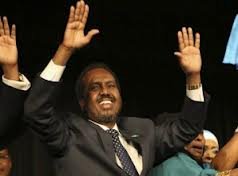
- A leader with a devilish smile who failed his country and people and still harbors dreams of being re-elected again in 2016 although he failed to rebuild the Somali army and other institutions in his first term in which the country suffered from corruption, nepotism, a resurgent terrorist movement and renewed clan fighting in many parts of the country such as Mudug.
The above factors and many more have contributed to the emptying of the country from its youth who have chosen the sea instead of confronting the swords of their numerous enemies, unlike Tarik Bin Ziad’s valiant soldiers who eventually conquered Spain and established a nation that contributed a lot to the civilized world.
A country that loses its youth through perennial droughts, mass migration and suicide vests is prone to be eventually taken over by its more populous neighbor which lacks an outlet to the sea. A famous outspoken Sheikh who vehemently and blindly supports the separatist enclave of Somaliland, has recently remarked that Somalia will be swallowed by its more populous neighbor, Ethiopia, when an Ethiopian clan crowned its traditional leader in the capital of the separatist state, Hargeisa. Hopefully, the Sheikh will see the light and stop calling for the establishment of weak states that could easily be devoured by Ethiopia.
Despite all these seemingly insurmountable challenges, there are heroes working quietly to extricate us from the abyss we find ourselves in. Among these heroes are the individuals who continue to rebuild the hotels and restaurants targeted by the suicide bombers and refuse to give up hope, and the thousands of brave Somali soldiers who confront the terrorists with insufficient armor, get paid a fraction of their AMISOM counterparts, and suffer from neglect when injured in the line of duty. I recently met one of these heroes whose body was riddled with countless bullets and left for dead, but with the will of God managed to survive and vows to return to his post in the fight against the devils masquerading as Islamists. He was forced to travel outside Somalia to be treated in private hospitals at the expense of his family when the Somali government refused to treat him at its own expense. He even met the current Prime Minister of Somalia who promised to help. However, the promised help never materialized.
These soldiers seem to be willing to trod the path chosen by Tarik Bin Ziad’s valiant soldiers who chose the sword instead of the sea and went on to build Grenada and Alhamra.
A united Somali Diaspora can also play a role in saving the country from its miserable situation. They can prevent the return of the man with the devilish smile who failed Somalia and wants to fail it again. I have no doubt that he will use the millions he has amassed during his ending term to bribe the parliament and return to office.
If the Diaspora cares about Somalia, now is the time to act by preparing and funding an honest and capable leader who is ready to renounce his foreign citizenship and stand for the Commander In Chief post for the Somali Republic. If we fail to do that, we might as well be ruled from Addis Ababa and prepare our future generations to enjoy Kitfo.
Ali H. Abdulla
Email: aliegeh@gmail.com