
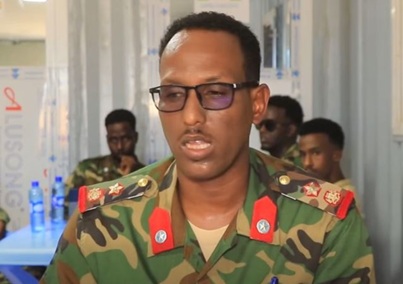
Mogadishu (WDN) – Former President Hassan Sheikh Mohamud has reportedly dismissed Colonel Adan Jeele, commander of the 23rd Military Police Brigade, in a move that is fueling fresh controversy over the government’s handling of Somalia’s deepening political crisis.
According to emerging reports, Colonel Adan Jeele was removed from his position after allegedly refusing to participate in a security operation targeting prominent opposition leaders critical of the president’s political agenda and proposed electoral process.
Sources familiar with the matter claim that the dismissed commander declined to take part in an operation directed against former President Sharif Sheikh Ahmed and former Prime Minister Hassan Ali Khaire, both of whom have emerged as leading critics of what they describe as an attempt to extend political control without broad national consensus.
The two opposition figures have been vocal opponents of the current administration’s electoral plans and have repeatedly called for an inclusive political agreement before any national vote is held.
Loyalist Officer Takes Command; Military sources indicate that Colonel Adan Jeele has been replaced by Abdullahi Osman Jimale, an officer widely regarded as being closely aligned with President Hassan Sheikh.
The appointment is expected to intensify concerns among opposition groups and political observers who have increasingly accused the government of politicizing state institutions and using security agencies to manage political disputes.
While the Federal Government has not publicly explained the reasons behind the command change, reports circulating within security circles suggest that Adan Jeele’s refusal to participate in the controversial operation was a decisive factor in his dismissal.
The development comes at a time of escalating tensions between the federal government and opposition leaders over the future of Somalia’s electoral process.
The administration continues to push forward with its proposed one-person, one-vote electoral model, a plan that critics argue lacks sufficient political consensus and institutional preparation. Opposition leaders have warned that attempts to impose major electoral changes without broad agreement could deepen instability and undermine confidence in national institutions.
Political analysts say the reported removal of a senior military officer for refusing to engage in a politically sensitive operation, if confirmed, would mark another sign of the widening divide between the government and its opponents. The controversy has also revived longstanding concerns about the role of Somalia’s security forces in political disputes.
The Military Police Brigade has traditionally been tasked with maintaining military discipline and enforcing security regulations within the armed forces. Any perception that such units are being drawn into partisan political conflicts risks further eroding public confidence in the neutrality of state institutions.
Observers note that Somalia’s fragile political environment requires security forces to remain above political competition and focused on their constitutional responsibilities rather than becoming instruments in disputes between rival political camps.
Pressure on Opposition Continues;The reported dismissal comes amid broader allegations that the government is increasing pressure on opposition figures who reject the president’s electoral roadmap.
With political negotiations largely stalled and trust between the government and opposition at one of its lowest points in recent years, the latest development is likely to add further strain to an already volatile political landscape.
As Somalia moves closer to a critical period of political transition, questions continue to mount over whether the country’s leaders can find a consensual path forward—or whether the confrontation between the government and opposition will deepen further in the months ahead.
WardheerNews
Leave a Reply