
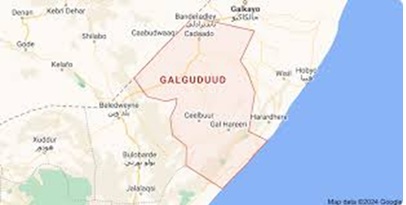
Abudwaq, Galgaduud(WDN) – A growing political confrontation in Galmudug turned violent Tuesday night when armed clashes erupted in Abudwaq between supporters of politician Libaan Shuluq and forces aligned with the Galmudug administration, exposing the dangerous consequences of increasingly militarized political competition in Somalia’s federal states.
According to local sources, the fighting broke out after security forces reportedly intervened to stop a political gathering organized in support of Libaan Shuluq, a figure widely viewed by residents as representing the political camp of former President Hassan Sheikh Mohamud.
The incident marks a dramatic escalation of tensions that have been building in Abudwaq for weeks, transforming political disagreements into armed confrontation and raising fears that Galmudug could be heading toward a deeper crisis ahead of future electoral contests.
“We Will Not Be Treated Like Baidoa”What makes the situation particularly significant is that Abudwaq residents had already staged large demonstrations rejecting Shuluq’s candidacy before the outbreak of violence. In recent days, hundreds of residents—many of them armed—gathered in the district to voice opposition to what they described as an attempt to impose a candidate associated with Hassan Sheikh’s political network on the people of Galmudug.
The demonstrators adopted a slogan that quickly spread across the town: “We will not be treated like Baidoa.” The slogan was a direct reference to the controversial political events that unfolded in South West State, where many opposition figures and local residents have long accused the federal government of intervening heavily in regional political processes and influencing leadership outcomes.
For many protesters in Abudwaq, the message was clear: they fear a repeat of what they view as externally managed political engineering and are determined to resist any effort to shape Galmudug’s future leadership through pressure, coercion, or federal influence.
Residents said Tuesday night’s clashes began after authorities moved against a pro-Shuluq political event. The situation rapidly deteriorated, with exchanges of gunfire reported across parts of the district.
The transformation of a political disagreement into an armed confrontation highlights the fragile state of regional politics in Somalia, where political rivalries are increasingly intertwined with clan loyalties, local security forces, and armed supporters.
Observers warn that once political actors begin relying on weapons rather than dialogue, elections cease to be contests of ideas and become contests of force. The violence comes amid an intensifying political struggle over the future leadership of Galmudug and the electoral mechanisms that will determine the administration’s next political direction.
The rivalry between Galmudug President Ahmed Abdi Kariye, commonly known as Qoor Qoor, and political figures seeking greater influence within the state has become increasingly visible in recent months. What was once a political competition is now showing signs of becoming a security challenge.
Analysts warn that if leaders fail to address the underlying grievances through dialogue and political compromise, similar confrontations could spread beyond Abudwaq and destabilize other parts of Galmudug. As of Tuesday night, neither the Galmudug administration nor the Federal Government of Somalia had issued an official statement detailing casualties or explaining the circumstances surrounding the confrontation.
The number of dead and wounded remains unknown. Residents reported hearing sustained gunfire in several parts of the town, while fears persist that tensions could reignite if urgent efforts are not made to calm the situation.
The events in Abudwaq underscore a broader challenge facing Somalia’s federal system: the increasing tendency for political disputes to become security crises. When communities begin viewing elections as battles for survival rather than democratic contests, and when armed groups become instruments of political competition, the consequences can be devastating.
The warning emerging from Abudwaq is stark. Political grievances that are ignored today can become armed confrontations tomorrow. For many residents, the message behind the demonstrations and the subsequent violence was not merely about one candidate. It was about resistance to perceived political interference and a demand that the future of Galmudug be determined by its people rather than by powerful actors seeking to shape outcomes from outside the region.
Whether political leaders heed that warning may determine whether Abudwaq becomes an isolated incident—or the opening chapter of a much larger political crisis.
WardheerNews
Leave a Reply