
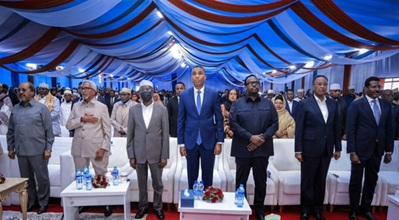
Mogadishu (WDN) — Mogadishu shimmered with color, ceremony, and collective pride today as the capital hosted one of the most unifying public gatherings seen in years. The inauguration of Ugaas Cabdirisaaq Ugaas Cabdullaahi Ugaas Xaashi Ugaas Faracade unfolded as a jubilant celebration—an event that blended centuries‑old tradition with the modern aspirations of a nation eager for stability and togetherness.
The atmosphere was electric. Leaders from across Somalia’s political spectrum arrived side by side, offering a rare tableau of harmony in a country where political disagreements often dominate the national conversation. Among the distinguished attendees were President Hassan Sheikh Mohamud, former President Sheikh Sharif, Prime Minister Hamza Abdi Barre, and Speaker of the Upper House Abdi Hashi Abdullahi. They were joined by former national leaders, ministers, lawmakers, regional representatives, diplomats, traditional elders, business figures, and civil society voices.
What made the day remarkable was not simply the scale of attendance—but the spirit behind it. Government officials and opposition figures shared the same hall, the same stage, and the same applause. For many Somalis watching, it was a refreshing reminder that unity is still possible, even in challenging times.
Held in the heart of Mogadishu, the ceremony radiated optimism. Prayers and blessings were offered for the newly crowned Ugaas, with speakers expressing hope that he will serve as a symbol of peace and a bridge between communities. Traditional leaders highlighted the enduring cultural role of the Ugaas institution—one that has long helped mediate disputes, preserve heritage, and foster social cohesion.
The event was overshadowed by the decision to grant speaking time to Hassan Mohamed Hussein Muungaab, the Governor of Banaadir and Mayor of Mogadishu—a figure whose tenure continues to generate deep controversy.
Critics accuse Mungaab of presiding over policies that have eroded public trust, particularly regarding land management in the capital. Allegations of large-scale land appropriation and displacement have fueled claims that hundreds of thousands of residents have been pushed into vulnerable conditions, with limited safeguards or compensation.
His administration has also faced scrutiny over the handling of international development funds, including support from institutions such as the World Bank. Observers argue that visible improvements in infrastructure have failed to match the scale of funding received, pointing instead to deteriorating urban conditions, including flooding and poor road maintenance.
Economic policy has become another flashpoint. Business owners and residents alike have voiced frustration over what they describe as heavy taxation, which they say has stifled commercial activity and slowed the city’s economic momentum.
For many attendees, the mayor’s appearance at the event was not a moment of unity—but a stark reminder of the unresolved grievances surrounding his leadership.
For many observers, the significance of the day extended far beyond the ceremonial crowning of a traditional leader. It was a vivid demonstration of how cultural institutions can bring together voices that might otherwise remain apart. In a political landscape often marked by tension, the inauguration offered a moment of shared pride and collective hope.
As the ceremony concluded, Mogadishu felt transformed—if only for a day—into a stage where unity overshadowed division, and where the promise of a more harmonious future felt within reach. The city was not defined by competing interests, but by a powerful reminder of what Somalis can achieve when they stand together.
WardheerNews
Leave a Reply