
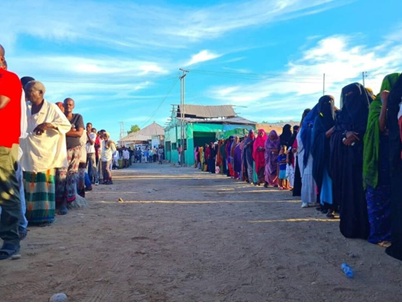
Garowe (WDN) — In a surprising admission that cuts against the optimism surrounding electoral reform, Puntland’s Interior Minister Abdi Hirsi Ali Qarjab has acknowledged that local councils elected under the one-person, one-vote system are facing serious operational breakdowns.
The system, widely seen as a milestone toward democratic governance, is now grappling with internal dysfunction. According to the minister, many of the newly elected councils have struggled to work effectively with the very mayors they helped bring into office—triggering persistent disputes, paralysis, and in some cases, outright confrontation.
What has raised further concern is the apparent drift of these councils away from local governance. Instead of focusing on service delivery and municipal priorities, some have reportedly become entangled in the broader political tensions between Puntland and the Federal Government, an unexpected turn that risks undermining their original mandate.
“The expectation was stability and accountability at the grassroots,” a regional observer told WardheerNews “What is emerging instead is fragmentation and politicization.”
The admission is particularly striking given that the one-person, one-vote model has long been championed as the future of Somalia’s electoral system. Puntland was among the first to test this approach at the local level, raising hopes that it could serve as a blueprint for wider national adoption.
Yet the current challenges highlight a more complicated reality: electoral reform alone does not guarantee effective governance. Without strong institutional frameworks, clear legal guidelines, and political discipline, newly elected bodies can quickly descend into dysfunction.
In response, Minister Qarjab signaled that his ministry is preparing new regulations aimed at restoring order and redefining the role of local councils. While details remain limited, the move suggests a shift from experimentation to control.
The development comes at a sensitive time, as Somalia continues to debate the feasibility of expanding one-person, one-vote elections nationwide. Puntland’s experience may now serve as both a lesson and a warning.
For many observers, the surprise is not just that problems have emerged, but how quickly they have surfaced in a system once hailed as a breakthrough.
Whether these setbacks represent growing pains or deeper structural flaws will likely shape the next phase of Somalia’s electoral journey.
WardheerNews