
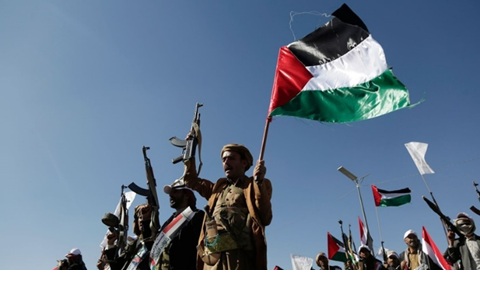
RIYADH (WDN) — The war in Yemen is reaching deeper into Saudi Arabia, with attacks on Riyadh’s international airport killing three Saudi citizens, including a national airline pilot, damaging a passenger aircraft and raising fresh fears that the conflict is spreading beyond the battlefield into civilian infrastructure.
Saudia, Saudi Arabia’s national carrier, confirmed the death of Captain Hamoud Ali Al-Kalthami following Thursday’s attacks on King Khalid International Airport. The airline expressed condolences to his family, friends and colleagues.
The Saudi General Authority of Civil Aviation said two attacks targeted the airport on October 8. The first struck airport facilities, while the second targeted an aircraft belonging to Saudia. The attacks killed three Saudi citizens and injured several other people, including citizens and residents of different nationalities. Some injuries were reported to be serious.
The aircraft was damaged while parked at the airport, with no passengers on board at the time, according to the airline. Airport operations subsequently resumed.
The deaths mark a sobering escalation in a conflict whose consequences are increasingly extending beyond Yemen’s borders. When missiles threaten a major international airport, the war is no longer confined to military positions or distant front lines. It puts civilian lives, commercial aviation and regional connectivity at risk.
A War With Increasingly Wider Consequences
The attack on Riyadh’s airport highlights the vulnerability of civilian infrastructure as hostilities intensify between Saudi-backed Yemeni government forces and the Houthi movement.
The Houthis claimed responsibility for strikes on the airport, saying they had used cruise missiles. The full circumstances of the attacks and the precise mechanism by which the Saudia aircraft was damaged were not immediately clear in the initial reporting.
The consequences, however, were unmistakable. Airport facilities were damaged, people were killed and injured, and aviation operations faced disruption as airlines and authorities assessed the security risks.
The incident followed other reported attacks on Saudi airports, adding to concern that air travel and critical infrastructure are becoming increasingly exposed to the widening conflict.
For passengers, airline employees and residents, the implications are immediate: a journey through a major civilian airport can no longer be treated as entirely separate from the military confrontation unfolding across the region.
Yemen’s conflict has endured for more than a decade, devastating communities and weakening the country’s institutions. The renewed escalation is now raising fresh concerns about the security of neighbouring states and the potential for further regional involvement.
Saudi Arabia has backed internationally recognised Yemeni government forces against the Houthis, who control the capital, Sanaa, and other parts of the country. The latest attacks have intensified the confrontation, with Saudi Arabia and its partners facing pressure to protect their territory and infrastructure.
The danger is that attacks and retaliation could produce a cycle in which each military response creates further incentives for escalation.
That prospect carries consequences well beyond the immediate combatants. A widening conflict could disrupt commercial aviation, threaten regional transport links and increase pressure on countries already navigating a volatile security environment.
The stakes are especially significant because the conflict is unfolding amid wider regional tensions. The more countries become involved militarily, the greater the risk that Yemen’s war will become entangled in a broader confrontation with consequences that are difficult to contain.
The Human Cost Behind the Headlines
The death of Captain Al-Kalthami gives the latest escalation a human face. He was an airline professional whose death has brought grief to his family and colleagues, while the other fatalities and injuries underscore the broader civilian toll.
Airports are essential public infrastructure, serving not only business and tourism but also families, humanitarian workers, medical travel and international connections. Attacks that endanger them can generate fear and disruption far beyond the immediate site of impact.
The incident also raises urgent questions about how civilian facilities can be protected when missile threats extend into major population centres. Although Saudi authorities have said airport operations returned to normal, the restoration of flights does not erase the loss of life or the security concerns exposed by the attack.
A Dangerous Threshold for the Region
The attacks on Riyadh are a reminder that the consequences of Yemen’s war cannot be measured solely by territory gained or lost by the opposing forces. They must also be measured in civilian deaths, damaged infrastructure, disrupted travel and the possibility of further escalation.
The immediate priority is to protect civilians and prevent additional attacks on facilities essential to public life. The longer-term challenge is to prevent military retaliation from drawing more countries and critical infrastructure into the conflict.
For Yemen, continued escalation threatens to deepen an already devastating crisis. For Saudi Arabia and its neighbours, it raises the prospect of a wider and more costly confrontation.
Captain Al-Kalthami’s death is more than another casualty in a regional conflict. It is a stark reminder that when war expands toward civilian airports and public infrastructure, the boundary between the battlefield and everyday life becomes dangerously thin.
WardheerNews