
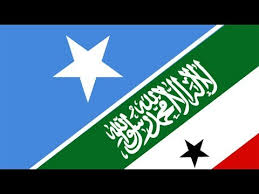
MOGADISHU (WDN) — The arrival of prominent Somaliland politician Liibaan Al-Cadaala in Mogadishu after abandoning his support for Somaliland’s independence has opened a new chapter in the contest over Somali unity. His defection may prove more than an isolated political move: it could signal a broader struggle in which disillusioned figures leave Hargeisa for Mogadishu, while others dissatisfied with federal rule may move in the opposite direction and embrace Somaliland’s independence project.
Al-Cadaala was welcomed at Aden Adde International Airport by federal lawmakers, senators, government officials, Banadir regional representatives and members of the public. His reception was presented by supporters of Somali unity as a symbolic victory for the idea of reunification after more than three decades of separation between Somaliland and Somalia.
The event also carried a political message. For Mogadishu, attracting a recognisable Somaliland political figure offers an opportunity to demonstrate that support for independence is not irreversible and that individuals who once defended separation may reconsider their position.
But the movement of politicians between the two sides is unlikely to be a one-way process. Political loyalties can shift when individuals feel excluded, threatened, marginalised or frustrated by the authorities they once supported. If Al-Cadaala’s departure reflects wider dissatisfaction within Somaliland’s political circles, others could follow him south. Equally, Somalis disillusioned with the Federal Government may gravitate towards Hargeisa, as previous political defections have illustrated.
Mogadishu sees an opening
At the welcoming ceremony, federal MP Aweys Mohamed Omar described Al-Cadaala’s arrival as the beginning of a potentially larger movement towards unity. He expressed hope that other Somaliland politicians would eventually come to Mogadishu, even invoking Somaliland President Abdirahman Mohamed Abdullahi, widely known as Cirro, as a future visitor.
His remarks reflected the political aspirations of Somalia’s unionist camp, which sees the return of prominent Somaliland figures as a way to weaken the perception that independence enjoys unquestioned support across the region.
MP Asha Koos, who represents the north-western regions, also praised Al-Cadaala’s decision and expressed hope that Mogadishu and Hargeisa could one day reunite peacefully. Her comments underscored the enduring emotional and political significance of unity for supporters of a shared Somali state.
Al-Cadaala thanked those who welcomed him and praised Mogadishu’s security and development. He described the capital as a centre of Somali intellectual and national life, arguing that Somalis remain connected despite their political divisions.
He also criticised Somaliland’s developing relationship with Israel, echoing Mogadishu’s opposition to that engagement. Al-Cadaala said he now felt able to speak freely about political issues that he had previously approached with caution. His remarks may indicate that his change of allegiance involves not only the question of independence but also disagreement with the political direction taken by Somaliland’s leadership.
Defections can work in both directions
Yet Mogadishu should be careful not to interpret one politician’s arrival as proof that Somaliland’s independence movement is losing broad public support. A political defection is significant, but it does not necessarily represent the views of an entire community or predict the decisions of other leaders.
The more important question is whether Al-Cadaala’s move reflects a wider pattern of political dissatisfaction. Politicians often reassess their allegiances when they believe they have lost influence, when internal party disputes intensify, or when they disagree with decisions made by those in power. Such calculations can lead individuals towards either side of the political divide.
That is why the flow of political figures between Mogadishu and Hargeisa should be understood as a two-way contest rather than a march inevitably towards reunification. For every Somaliland politician who abandons independence and joins the unionist camp, another frustrated with federal politics could choose to support Somaliland’s separate statehood. The number of future defections cannot be predicted from this single event, but the possibility highlights the fragility of political loyalty when grievances remain unresolved.
Neither side can build a durable national strategy simply by celebrating the arrival of defectors or condemning those who leave. Political allegiances are not substitutes for public consent, constitutional clarity or an agreed framework for resolving the longstanding dispute.
The real contest is political credibility
Somalia’s division has persisted for more than 30 years, and the disagreement between Mogadishu and Hargeisa extends beyond individual politicians. It concerns sovereignty, recognition, security, representation and competing visions of the future. These issues cannot be settled through ceremonial welcomes, political speeches or the movement of a handful of prominent figures.
If Mogadishu hopes to persuade more Somaliland politicians and citizens to reconsider independence, it must demonstrate the advantages of a credible and inclusive political settlement. That means addressing concerns about federal governance, power-sharing, security and the protection of regional interests. Likewise, Somaliland’s leadership faces the challenge of maintaining public confidence while navigating internal disagreements and sensitive external relationships.
The relationship with Israel, which Al-Cadaala criticised, may become another dividing line in Somaliland’s political debate. But it should not overshadow the wider question of how the people of Somaliland and Somalia can determine their political future without coercion or renewed conflict.
Ultimately, Al-Cadaala’s arrival is a political development worth watching, not proof that reunification is imminent. His decision may encourage others to reconsider their positions, but it may also prompt counter-movements among those who feel alienated by Mogadishu.
The real test for both sides is whether they can win political confidence through governance, dialogue and a credible vision for the future—not simply through defections. Until the underlying grievances are addressed, the movement of frustrated politicians between Mogadishu and Hargeisa is likely to remain part of the wider struggle over Somalia’s political destiny.
WardheerNews