
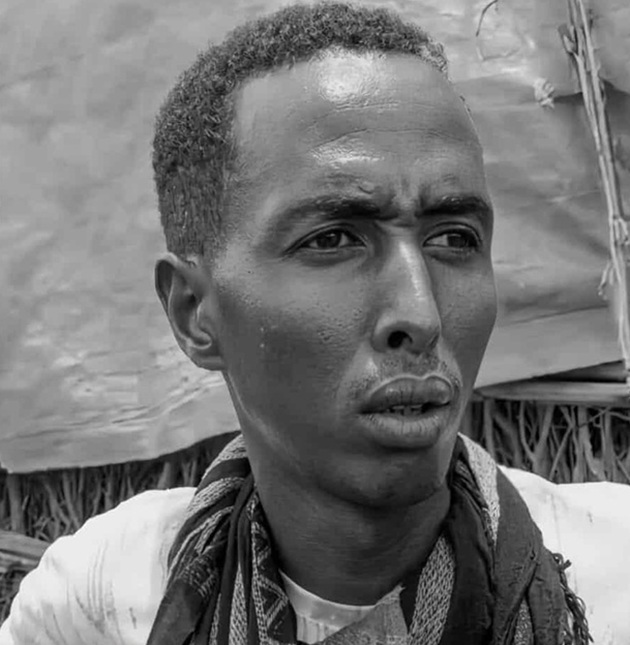
By Abdisalam Ali Farah (Biligsey)
A person who grows up in a society where government, police and courts function properly would struggle to understand how an innocent man could be killed because two clans fought somewhere else. Yet in parts of Somalia where state authority remains weak, a person’s clan identity can still become a death sentence.
Two Victims, One Dangerous Pattern
The recent killings of Ahmed Shire Hussein, a Somali National Army soldier near Ceel Baraf in Middle Shabelle, and Ahmed Yusuf Haamey, a respected businessman and community elder in Gaalkayo, illustrate the human cost of collective revenge.
Ahmed Shire was reportedly travelling toward Hiiraan while on leave when armed men intercepted him and two other soldiers. The other two were reportedly released, while Ahmed was killed. A video reportedly shows him pleading for his life and explaining that he was ill and travelling to see his family. Local reports have linked the killing to clan revenge, although the motive and responsibility remain unverified.
Days earlier, Ahmed Yusuf Haamey was reportedly shot dead in Gaalkayo while on his way to evening prayers. Local reports have also linked his killing to clan revenge, although authorities have not confirmed the motive. The circumstances of both killings raise the same disturbing question: How can a person become a target for something he did not do?
The answer lies in the dangerous logic of collective punishment—when an individual is targeted not because of his own actions, but because of his identity or association with a particular community. I remember living in Gaalkayo in the late 1990s, when clan disputes could quickly turn ordinary citizens into potential targets.
When killings occurred, respected members of the affected communities—including doctors, engineers, intellectuals, businessmen and traditional elders—were sometimes placed under protection in hotels while elders negotiated settlements.
They had committed no crime. Their only vulnerability was their association with the community involved in the conflict. That experience demonstrated a basic truth that remains relevant today: a clan is not an individual, and one person’s actions cannot make another person guilty.
When justice gives way to revenge, the question changes from “Who committed the crime?” to “Who can we kill from the other clan?” That is not justice. It is collective punishment.
The Most Dangerous Form of Revenge
The practice becomes even more destructive when respected members of a community are deliberately targeted because their deaths are expected to cause greater pain.
A doctor, engineer, teacher, businessman, intellectual, elder or community leader may have nothing to do with the original dispute. Yet his status can make him a more valuable target for those seeking retaliation. The objective is no longer accountability. It is intimidation, humiliation and revenge.
The killing of Ahmed Yusuf Haamey is particularly painful because he was reportedly a respected businessman and community figure who was on his way to pray when he was attacked. He never reached the mosque.
The reported killing of Ahmed Shire Hussein is equally disturbing. Although he was a soldier, reports indicate that he was travelling on leave and away from his military duties when he was intercepted.
Whatever investigations ultimately establish, neither death should become justification for another. One innocent death cannot justify another.
Islam Rejects Collective Guilt
For Somali society, there is also a powerful religious principle that should guide the response to this problem:
“No bearer of burdens shall bear the burden of another.” The principle is straightforward. If one man commits murder, his brother is not the murderer. His neighbor is not the murderer. His clan member is not the murderer. The perpetrator must answer for his own actions.
This principle should be central to Somalia’s efforts to rebuild justice, social cohesion and the rule of law.
A Responsibility for Scholars and Elders
Somali religious scholars have demonstrated that they can influence deeply rooted social practices. Their campaigns against harmful traditions, including female genital mutilation, have helped change public attitudes.
They now face another important responsibility. They should speak with the same clarity against the killing of war-ma-qabto—people who have nothing to do with the dispute for which they are being punished. Traditional elders have an equally important role.
The constructive elements of xeer—mediation, compensation, reconciliation and dialogue—should be strengthened. But traditional authority must never become a justification for killing innocent people.
Elders should make one principle unmistakable: If you know who committed the crime, pursue the perpetrator. Do not manufacture another victim.
The State Must Restore Individual Protection
Ultimately, the long-term solution requires a functioning state. Where police cannot protect citizens, courts cannot reliably prosecute criminals and government authority does not extend effectively into communities, people naturally fall back on clan protection. That is how collective punishment survives.
Somalia’s state-building challenge is therefore not simply about ministries, elections and security forces. It is also about restoring something much more basic: the individual’s right to live without being punished for somebody else’s actions.
The government must investigate the killings of Ahmed Shire Hussein and Ahmed Yusuf Haamey and bring those responsible to justice. Neither case should be allowed to trigger another cycle of revenge. The same responsibility falls on traditional elders, religious scholars and community leaders.
They must reject the logic that says: “Someone from our clan was killed, therefore someone from their clan must die.” That logic has no place in a society trying to rebuild a state.
From Collective Revenge to Individual Justice
Somalia cannot permanently escape clan violence while collective guilt remains socially acceptable. The question must change. Not: “Who should we kill from Clan X?” But: “Who committed the crime?” That is the difference between revenge and justice.
The deaths in Middle Shabelle and Gaalkayo should not become merely two more names added to Somalia’s long list of victims. They should be a warning that the country cannot build lasting peace while innocent people remain vulnerable to crimes committed by others.
Let the perpetrator answer for the crime. Let the innocent live. That is not only the foundation of the rule of law. It is the foundation of a society worthy of peace.
Abdisalam Ali Farah (Biligsey)
Email: biligsey2005@gmail.com