
ABU DHABI- The United Arab Emirates condemned Somalia’s decision to expel its ambassador on Thursday, rejecting Mogadishu’s accusations and warning that its approach could damage relations between the two countries.
Somalia ordered the Emirati diplomat to leave within 72 hours and recalled its own ambassador from Abu Dhabi. The move followed accusations by President Hassan Sheikh Mohamud that the UAE was undermining Somalia’s sovereignty and supporting regional administrations opposed to the federal government.
The UAE foreign ministry described Mogadishu’s position as “escalatory and hostile”, saying it reflected “irresponsible positions that undermine bilateral relations and weaken the foundations of cooperation between the two countries”.
It also criticised attempts to draw the UAE into Somalia’s internal political disputes. Decisions affecting relations between states, the ministry said, should serve shared interests and remain separate from domestic political rivalries.
The statement expressed regret that the Somali government was seeking to bring its internal power struggles into bilateral relations, potentially harming the interests of both peoples.
The UAE said it had already closed its embassy in Mogadishu and withdrawn its diplomatic staff in January 2026, citing what it described as hostile actions by the Somali government, including the cancellation of bilateral agreements.
Despite the dispute with federal officials, Abu Dhabi stressed its longstanding ties with Somalia’s population. It reaffirmed its commitment to preserving and strengthening relations with the Somali people, including the community living in the UAE and Somali visitors to the country.
The latest exchange follows increasingly sharp criticism from both sides. On Tuesday, Mohamud accused the UAE of providing political and economic support to regional administrations in opposition to Mogadishu. He also alleged that Abu Dhabi had established unauthorised military facilities and supported forces operating outside the federal chain of command.
Somali Information Minister Abdifatah Kasim Mohamud said the expulsion was a response to actions threatening the country’s sovereignty, territorial integrity, national unity and security. He described them as an “open invasion” and urged Somalis to unite in defending the country.
The minister did not specify which UAE actions had prompted the decision. He also warned that measures would be taken against anyone cooperating with the UAE in what he called an invasion of Somalia.
The UAE has long denied interfering in Somalia’s internal affairs.
Dispute over ports and regional authority
The latest confrontation follows a wider dispute over the federal government’s authority to manage Somalia’s relations with regional administrations.
In January, Mogadishu announced that it was cancelling all agreements with the UAE, including arrangements covering ports, government institutions and defence and security cooperation. It accused Abu Dhabi of violating national sovereignty.
The decision was rejected by Somaliland, Puntland and Jubbaland, three self-governing regions with close ties to the UAE. Their administrations argued that Mogadishu could not unilaterally terminate agreements falling under their own authority.
Puntland maintained that its agreement with a subsidiary of Dubai-based DP World to operate Bosaso port remained valid. DP World also continued operating Berbera port in Somaliland under a concession agreement, despite the federal government’s objections.
The dispute has also involved allegations over the UAE’s relations with Somaliland. Mohamud accused Abu Dhabi of bypassing the federal government in agreements concerning Berbera, Bosaso and Kismayo, and of helping establish military bases without Mogadishu’s approval.
He further alleged that the UAE had helped facilitate Israel’s recognition of Somaliland in December 2025 and enabled the transfer of Yemeni leader Aidarous al-Zubaidi through Berbera in January without federal consent.
Somaliland rejected Mogadishu’s position on Thursday, insisting that its authorities had exclusive control over the territory and the right to conduct their own foreign relations.
Its foreign ministry said Hargeisa could conclude diplomatic, economic and strategic agreements without seeking approval from the federal government in Mogadishu.
The UAE and the African Union Commission had reaffirmed their support for Somalia’s sovereignty and territorial integrity in a joint statement on January 6.
A wider political confrontation
The diplomatic row is unfolding amid a constitutional dispute in Somalia. The attorney general rejected a Supreme Court ruling earlier this month that said Mohamud’s presidential mandate had expired, adding to tensions between federal institutions.
Anwar Gargash, diplomatic adviser to the UAE president, criticised the Somali leadership on Wednesday, accusing Mohamud of allowing domestic political rivalries to shape the country’s foreign relations. Gargash also questioned whether the president was putting his personal interests ahead of Somalia’s.
The UAE has sought to distinguish its criticism of the federal government from its relations with the wider Somali population.
For decades, Somalia’s federal authorities have struggled to extend their control across the country and defeat Al-Shabaab militants, despite years of international assistance, including African peacekeeping deployments and US air strikes.
The UAE has provided military training and financial support to Somali forces, while investing in ports and other commercial infrastructure along the country’s strategic coastline.
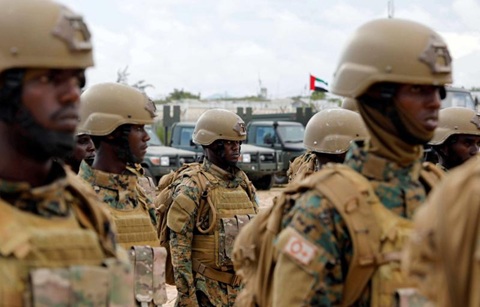
Senior Somali sources told Reuters on Thursday that Abu Dhabi continued to pay salaries and provide logistical support for about 3,400 Somali military police and special forces personnel in and around Mogadishu.
The UAE trained hundreds of Somali troops between 2014 and 2018. Its support has also extended to regional administrations, where Emirati-linked commercial and security arrangements have continued despite Mogadishu’s objections.
Source:
Leave a Reply