
By Ahmed Adan Sooldaad
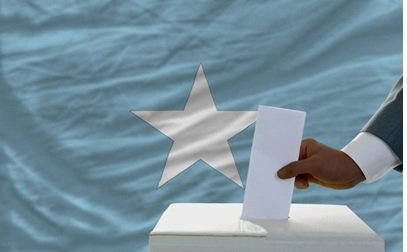
During a recent discussion with a colleague regarding the escalating political crisis in Somalia, my thoughts reverted to an old reading list from my tenure at Oxford. One of the books that profoundly influenced me was Paul Collier’s “Wars, Guns, and Votes”—a masterful and thought-provoking examination of how elections in fragile states can often be more detrimental than beneficial. Collier’s insights have been resonating in my mind recently, as Somalia’s leaders prepare for yet another electoral confrontation that appears less as a genuine step toward democracy and more as a rehearsal in political theatre.
The ongoing deadlock among the Federal Government, its member states, and opposition groups has once more diminished Somalia’s democratic ambitions to a mere struggle for survival—not based on ideas but on power. The irony lies in the fact that, although the discourse centres on “elections,” the underlying reality reflects Collier’s enduring caution: in fragile states, elections do not serve as instruments of democratisation but rather as means to extend incumbent authority by any necessary measures.
In his publication, Collier analyses how, in countries lacking fundamental checks and balances, elections frequently serve not as instruments for democratisation but as mechanisms for authoritarian consolidation. He contends that a strategic autocrat seldom outright denies elections, as such a stance would elicit international condemnation. Rather, they orchestrate these elections, meticulously staging a political theatre designed to yield a predetermined outcome. The primary objective is not to facilitate a change in leadership but to achieve what Collier describes as the’ prolongation of power.”
Observing President Hassan Sheikh Mohamud’s advocacy for a swift election, I recognise a quintessential example of this strategy in motion. Three aspects of the prevailing circumstances in Mogadishu distinctly exhibit the characteristic features of a Collier-style orchestrated election—an illusion of legitimacy where substantive authority is minimal.
Firstly, there exists the fundamental issue of legitimacy itself. Collier emphasises that this is the foundation of any meaningful electoral process. However, what is the authority of the Somali government beyond certain parts of the capital? It is embroiled in conflicts with federal states, incapable of providing security against Al-Shabaab throughout large portions of the country, and dependent on an international peacekeeping force for its continuity. Conducting an election under these circumstances does not represent the pursuit of a genuine mandate; rather, it employs the language of democracy to conceal the reality of state failure, thereby creating a superficial veneer of popular endorsement for a structurally flawed state.
Second, as Collier warns, without a neutral arbiter, the process is merely an extension of the executive’s will. In Somalia, the National Independent Electoral Commission (NIEC) is widely seen as a politicised body. The rules are being hastily drafted and imposed from the top, seemingly tailored to sideline opposition and consolidate the incumbent’s faction. This isn’t institution-building; it is the weaponisation of procedure.
Finally, the fragmentation of the federal states is not merely a symptom of chaos; rather, it constitutes a deliberate element of the strategic approach. Collier observes that a divided opposition is easier to control. By deliberately intensifying these tensions, the central government ensures that any opposition is localised and disorganised. Consequently, the election transitions from a national contest to a series of orchestrated local endorsements, where patronage, rather than principle, determines the result.
The international community must recognise the true nature of this situation. Collier appropriately criticises donors who, in their eagerness for a “success story,” laud the mere act of voting. By legitimising this manipulated process, they unintentionally support the very authoritarianism they profess to oppose. Endorsing this Somali election equates to endorsing a facade that will further exacerbate the country’s instability.
The Choice Before Somalia
Paul Collier’s work imparts a sober lesson: not every election signifies progress. In countries such as Somalia, where the state remains in an embryonic stage, elections conducted without established institutions do not constitute democratisation; rather, they constitute ritualised deception. Currently, Somalia finds itself at a crossroads between two trajectories: the illusion of a hurried, manipulated election that caters to the political calculations of a single individual, and the foundation of a genuine democracy — one founded upon reconciliation among federal states, credible institutions, and the rule of law.
True democracy cannot be imported through election schedules or donor-imposed deadlines. It must be constructed diligently and patiently from the ground up. Until such time, Somalia’s ballot boxes will continue to represent, as Collier warned, not instruments of liberty, but mirrors reflecting the same old authority under a new guise.
Ahmed Adan Sooldaad
Email: Sooldaad33@gmail.com
—————
Ahmed is a writer and researcher focusing on governance, development, and political transitions in East Africa.