
By Dayib Sh. Ahmed
The case of Puntland, Reform as Renewal of legitimacy
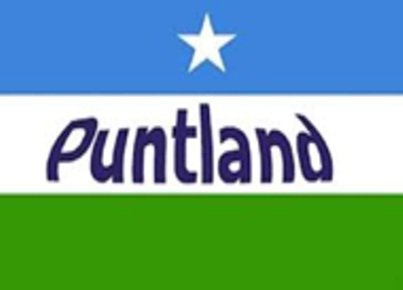
Puntland was among the oppositions of Mohamed Siad Barre’s military regime — an era that silenced dissent, centralized power, and suffocated civic life across Somalia. The resistance to that dictatorship was not born of political ambition but of moral conviction. Puntlanders believed, and still do, that leadership must serve the public interest, not consume it. The fall of Barre’s rule in 1991 was a reminder that no government built on fear and repression can endure. Power without justice is self-defeating; it collapses under its own weight, however, more than three decades later, Puntland finds itself navigating a perilous transition — one that mirrors some of the very challenges that doomed Somalia’s first republic. When Puntland was founded in 1998, it emerged as a refuge of order amid national collapse. Its founding charter reflected a moral promise: that governance in Garowe would not mimic Mogadishu’s mistakes, that power would remain accountable, and that the rule of law would guide the state’s affairs.
Yet in recent years, the political landscape of Puntland has begun to shift in troubling ways. The creeping centralization of authority, the marginalization of dissenting voices, and the politicization of public institutions are warning signs of democratic backsliding. While the context may differ from Barre’s era, the underlying pattern feels hauntingly familiar — power concentrated in few hands, accountability weakened, and institutions slowly bent to political will. As history teaches, nations often perish not because they are conquered, but because they forget the moral foundations of their creation. The late Mohamed Siad Barre’s government fell not due to foreign invasion but internal decay the loss of legitimacy that follows when leaders replace consent with coercion. Puntland must not repeat that fate under new rhetoric of “stability” or “unity.” Stability is meaningful only when it is rooted in justice, inclusivity, and the rule of law. The pursuit of order without freedom is a false peace — a quiet before the storm. If Puntland once rejected dictatorship, why now tolerate its democratic disguise? Why do societies that sacrificed so much for freedom accept the slow return of authoritarian habits? The answer may lie in complacency — the fatigue that follows long struggles. Yet complacency is dangerous. It allows fear to masquerade as prudence and silence to pass for peace. The defense of freedom is not a one-time act; it is a constant duty.
Puntland’s Constitution offers a moral and legal roadmap for reform, if only it is taken seriously. Article 14 guarantees freedom of expression and the press — a cornerstone of accountable governance. Article 46 prohibits clan-based or personality-driven political organizations, recognizing that tribalism corrodes public trust and undermines merit-based politics. Oversight bodies such as the Auditor General, and judiciary must be insulated from executive interference to restore integrity in public service.
One clause that demands renewed attention is Article 7 (Land and Boundaries), which clearly defines Puntland’s territory as encompassing the regions of Bari, Nugaal, Sool, Ayn, Karkaar, Mudug, Haylan, and Sanaag. The question arises: Where are Sool and Ayn today? These regions have effectively established their own administration under the name “North East State.” Puntland must now face this reality and take the necessary constitutional steps including amending Article 7 — to reflect the new political and territorial circumstances. Pretending otherwise only deepens confusion and weakens Puntland’s institutional legitimacy. Puntland must recognize that governance is built on truth, not illusion. The emergence of “North East State” marks a new political reality that cannot be ignored. Amending Article 7 is not surrender, but adaptation — a necessary step to preserve Puntland’s legitimacy, stability, and the integrity of its constitutional order. As Puntland stands at a crossroads, it faces a simple choice — to either learn from Somalia’s past or to repeat it. The memory of 1991 should serve not as a wound to reopen but as a warning to heed. Puntland’s promise was born of moral clarity and collective responsibility. To preserve that promise, its leaders must choose reform over regression and courage over convenience. Only then can Puntland remain a beacon of federalism and stability in an increasingly fragmented Somalia.
Good governance rests on five moral pillars, each essential for a just and functional state:
- Participation Citizens have the fundamental right to shape their own destiny through open dialogue, debate, free and fair elections which doesn’t exist at both Federal and Puntland level. True governance flourishes only when people are actively involved in decisions that affect their lives.
- Rule of Law The law must reign supreme over privilege, wealth, or influence. No individual, no matter how powerful, is above the law, and justice must be applied equally to all.
- Transparency Openness in government decisions, processes, and finances is essential to dispel corruption and secrecy. Transparency ensures that leaders are visible and accountable, and it builds trust between the state and its citizens.
- Accountability Leaders and institutions must have the courage to answer for their actions and decisions. Holding power to account is not a political option—it is a moral obligation.
- Responsiveness Government must be timely and effective in addressing the needs of its people, without delay, favoritism, or discrimination. A responsive state listens to its citizens and acts in their best interest.
These pillars are not mere abstractions. They resonate deeply with both Western and Islamic thought, reflecting Locke’s liberal social contract and the Qur’anic guidanceJudge between them with justice; do not follow desire” quran teacher us (5:49). In Puntland, however, the long-standing concentration of power in the presidency, coupled with weak oversight institutions, has eroded these principles. Participation is limited, laws are unevenly applied, transparency is minimal, accountability is rare, and responsiveness is often slow or selective. Strengthening these pillars is essential not only for good governance but for restoring public trust and ensuring the state serves its people rather than the ambitions of a few.
The Northeast Political Question
The North-East state new administration established in 2025 has reopened long-standing historical and political questions at the heart of Somalia’s northern regions. What was once considered a local or regional dispute has now evolved into a defining test for the very idea of federalism and unity in Somalia. Puntland’s muted and cautious response, though politically understandable, also reflects a deeper absence of strategic clarity and a lack of long-term vision in addressing one of the most sensitive national issues of our time. Both Puntland and the north-East state leadership appear trapped in short-term electoral calculations, responding to immediate pressures rather than charting a shared strategic future. Yet, beneath these political maneuvers lie much deeper questions of historical identity, collective belonging, justice, and reconciliation. These are not merely administrative or territorial issues; they are moral and philosophical challenges about who represents the people of the north and how they fit within Somalia’s federal mosaic. Reform in this context must go beyond politics it must be visionary.
Puntland should not approach the north-East state question as a zero-sum contest of control or authority, but as an opportunity to reimagine cooperation among the Somali communities of the north. What is needed is a coherent northern policy one that integrates security, diplomacy, governance, and reconciliation into a unified strategic framework. Such a policy should affirm Puntland’s historical role as the defender of federalism and constitutional order, while also recognizing the legitimate grievances, aspirations, and identities of communities in North-Eat state. The goal must not be domination but coexistence not rivalry but partnership a partnership rooted in mutual respect, trust, and shared national purpose. Puntland should lead efforts to build dialogue mechanisms, confidence-building programs, and joint security initiatives with North-East state, under the broader umbrella of Somalia’s federal system.
Historically, external manipulation and internal mistrust have divided the Somali people of the north. British colonial boundaries, clan politics, and post-1991 fragmentation have all left deep scars on the collective psyche. But if Puntland aspires to renew its moral and political leadership, it must rise above these divisions and offer a unifying vision one that turns historical wounds into opportunities for collective healing. In essence, the “Northeast Question” is not simply about who governs a region, but about how Somalis govern themselves with justice, inclusion, and a shared sense of destiny. The future of Puntland’s federal diplomacy, and indeed the stability of Somalia itself, depends on whether this question is addressed with wisdom, restraint, and foresight
The Office of the Presidency: Stewardship, Not Kingship
Puntland is at a crossroads. The decisions of today’s leaders—and the choices of those who seek power—will define whether this region thrives or falters. The presidency is not a crown. It is not a personal fiefdom. It is an office of stewardship, bound by duty, ethics, and service to the people. Those who treat it as a prize, or as a platform for personal gain, betray not only the office but the very society that sustains them. Political theory and history leave no room for doubt. Max Weber argued that charisma alone cannot legitimize rule; authority must be institutionalized, accountable, and rational. Elite theory warns that unchecked power among a few inevitably corrodes public trust. Philosophers and historians—from Plato to Ibn Khaldun, Locke to Al-Kawakibi—repeated the same lesson: states fail not from outside attack, but from internal rot. Corruption, arrogance, and self-interest within leadership are the silent killers of nations. Puntland cannot afford that fate.
To the political class: the time for self-interest is over. Your mandate is service, not domination. Reform is not a campaign slogan—it is your moral and civic duty. Transform office into service, power into principle, and authority into trust. Lead with integrity, restraint, and vision. Only then can institutions rise above factionalism and guide Puntland toward unity and progress. To the citizens: your voice is your power. Demand accountability. Reject leaders who see the state as personal property. Insist on stewardship, not kingship. The consequences of silence are clear: stagnation, division, and decay. The rewards of principled leadership are undeniable: justice, dignity, and hope. Puntland—and by extension, Somalia—stands at the threshold of renewal. This is not a debate. It is a test of conscience and courage. The presidency is not for the ambitious; it is for the accountable. We do not need rulers who occupy thrones. We need stewards who honor their responsibility. And we need them now.
Read more: Government Reform in Puntland, A Political, Philosophical, and Moral Renewal
Dayib Sh. Ahmed
Email: Dayib0658@gmail.com
——
Dayib is a writer, political analyst and WardheerNews contributor