
By Abdikarim Haji Abdi Buh
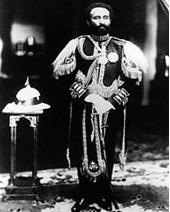
On the morning of September 12, 1974, Addis Ababa awoke to a reality few Ethiopians had ever believed possible. The Lion of Judah, Emperor Haile Selassie I, a ruler whose lineage was said to stretch back three thousand years to King Solomon was quietly removed from power. There was no abdication speech broadcast on radio, no grand procession through Meskel Square, no last stand by loyal imperial guards. Instead, history shifted at dawn, almost silently.
Armed soldiers arrived at the Jubilee Palace and informed the aging emperor that his reign had ended. The empire was over. By midday, the monarchy that had survived invasions, internal revolts, and the colonial scramble for Africa had collapsed without a single shot fired in its defense.
A Fall Months in the Making
The coup itself was bloodless, but the forces that produced it had been gathering for years. Ethiopia in the early 1970s was a nation stretched thin by contradiction. On one hand stood an ancient imperial system rooted in ritual, hierarchy, and divine legitimacy. On the other stood a restless population confronting poverty, inequality, and modern political consciousness.
Soldiers mutinied over wages that could not feed their families. University students poured into the streets, chanting slogans against feudalism and imperial privilege. Teachers, taxi drivers, civil servants, and factory workers joined strikes that paralyzed the capital. At the same time, a devastating famine swept through provinces such as Wollo and Tigray, killing tens of thousands—largely unseen and unacknowledged by the palace.
As discontent spread, a shadowy group of junior military officers formed a coordinating committee. They called themselves the Derg—Amharic for “committee.” At first, they claimed to act in defense of the emperor, arresting corrupt officials and promising reform. But step by step, they dismantled the imperial system from within, detaining ministers, generals, and aristocrats until the throne itself stood isolated.
By September 1974, Haile Selassie ruled in name only.
The Last Ride of an Emperor
At the palace, the emperor—frail, nearly blind, and in his eighties—was informed that he would be “protected” by the armed forces. His guards were dismissed. His advisers were sent away. The man who had once presided over coronations attended by kings, queens, and global dignitaries was escorted out without ceremony.
He was placed in the back seat of a modest blue Volkswagen Beetle and driven through the streets of Addis Ababa under military escort.
The image was devastating in its symbolism.
Crowds lined the roads in stunned silence. Some bowed their heads in sorrow. Others watched with bitterness, seeing not a fallen icon but a ruler who had failed them. Elders whispered prayers for an empire they believed divinely ordained. Children stared, unsure whether they were witnessing disgrace or deliverance.
By nightfall, Haile Selassie was under house arrest at Menelik Palace. The Derg announced the abolition of the monarchy. Ethiopia was declared a republic. In a single day, the Solomonic dynasty, one of the oldest continuous monarchies on Earth, came to an end.
The Making of a Modern Emperor
To understand the fall, one must first understand the rise.
Born Lij Tafari Makonnen in 1892 in Harar province, Haile Selassie emerged from Ethiopia’s elite aristocracy. His father, Ras Makonnen, was a trusted general and cousin of Emperor Menelik II. Tafari received an education unusual for Ethiopian nobility, blending Orthodox theology with French language instruction and exposure to European political ideas.
From an early age, he displayed discipline, ambition, and a keen sense of power. Appointed to administrative roles while still a teenager, he cultivated an image of reform and competence. When Empress Zewditu ascended the throne in 1916, Tafari was named regent and heir apparent, effectively governing the empire.
As regent, he centralized authority, curbed the power of regional nobles, expanded diplomatic ties, and in 1923 led Ethiopia into the League of Nations—a bold assertion of African sovereignty in a colonial world.
When he was crowned emperor in 1930, the spectacle captivated the globe. His coronation blended ancient Ethiopian ritual with modern statecraft, projecting the image of an empire both timeless and forward-looking.
War, Exile, and Redemption
That image was shattered in 1935, when Fascist Italy invaded Ethiopia. Despite fierce resistance, Ethiopian forces—outmatched and bombarded with chemical weapons—were defeated. Haile Selassie fled into exile, delivering his historic speech to the League of Nations in 1936, warning that aggression left unchecked would engulf the world.
His warning went unheeded—until the Second World War proved him right.
In 1941, with Allied support, he returned to Addis Ababa in triumph. Ethiopia regained its independence. Haile Selassie emerged as a global statesman, later becoming a founding figure of the Organization of African Unity and a symbol of Black sovereignty worldwide.
Glory Abroad, Stagnation at Home
International admiration masked domestic decay.
Despite modernization efforts, Ethiopia remained overwhelmingly rural and feudal. Land ownership was concentrated among nobles and the church. Education reached only a tiny elite. Political participation was virtually nonexistent. As the emperor aged, decision-making grew insular, filtered through a court more concerned with ceremony than reform.
When famine struck in the late 1960s and early 1970s, the regime responded slowly—and at times tried to conceal the scale of the disaster. For students and soldiers, the contrast between starving peasants and imperial pageantry became unbearable.
By 1974, Haile Selassie no longer inspired fear, loyalty, or hope—only resignation.
Death and a Divided Memory
After his deposition, the former emperor vanished from public life. On August 27, 1975, he died under mysterious circumstances while in detention. The Derg claimed natural causes. Many Ethiopians believe he was killed. He was buried in secret, without ceremony.
Only in 2000, long after the fall of the military regime, was he reburied with state honors.
His legacy remains contested. To the world, Haile Selassie is remembered as a champion of African independence. To many Ethiopians, he is also the ruler who modernized too slowly, listened too late, and failed to confront suffering with urgency.
Revered abroad, criticized at home, Haile Selassie embodies the tragedy of power divorced from empathy. His fall stands as a warning written into Ethiopian history—and into history everywhere:
No empire, however ancient, can survive the silence of hunger.
Abdikarim Haji Abdi Buh
Email: abdikarimbuh@yahoo.com
——–
Related articles:
The Triumph and Tragedy of Emperor Haile Selassie I of Ethiopia by Asfa-Wossen Asserate – review
Haile Selassie: Why the African Union is putting up a statue By BBC