
By Hussien Mohamed Yusuf
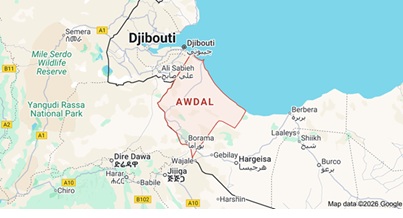
In recent weeks, talk of forming an “Awdal State” aligned directly with Mogadishu has returned to the political spotlight. Somalia’s Federal Government has signaled that plans are being developed, with consultations reportedly underway among stakeholders and international partners, and senior officials have publicly described the idea as an evolving process rather than a settled blueprint. To many in Awdal, the appeal is easy to understand. The region has genuine grievances, including perceptions of political exclusion, uneven development, and the frustrations that come when local priorities do not translate into national budgets or credible representation.
It is also true that the wider Somali question remains unresolved, and that Somaliland’s claim to independence continues to divide Somalis at home and abroad. But the most important test for any political project is not how emotionally satisfying it feels at launch. The test is whether it can improve security, livelihoods, public services, and dignity in real and measurable ways. Judged by that standard, the push to create a federal aligned Awdal administration is not only premature, it is likely to be harmful to the interests of the people it claims to serve.
Awdal’s interest, above all, is stability with workable governance. A functioning administration is not a flag, a slogan, or a new set of titles. It is predictable security, a dependable civil service, rule based policing, and service delivery that reaches households beyond the main towns. In the Horn of Africa, where border economies, remittances, and livestock trade are lifelines, stability is not a luxury. It is the foundation of survival. Any plan that risks destabilizing that foundation must be treated with the utmost caution, no matter how compelling its rhetoric may sound. The argument for “Awdal State” today is largely built on the assumption that federal recognition alone can generate development, security, and international support. Somalia’s recent experience demonstrates that this assumption is weak.
The clearest warning comes from Las Anod and the formation of the North Eastern State. Its recognition by Mogadishu in April 2025 created a wave of hope among supporters who believed that federal legitimacy would quickly translate into resources, institution building, and improved day to day life. Yet credible analysis of the new entity’s formation and early trajectory points to an administration still grappling with fundamental state building challenges, including revenue generation, security stabilization, relations with neighboring authorities, and the transition from wartime mobilization to civilian governance. Even within supportive policy circles, the emphasis has consistently been on what still needs to be fixed: improving revenue collection, strengthening customs and excise systems, tightening command and control of armed forces, reducing frontline tensions, and preventing further militarization.
That is not a portrait of a political project that has already delivered tangible dividends at scale. It is the portrait of an entity still struggling to fund itself, secure itself, and unify contested politics under a single administrative umbrella. If that is the reality for a newly recognized administration born out of intense conflict and national attention, Awdal must ask an uncomfortable but necessary question: what makes us think our outcome will be different, especially when our proposed project would open a new front of confrontation with Somaliland.
The reality is that Mogadishu’s capacity constraints are not speculative. They are documented, repeated, and visible. Somalia’s security challenge is not confined to rural districts. Al Shabaab has repeatedly demonstrated the ability to operate near Mogadishu and to disrupt key roads and corridors, including incursions and checkpoints along strategic routes. The United Nations has also noted the group’s ability to strike inside the capital, including an attempted attack targeting the president’s convoy close to the presidential palace area in March 2025. When a government is still fighting to secure its own capital and main supply lines, it is not a serious plan to promise that the same government can effectively establish, finance, protect, and develop a brand new federal member state far from its center of control. The popular phrase that Mogadishu does not control “50 kilometers outside the city” is not meant as a literal measurement, but as a political truth about limited reach and uneven authority. The point is simple: federal ambition is currently larger than federal capacity, and when ambition outruns capacity, communities pay the price.
This is where the “Awdal State” project becomes less a development plan and more a political instrument. The federal push comes at a time when Mogadishu is in deep dispute with key existing federal member states, particularly Puntland and Jubbaland, over constitutional changes, elections, and the basic terms of federal power sharing. Puntland’s refusal to recognize the federal government after disputed constitutional amendments in March 2024 was not a small disagreement. It was a major fracture in the federation.
More recently, the public split over UAE related agreements showed how limited Mogadishu’s enforcement leverage is when regions reject federal decisions and continue their own external partnerships. In this context, the push to create new administrations in contested northern territories risks appearing selective: strong energy for creating new entities where it weakens Somaliland, but inadequate energy for rebuilding trust, consensus, and rules with existing member states. That kind of selective federalism does not consolidate the state. It multiplies disputes, stretches institutions thinner, and turns local communities into pawns in national rivalries.
This is precisely why, Awdal’s interest is best served by remaining within Somaliland. This is not an argument that Somaliland is perfect, or that Awdal’s grievances are imaginary. It is an argument about comparative governance, relative stability, and practical pathways for improvement. Somaliland has maintained functioning administrative structures for decades, and it has demonstrated, in multiple areas, that local governance reforms can translate into real public service gains when institutions are strengthened and revenue collection becomes more predictable.
Somaliland’s political system has also shown a capacity, however imperfect, to manage electoral competition and political transitions in ways that are still rare in the Somali context. International reporting has noted Somaliland’s presidential elections and the resulting political developments in recent years, reflecting a continuing pattern of structured political contestation rather than perpetual institutional breakdown. Again, this is not romanticizing Somaliland or dismissing legitimate criticism. It is recognizing a basic governance reality: stability allows incremental reform, while instability destroys even the gains already made.
If Awdal wants change, the most effective strategy is not to gamble on a fragile federal project whose center is still battling for authority and cohesion. The effective strategy is to negotiate hard within the existing Somaliland framework for concrete deliverables that citizens can touch: roads, health facilities, education quality, water systems, market infrastructure, fair political representation, and accountable local governance. The most powerful tool Awdal has is not a new flag but a clear, organized, citizen driven agenda that demands measurable outcomes from Hargeisa, backed by elders, business communities, youth, women’s groups, and the diaspora. Awdal can push for stronger regional budgeting, transparent development planning, and public accountability and equal representation without detonating the security environment that makes development possible in the first place. It can also push for de politicizing local grievances by tying demands to service delivery indicators, not to slogans that turn neighbors into enemies.
This brings us to the final and most decisive point. The question of Somali unity is not dead, but it is not currently solved either. If, in the future, Somalia becomes a genuinely unified and functional state with an agreed constitution, legitimate elections, predictable security across major corridors, and a federal arrangement accepted by all key stakeholders, then Awdal, like other regions, could reassess its political options. But unity cannot be built on hallucinations. It must be built on functioning institutions and mutual consent. At present, Somalia’s federation is contested, major member states are in open political conflict with Mogadishu, and the national security environment remains volatile. In such conditions, the idea of creating Awdal State is not a development project. It is a political spectacle with a high probability of creating new tensions and a low probability of delivering services.
Awdal deserves more than symbolic politics. It deserves a realistic pathway to stability and prosperity. The evidence from recent state formation experiments, especially the experience after Las Anod, is that recognition does not automatically bring revenue, services, or security. Awdal’s true interest today is to protect what stability exists, strengthen institutions where it can, and pursue reform through the governance structure that is already functioning on the ground. Remaining part of Somaliland, while demanding fair representation and equitable development with discipline and unity, is not surrender. It is strategy. It is the sober choice that puts people ahead of politics, services ahead of slogans, and stability ahead of risky experiments whose costs would be paid by ordinary families, not by the elites who champion them from comfortable distances.
Hussien Mohamed Yusuf
Email: hussienm4@gmail.com